World Cup 2026 Travel Guide: All 16 Host Cities
World Cup 2026 Travel Guide: Staying Connected Across All 16 Host Cities
The 2026 FIFA World Cup is the biggest sporting event in history by almost every measure: 48 teams, 104 matches, 16 host cities, and three countries — the United States, Mexico, and Canada — sharing the stage from June 11 to July 19, 2026.
For travelers following their team (or just chasing the atmosphere), that scale creates a real question: how do you move fluidly across three countries, stay online for maps, tickets, and group chats, and actually enjoy the journey?
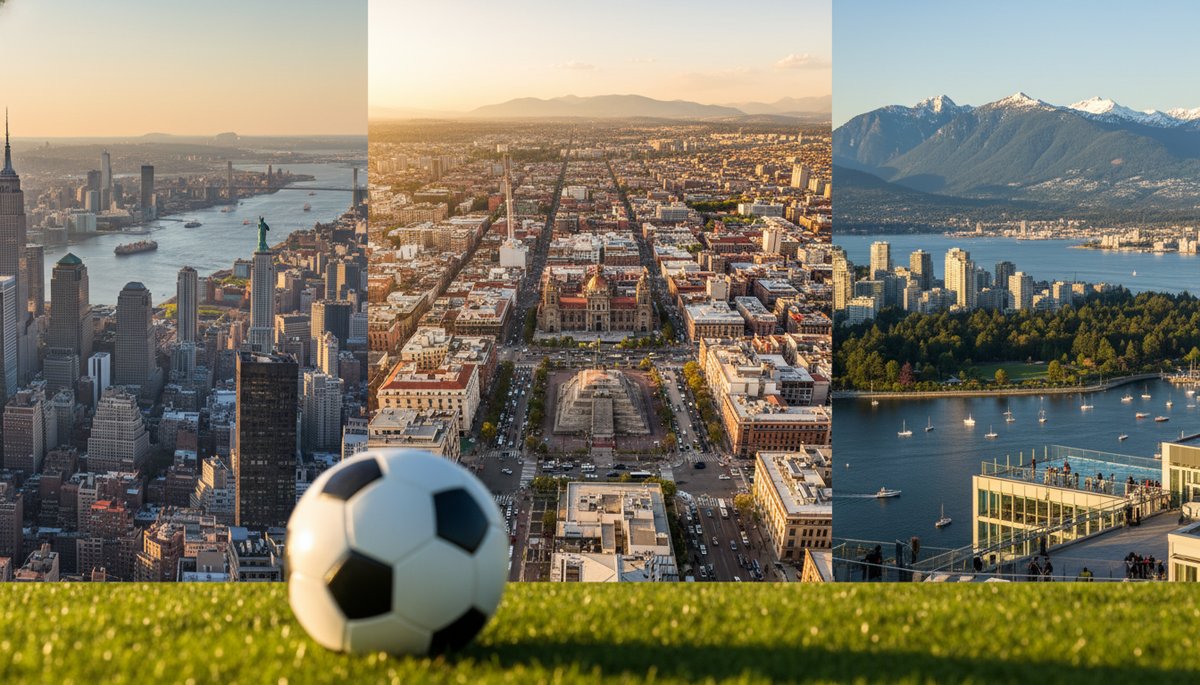
This guide is your starting point. Below you'll find every World Cup 2026 host city grouped by country, a quick teaser of what each city offers, the tournament's key dates, and a practical connectivity plan so you're never stuck roaming.
Quick Answer: The 2026 World Cup spans 16 host cities — 11 in the USA, 3 in Mexico, and 2 in Canada — from June 11 (opener in Mexico City) through July 19 (final near New York). An Airalo North America eSIM covers all three countries on one plan, making multi-city travel far simpler than managing separate local SIMs.
Disclosure: This post contains affiliate links. If you make a purchase through these links, we may earn a small commission at no extra cost to you. We only recommend products we genuinely believe in.
The Tournament at a Glance
The 2026 FIFA World Cup runs June 11 – July 19, 2026, spanning 39 days. This is the first edition to feature 48 national teams, up from 32, producing a record 104 matches across all stages.
| Key fact | Detail |
|---|---|
| Tournament dates | June 11 – July 19, 2026 |
| Total teams | 48 |
| Total matches | 104 |
| Host cities | 16 (11 USA, 3 Mexico, 2 Canada) |
| Opening match | June 11 — Mexico City (Mexico vs South Africa) |
| Final | July 19 — New York/New Jersey (MetLife Stadium) |
Opening match: The tournament kicks off on June 11 at Estadio Ciudad de México — the FIFA tournament name for the stadium historically known as Estadio Azteca — with Mexico hosting South Africa. It marks the third time this legendary venue has hosted a World Cup opening match, something no other stadium on earth can claim.
The final: On July 19, New York/New Jersey Stadium (MetLife Stadium, East Rutherford, NJ) hosts the tournament's climax. It's one of the largest stadium capacities in North America and less than 20 miles from Midtown Manhattan.
How the 2026 World Cup finished: the tournament is complete. Spain won their second World Cup title (their first was in 2010), beating Argentina 1–0 after extra time in the Final at MetLife Stadium (New York/New Jersey) on July 19, 2026 — substitute Ferran Torres scored the only goal in the 106th minute. Spain reached the final by beating France 2–0 in the Dallas semifinal; Argentina got there past England 2–1 in Atlanta. Hard Rock Stadium in Miami hosted the third-place play-off on July 18. These city guides remain useful for anyone planning a future trip to the same destinations.
What Will the Weather Be Like at World Cup 2026 Venues?
Conditions vary sharply across the 16 cities because the tournament spans two months and three climate zones. Northern and coastal cities — Vancouver, Seattle, Toronto, and San Francisco — expect mild June-July highs of 18–28 °C (64–82 °F), ideal for outdoor fans. Southern and inland US cities — Dallas, Houston, Miami, and Atlanta — regularly hit 30–35 °C (86–95 °F) with high humidity, making afternoon heat a genuine factor. Monterrey is the hottest venue: average June highs near 35 °C (95 °F), with peaks that can reach 40–43 °C (104–109 °F). To manage this, FIFA has scheduled most matches in hotter cities for evening kick-offs and has mandated hydration breaks at all 104 matches. Pack light, breathable clothes for the south; a light layer is useful for night matches in Vancouver or Seattle.
11 US Host Cities
The United States hosts the lion's share of the action — 11 cities spread from coast to coast. Whether you're flying between matches or road-tripping, the geography rewards planning.
New York / New Jersey — Final Host
The marquee assignment. The New York metro area hosts eight matches, including the July 19 final at New York/New Jersey Stadium (MetLife Stadium) in East Rutherford, NJ. This is the anchor of the cluster for anyone following the tournament to its conclusion. Read our full city guide: World Cup 2026 in New York/New Jersey: Final Host City Guide.
Los Angeles
SoFi Stadium in Inglewood hosts eight matches in one of the world's most soccer-passionate cities, fueled by a massive Latino fanbase. Expect packed fanzones from Echo Park to Santa Monica, and LAX as the transit hub for West Coast match-hoppers. City guide coming soon.
Dallas
AT&T Stadium in Arlington hosts nine matches — the most of any venue in the tournament. That makes the Dallas/Fort Worth metro a genuine hub for group-stage and knockout action. City guide coming soon.
Atlanta
Mercedes-Benz Stadium hosts eight matches. Atlanta is easy to reach from the East Coast and the American South, and the city's food and music scenes hold up between kick-offs. City guide coming soon.
Miami
Hard Rock Stadium hosts seven matches plus the third-place play-off. Miami's location and Latin American cultural connections make it one of the most electric fan atmospheres on the US calendar. City guide coming soon.
Boston
Gillette Stadium in Foxborough hosts seven matches. The greater Boston area is a natural base for fans arriving on transatlantic flights, with easy rail connections to New York and Philadelphia. City guide coming soon.
Houston
NRG Stadium hosts seven matches. Houston's diverse population and direct flights from Latin America make it a key gateway city for supporters from South America and Central America. City guide coming soon.
Seattle
Lumen Field hosts six matches. Seattle sits at the northwestern edge of the US host footprint, making it the ideal jumping-off point for fans who want to combine a match with a trip across the border to Vancouver. City guide coming soon.
San Francisco Bay Area
Levi's Stadium in Santa Clara hosts six matches. The Bay Area's tech-savvy fanbase, walkable neighborhoods around San Jose, and easy access from Los Angeles via flight make this a popular secondary stop on any West Coast circuit. City guide coming soon.
Philadelphia
Lincoln Financial Field hosts six matches. Philly is the shortest train ride from New York of any host city — Amtrak gets you there in about 70 minutes — making it a natural pairing with the NY/NJ final hub. City guide coming soon.
Kansas City
GEHA Field at Arrowhead Stadium hosts six matches. Often overlooked on the city circuit, Kansas City is a genuine World Cup sleeper — centrally located, packed with barbecue joints, and deeply proud of its soccer history. City guide coming soon.
3 Mexico Host Cities
Mexico is the only country to have hosted three FIFA World Cups (1970, 1986, and now 2026). Its three cities bring iconic venues, vibrant street culture, and a fan atmosphere that's hard to match anywhere in the world.
Mexico City — Opener Host
The tournament begins here. Estadio Ciudad de México (the FIFA tournament name; historically Estadio Azteca) hosts five matches, including the June 11 opener. Mexico City is also one of the most rewarding cities in the Americas to explore — from the historic centro to the trendy neighborhoods of Roma and Condesa. Read our full city guide: World Cup 2026 in Mexico City: Travel, Transit & Staying Connected.
Guadalajara
Estadio Guadalajara (the FIFA name; known locally as Estadio Akron) in the suburb of Zapopan hosts four matches. Mexico's second city is more relaxed than the capital and offers excellent taco spots, colonial architecture, and easy connections onward to Mexico City or Monterrey. City guide coming soon.
Monterrey
Estadio Monterrey hosts four matches in Mexico's industrial north, a city known for its mountain backdrop, norteño culture, and proximity to the US border at Laredo. Fans routing between Mexican and US cities often pass through here. City guide coming soon.
2 Canada Host Cities
Canada makes its FIFA World Cup hosting debut in 2026. Both cities bring a distinctly different flavor to the tournament.
Toronto
Toronto Stadium (BMO Field) hosts six matches. Canada's largest city is one of the most multicultural in the world — every competing nation seems to have a vocal diaspora community here — which makes the fan atmosphere uniquely global. City guide coming soon.
Vancouver
BC Place Vancouver hosts seven matches and sits on the Pacific Coast, with one of the world's most spectacular mountain-and-water backdrops. Vancouver is also a natural bridge between the Seattle and West Coast US cluster for travelers combining matches in both countries. City guide coming soon.
Stay Connected Across Three Countries
Here's the practical problem most World Cup travelers run into: you land in Mexico City, cross to Dallas, then fly north to Toronto. Each country has its own carriers, and international roaming plans from your home provider can be eye-watering over a 39-day tournament.
The cleanest solution is a single North America eSIM that activates across the USA, Mexico, and Canada before you even board your first flight.
An Airalo North America Unlimited eSIM covers all three host countries on one plan — no SIM-swapping, no carrier negotiation at airport kiosks, no surprise roaming bills. Plans range from 3-day to 40-day coverage, which maps neatly to the tournament window. (Affiliate link — I may earn a commission at no extra cost to you.)
As part of Airalo's World Cup 2026 promotion, the North America Unlimited eSIM is 26% off through July 18, 2026. This is a verified limited-time discount — valid May 27–July 18, 2026 — so lock it in before you fly.
For a deeper look at which plan fits your itinerary — including whether to get a US-Mexico plan versus the full North America option — see our dedicated guide: Best eSIM for the 2026 World Cup: USA, Mexico & Canada.
If you're crossing all three countries and want a complete no-SIM-swap game plan, we also cover the logistics in detail here: Following Your Team Across 3 Countries: the No-SIM-Swap World Cup Plan.
Plan Your Route by Country Cluster
The 16 cities break into natural travel clusters. Reviewing these before you book flights can save both money and time:
Mexico cluster — Mexico City + Guadalajara + Monterrey. All three are linked by domestic flights under 2 hours and by ADO long-distance buses for the budget-conscious. A week here at the start of the tournament (when the opener is in Mexico City) flows naturally.
US East cluster — New York/NJ + Philadelphia + Boston. These three cities are Amtrak country. The Acela corridor means you can move between them without setting foot in an airport. The final is here; bracket it with group-stage matches.
US South cluster — Dallas + Houston + Miami + Atlanta. Fly between these unless you enjoy a long drive. Dallas hosts the most matches of any venue, making it the anchor.
US West cluster — Los Angeles + San Francisco Bay Area + Seattle. West Coast flights are cheap and frequent. Seattle pairs naturally with Vancouver for a USA/Canada crossing.
Canada — Toronto and Vancouver are 5 hours apart by air but worlds apart culturally. Both are worth a separate trip; few fans do both unless they're watching the full tournament.
Do You Need a Visa for the 2026 World Cup?
Visa requirements depend on your nationality and which host countries you plan to visit — there is no single World Cup fan visa covering all three nations.
For the United States, citizens of the 42 countries in the Visa Waiver Program can enter using an ESTA (Electronic System for Travel Authorization). Everyone else needs a B-1/B-2 tourist visa. FIFA's PASS program (opt in when purchasing tickets directly via FIFA) gives ticket holders priority visa appointment scheduling to help meet the tournament timeline.
For Canada, visa-exempt nationals flying in need an eTA (Electronic Travel Authorisation, CAD $7, typically approved in minutes online). Canadian and US entry requirements are completely independent — a valid US visa does not grant entry into Canada.
For Mexico, most nationalities do not need a visa for short tourist stays, but check your country's specific requirement before booking. If you are crossing all three countries, budget time to apply for each separately well in advance of June 11.
Work the Host Cities, Not Just the Matches
If you're flexible with your travel plans, the 2026 World Cup is also one of the biggest short-term job opportunities in recent memory. Host cities are hiring in hospitality, event operations, security, transport, and fan-zone management — and many of those roles are traveler-friendly contracts.
We have a full breakdown in our guide to seasonal jobs at the 2026 World Cup host cities, covering where the roles are, how to apply, and which cities offer the best combination of match access and paid work.
Where to Go Next
This post is the hub for our complete World Cup 2026 travel series. As individual city guides go live, each link below will take you to a full deep-dive covering transit, neighborhoods, connectivity, and match logistics:
Mexico
- Mexico City — opener host, five matches
- Guadalajara — four matches (guide coming soon)
- Monterrey — four matches (guide coming soon)
USA
- New York / New Jersey — final host, eight matches
- Dallas — nine matches, most of any venue (guide coming soon)
- Atlanta — eight matches (guide coming soon)
- Los Angeles — eight matches (guide coming soon)
- Miami — seven matches, third-place match (guide coming soon)
- Boston — seven matches (guide coming soon)
- Houston — seven matches (guide coming soon)
- Vancouver (Canada) — seven matches (guide coming soon)
- Toronto (Canada) — six matches (guide coming soon)
- Seattle — six matches (guide coming soon)
- San Francisco Bay Area — six matches (guide coming soon)
- Philadelphia — six matches (guide coming soon)
- Kansas City — six matches (guide coming soon)
Practical guides
- Best eSIM for the 2026 World Cup — which Airalo plan fits your itinerary
- No-SIM-Swap multi-country plan — following your team across all three countries
- Seasonal jobs at World Cup host cities — work the tournament
Get Ready to Go
The 2026 FIFA World Cup is a once-in-a-generation event on your doorstep if you're already in North America — and an unmissable excuse for a cross-continental trip if you're not. Forty-eight teams, 104 matches, and 16 host cities spread across one of the world's most accessible travel regions.
Lock in your eSIM before departure so connectivity is handled: get an Airalo North America Unlimited plan and you're covered in all three host countries from day one. (Affiliate link — I may earn a commission at no extra cost to you.)
See you at the stadium.
Frequently Asked Questions
What are the 16 host cities for the 2026 FIFA World Cup?
When does the 2026 FIFA World Cup start and end?
How does the 2026 World Cup format work with 48 teams?
Do I need a visa to attend the 2026 World Cup?
Where is the 2026 World Cup final?
You Might Also Like
Travel & Remote Work Briefing — September 22, 2026
Travel & Remote Work Briefing — September 21, 2026
Travel & Remote Work Briefing — September 20, 2026