World Cup 2026 Jobs: Seasonal Work in Host Cities
World Cup 2026 Jobs: Seasonal Work in Host Cities
The 2026 FIFA World Cup runs across 16 cities in the US, Canada, and Mexico from June 11 to July 19 — and it's generating one of the largest short-term hiring surges in recent memory. Federal and FIFA projections put the number of US jobs tied to the tournament at roughly 185,000, and if you're a traveler with existing work eligibility in one of the host countries, you're looking at a genuine window to work somewhere exciting for a few weeks.
Quick Answer: Paid World Cup 2026 jobs exist in hospitality, security, event operations, fan-zone staffing, retail, and transportation. Most require existing US, Canadian, or Mexican work authorization — there is no special World Cup work visa for international job seekers. Hiring is active now; the tournament window is June 11–July 19. Volunteer spots (unpaid) through FIFA are open to anyone 18+ who can legally enter the host country.
This guide covers what jobs are actually out there, the honest work-authorization picture, when and where to apply, and how to maximize your chances of landing something.
What Kinds of World Cup 2026 Jobs Are Available?
The job market around a 48-team World Cup is broader than it looks. Here's a realistic breakdown by category.
Hospitality: The Biggest Category by Far
Hotels and restaurants near stadiums are the largest employers. OysterLink data shows hospitality job postings across the 11 US host cities climbed 30.3% in May 2026 compared to the January–April monthly average — while non-host cities saw hiring drop 23.8%. Philadelphia led with an 83% surge; Boston (+61%) and Atlanta (+55%) weren't far behind.
Roles include: front desk and concierge, food and beverage service, event catering, housekeeping, hotel operations, and banquet/catering for corporate hospitality clients. DO & CO, the major event catering firm, is handling FIFA World Cup VIP Hospitality — one of the bigger employer names in this space.
Event Operations and Stadium Staff
FIFA and the local host-city committees are hiring directly for tournament operations roles across all 16 cities. Categories on FIFA's careers page (jobs.fifa.com) include:
- Fan Operations
- Workforce Operations
- Hospitality Management and Venue Operations
- Safety and Security
- Government Relations and Logistics
TeamWork Online (teamworkonline.com) lists tournament operations roles across individual host cities including Kansas City, Seattle, Miami, San Francisco, Boston, and Houston.
Security
Security is one of the higher-volume categories — and one that takes the most lead time. General event-security roles require a background check and, for some positions, a valid security guard card. FIFA credential clearance for security-adjacent roles takes longer than standard event vetting: most employers building security teams started screening 3–4 months before the event. Entry-level crowd-management and access-control roles are still being posted on Indeed and ZipRecruiter.
Note: If you're pursuing a security role and haven't started the credential process, your options narrow to general entry-level crowd-management positions rather than venue-floor security assignments.
Fan-Zone and Brand Ambassador Work
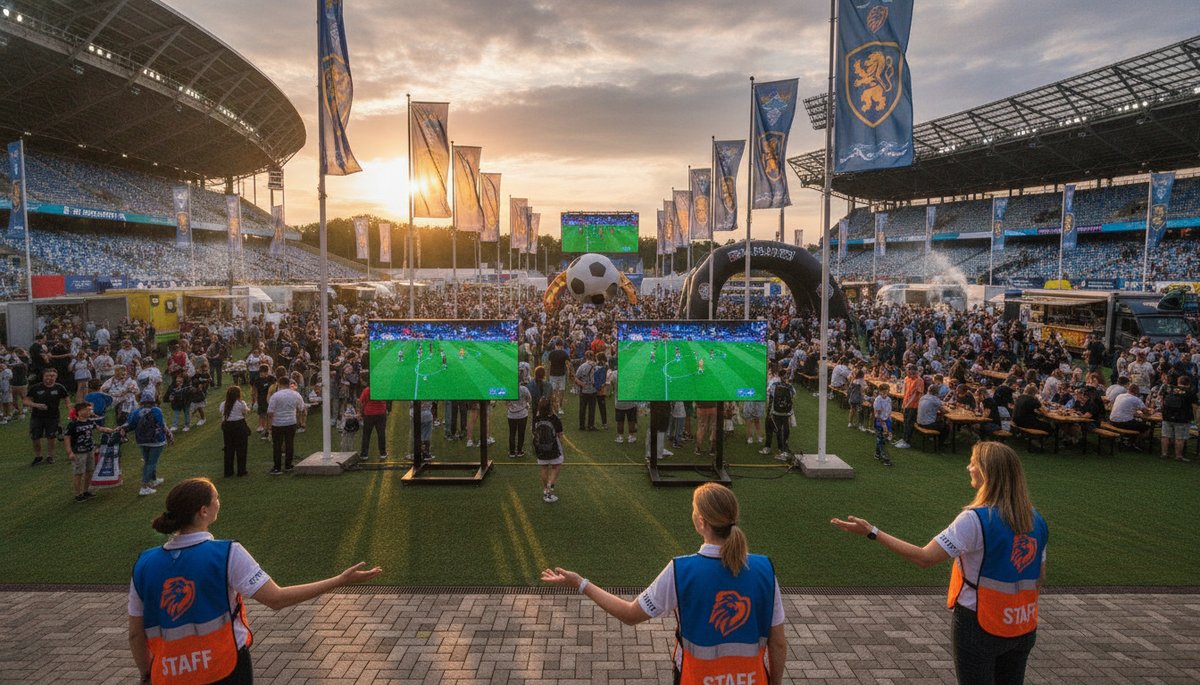
Official and unofficial fan festivals run throughout the tournament at or near each host city. Street Teams Co. is staffing fan-zone brand ambassadors across all 11 US host cities. These are typically short-term promotional staffing contracts — think greeting fans, running activations, handing out branded materials, and creating on-site content. Hours are concentrated around match days.
Rideshare, Delivery, and the Gig Economy
You don't need to be pre-hired for the tournament to earn from it. In every host city, match days create demand spikes for rideshare (Uber, Lyft) and food delivery (DoorDash, Uber Eats). If you already have accounts and a car in a host city, this is the path of least resistance — and the most flexible. Rideshare drivers in Toronto supporting the 2026 matches can find specific Transportation Coordinator Positions (TCPs) working near venue rideshare pickup/drop-off zones.
Retail and Tourism Services
Tourist corridors near stadiums and fan zones see elevated foot traffic for the full six-week window. Short-term retail roles, souvenir and merchandise stalls, and tour operator positions spike around the tournament. These typically don't appear through FIFA-affiliated channels — they're listed directly on Indeed, ZipRecruiter, and local job boards.
Freelance and Short-Term Rentals
Journalists, broadcast crews, event photographers, content creators, and interpreters (especially Spanish, Portuguese, and French speakers) find short-term freelance work during major tournaments. If you have a property in a host city, short-term rental platforms also see a booking surge — this is a passive way to earn from the tournament without taking a job.
Do I Need Work Authorization to Work at the World Cup?
Yes — and this is the most important reality check in this guide.
For virtually every paid, on-the-ground role at the 2026 World Cup in the United States, you need existing US work authorization — a US passport, a green card, an EAD, or an active visa category that permits employment. The same applies in Canada (Canadian work eligibility required) and Mexico (Mexican work authorization required). There is no special World Cup work visa that allows international applicants to land in a host city and take a local job.
This is identical to the eligibility rules for any other US employer. FIFA and its contractors are bound by the same I-9 employment verification requirements as any other company operating in the US.
What if I'm from outside the host countries?
A small number of roles do cross borders. FIFA-accredited personnel — team officials, media and broadcast staff, and certain contracted specialists — are generally exempt from standard work permit requirements. Canada has also issued a temporary public policy providing work permit exemptions for certain FIFA-affiliated subcontractors (with a window through July 31, 2026), but this applies to organizations invited and contracted by FIFA, not open-application candidates. These are not advertised roles you can apply to as an individual.
The realistic path for international travelers: the volunteer program (covered below), or a freelance/contractor arrangement where you sell services independently rather than working as an employee.
How to Volunteer at the FIFA World Cup 2026
The FIFA volunteer program is the most accessible route for anyone who wants to be part of the tournament but doesn't already have work authorization in a host country.
Key facts (verified via fifa.com/volunteers):
- Around 65,000 volunteers are being recruited — the largest volunteer programme in FIFA's history.
- You must be 18 or older at the time of application.
- You must be legally eligible to enter the host country where you'll volunteer (standard entry rules apply; no separate volunteer visa is created).
- You must commit to a minimum of 8 shifts, each 6–8 hours, between June 11 and July 19.
- English proficiency is required; additional languages (especially Spanish and French) strengthen your application.
- A background check is part of the process.
- No prior event experience is required — FIFA values availability and attitude.
Volunteers work across 23 functional areas: fan assistance, transport logistics, media operations, stadium ticketing support, hospitality, and more. Apply or check status at fifaworldcup.com/volunteers.
Heads up on timing: FIFA's original volunteer selection and tryouts ran in late 2025 and early 2026. If you missed the main application window, check both FIFA's page and individual host-city committee sites — some cities (including Houston, Boston, and Seattle) have run their own supplemental volunteer recruitment alongside the main FIFA pipeline.
Where to Find World Cup 2026 Jobs Right Now
Here's a practical shortlist of the hiring channels, ordered by volume:
Direct FIFA and official sources:
jobs.fifa.com— FIFA's official careers portal for tournament operations roles across all host cities- TeamWork Online (
teamworkonline.com/soccer-jobs/fifa-world-cup-2026) — sports-industry focused; tournament operations, event roles, and career expo listings - Host-city organizing committee sites (e.g.,
bostonfwc26.com/join-our-team,fwc26houston.com/volunteer)
Broad job boards:
- Indeed (
indeed.com/q-world-cup-2026-jobs.html) — largest volume of employer-posted roles - ZipRecruiter — active listings in every host city; search "World Cup 2026" or "FIFA 2026"
- LinkedIn — FIFA and partner contractors post management and specialist roles here
Staffing agencies and event companies:
- Street Teams Co. (
streetteamsco.com) — fan-zone brand ambassador work, all 11 US host cities - EventStaffApp (
jobs.eventstaffapp.com) — stadium and event operations - Frontline Source Group (Texas markets: Dallas and Houston) — staffing agency with World Cup hospitality specialization
- TempGuru (TAG) — event staffing with a specific FIFA 2026 guide
How to Stand Out When Applying
These are competitive openings, especially for the direct FIFA roles. A few things that make a real difference:
Apply now, not later. The tournament is already underway as of June 11. Core staff for most venues was locked weeks ago, but second-wave hiring for fan-zone, retail, and event-day support is still active. Every day you wait, the pool shrinks.
Relevant experience matters most for the higher-tier roles. Stadium operations, VIP hospitality, and any role touching security or credential management will screen for prior sports or event work. Hospitality and fan-zone roles are more accessible to first-timers.
Flexibility is a superpower. The tournament runs for six weeks across multiple cities. If you can say "I'm available in Dallas, then New York, then Miami" rather than locking to one city, you become significantly more placeable through staffing agencies.
Language skills open doors. Spanish is the second most spoken language in most US host cities and the primary language in the three Mexican venues. Portuguese is heavily used in fan populations. If you're fluent in either, put it front and center on your application.
Background check timing. If you haven't cleared a background check with a specific agency yet, apply immediately — turnaround adds a week or more to the process. FIFA credential clearance for in-venue roles takes longer than standard event vetting.
A Note on World Cup Jobs in Mexico and Canada
The 2026 tournament is spread across three countries, and the job picture varies.
Mexico host cities — Guadalajara, Mexico City, and Monterrey — are hiring through local vendors, hospitality groups, and FIFA's Mexico-based committees. Roles require Mexican work authorization. Mexico has not announced a special work-visa category for the tournament.
Canada host cities — Toronto and Vancouver — require Canadian work authorization for standard employment. Canada's temporary public policy exempting FIFA-affiliated subcontractors from work permit requirements runs through July 31, 2026, but applies to organizations contracted by FIFA, not individuals. Detailed entry and work requirement information from immigration firm Fragomen is available from the Canadian government and their website.
For the travel planning side of visiting these cities during the tournament, our World Cup 2026 host cities travel guide has logistics covered. If you're eyeing work in a specific US hub, see our dedicated guides for New York and New Jersey, Los Angeles, and Dallas.
Is It Worth It?
That depends on your situation.
If you already have work authorization in a host country, are flexible about hours and location, and are okay with a short-term contract, the 2026 World Cup is a genuinely unusual job market moment. Hospitality employers are desperate for staff; major events often translate into full-time offers for reliable seasonal workers after the fact.
If you're an international traveler hoping to show up and get hired on the ground — be honest with yourself about the authorization wall. The volunteer path is real and rewarding, but it's unpaid. The freelance path (content creation, translation, interpretation, rideshare if you have a car and a local account) is more accessible than traditional employment.
Either way, being inside the tournament in any capacity — as a worker, a volunteer, or a self-employed freelancer — is a remarkable thing to do. The 2026 World Cup is the first 48-team edition in history, and it's happening across three countries simultaneously. There won't be another one like it for a long time.
Frequently Asked Questions
Are there paid jobs at the 2026 World Cup?
How do I volunteer at the FIFA World Cup 2026?
Do I need special work authorization to work at the World Cup?
When is the best time to apply for World Cup 2026 jobs?
What kinds of jobs are available at the World Cup 2026?
You Might Also Like
Travel + Remote-Work Briefing — October 25, 2026

Travel + Remote Work Briefing — October 24, 2026
Travel + Remote Work Briefing — October 22, 2026