Rome Festa de' Noantri 2026: Trastevere Guide
Rome Festa de' Noantri 2026: Your Guide to Trastevere's Wildest Summer Festival
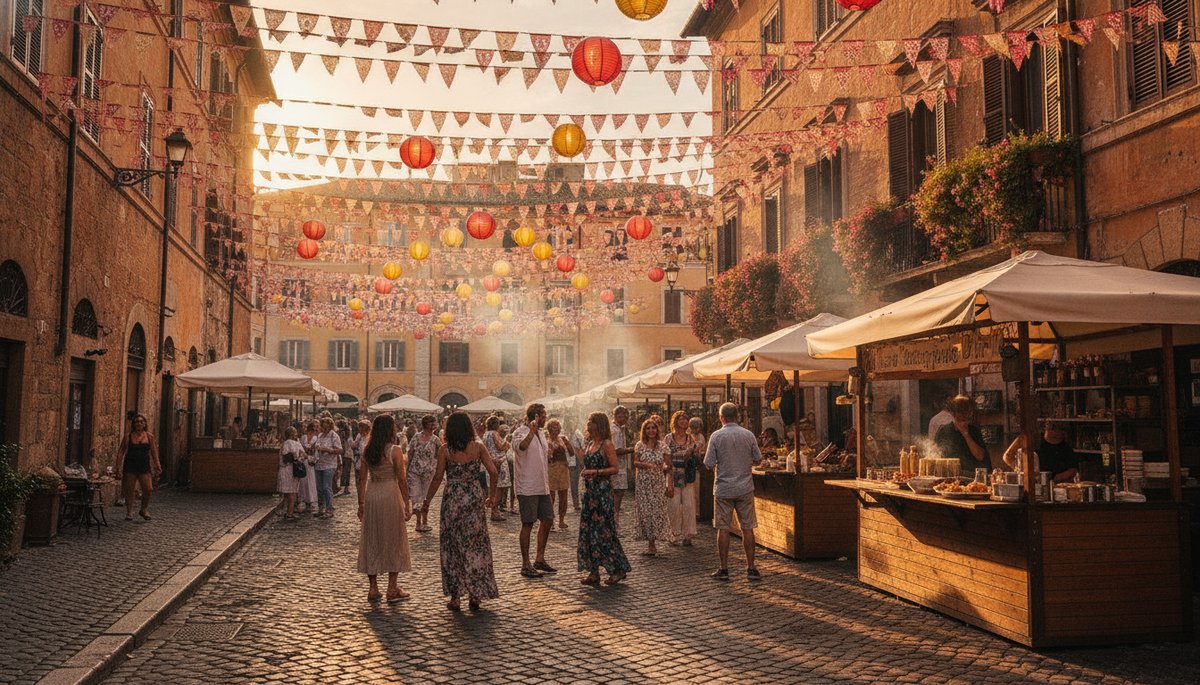
Every July, one corner of Rome stops pretending to be a museum and becomes a party. That corner is Trastevere, and the party is the Rome Festa de' Noantri 2026 — a weeks-long street festival that locals have been throwing since the 1500s, anchored by a candlelit Madonna procession and fueled by porchetta sandwiches, live music, and the kind of heat that makes cold wine taste like a miracle.
If you are planning a Rome trip in late July, or you are looking for a remote work base with actual summer culture, this is the guide for you.
Quick Answer: Festa de' Noantri 2026 runs July 17-25 in Trastevere. Nine free evenings of concerts, theater, and street performances fill Piazza Santa Maria in Trastevere. A grand procession carrying the Madonna Fiumarola statue opens the festival. It is the most authentic and local of Rome's summer events — and it costs nothing to attend.
What Is Festa de' Noantri?
Festa de' Noantri is Trastevere's centuries-old neighborhood festival, rooted in popular devotion to the Madonna Fiumarola — a wooden Madonna statue said to have arrived by river in the 1500s. "Noantri" is Romanesco dialect for "noi altri" (us others), a signal that this is a celebration by and for Trastevere locals, not tourists.
The festival's heart is a solemn procession: dozens of men carry the decorated Madonna statue through the narrow streets on a platform, with residents hanging tapestries and flowers from their windows above. The procession runs for nearly two hours, winding through Trastevere's alleys before returning to the church.
Alongside the religious ceremony, the piazzas fill with carnival rides, street food stalls, open-air concerts, puppet shows, and theater performances that run well past midnight.
When Is Festa de' Noantri 2026?
The 2026 edition officially runs July 17-25, with a program of nine free evenings centered on Piazza Santa Maria in Trastevere. The schedule includes:
Opening concert by the Rome Municipal Police Band
Classical and folk music performances, including Raffaella Misiti and Le Romane
Comedy and cabaret shows
A theatrical production honoring Saint Francis of Assisi on July 23 (the 800th anniversary of his death)
Street theater in Trastevere's vicoli (alleys) on July 21, 24, and 25
A closing concert on July 25 by Burning Season
Family-friendly activities run in parallel at Piazza San Cosimato. The traditional opening procession carrying the Madonna Fiumarola statue launches the festival on the first Saturday (July 19). Most events are free of charge.
Tip: Weekday evenings (Tuesday and Wednesday) offer a more relaxed, less packed version of the festival. Weekends draw the biggest crowds — arrive by 7pm to claim a good spot in the piazza.
What to Do in Rome in July Beyond the Festival
Festa de' Noantri is the centerpiece, but Rome's wider summer program runs hot through August. The city-wide Estate Romana festival (roughly July 1 through August 31) transforms outdoor spaces across the city with concerts, open-air cinema, and theater. Key highlights for a late-July visit:
Opera at Circo Massimo: The Teatro dell'Opera di Roma stages grand productions — including Verdi's Aida — at the ancient Circus Maximus through July 2026.
Roma Summer Fest: More than seventy events at the Auditorium Parco della Musica Ennio Morricone, spanning pop, jazz, rock, and world music, running through mid-September.
Isola Tiberina cinema: Open-air film screenings on Rome's Tiber island, part of the Lungotevere program running from June through late August.
Testaccio Estate: Music, DJ sets, comedy, and street food in the Campo Boario space in Testaccio through September.
Evening passeggiata: Rome's most underrated free activity. Walk the Ponte Sisto at 9pm, join the foot traffic from Campo de' Fiori toward Trastevere, and watch the city come alive once the sun sets.
The Vatican Museums, Borghese Gallery, and Colosseum all require advance booking in July — they sell out fast. Book timed-entry slots at least two to three weeks ahead.
Is Rome Too Hot in July?
July is Rome's hottest month. Daytime highs typically reach 32-35°C (90-95°F), the sun is intense, and the historic center radiates heat off ancient stone.
The honest answer: it is hot. But it is manageable if you work with the rhythm of the city rather than against it.
The Roman day structure that works:
Before 11am: Do your major outdoor sightseeing. The Colosseum, the Forum, and the Borghese gardens are all far more bearable at 8-10am. This is also when the light for photography is best.
11am-4pm: Museums, air-conditioned churches, a long lunch, and a proper rest. This is not laziness — it is what Romans do.
Evening: The city belongs to you. Temperatures drop, restaurants fill up, and the outdoor festival culture begins.
Hydration is free. Rome operates more than 3,000 public drinking fountains called nasoni throughout the city. These cast-iron spouts run constantly with cold, drinkable water from the Apennine springs. Carry a refillable bottle and you will never pay for water.
Trastevere: The Neighborhood Worth Knowing
Trastevere is one of Rome's oldest and most atmospheric neighborhoods — a tangle of narrow lanes, ivy-covered medieval buildings, and piazzas that were busy long before the city became a tourist destination.
During Festa de' Noantri, the whole neighborhood becomes the venue. But outside the festival dates, Trastevere is still worth a half-day or full evening on any Rome itinerary:
Piazza Santa Maria in Trastevere is anchored by one of Rome's oldest basilicas, its golden mosaics glittering even at night. The piazza has a fountain where locals and travelers both sit for hours.
Viale di Trastevere is the main artery and home to the covered market at Piazza di San Cosimato — good for morning produce and coffee.
For street food during the festival: look for porchetta (slow-roasted pork on a roll), supplì (fried rice balls with tomato sauce and mozzarella), and grilled corn from the vendors who set up along the main streets. These are Rome, not tourist approximations of it.
Safety note: Trastevere is a well-trodden, generally safe neighborhood. Standard Rome precautions apply: watch your pockets in crowds (especially during the festival when the piazzas are packed), keep bags in front of you, and be aware of the occasional pickpocket team near major piazzas. The neighborhood is well-lit and active until late — solo travelers and groups are both comfortable here at night.
Rome as a Short Remote Work Base
Rome works surprisingly well as a one- to three-week remote work base, especially if you are combining work with a summer festival trip.
The neighborhood fabric of Trastevere, Monti, and Testaccio has shifted in recent years. Fiber-optic upgrades and a growing acceptance of laptop culture in cafes means more spots with reliable WiFi and the expectation that you might settle in for a few hours. Coworking memberships in Rome typically run in the range of a few hundred dollars a month for a hot desk, with spaces like Talent Garden offering both enclosed desks and outdoor terrace options.
A few practical notes for remote workers:
Connectivity: Italian SIM cards from TIM, Vodafone, or Iliad are easy to find at any tabacchi shop. If you are traveling across multiple European countries before or after Rome, the Airalo Italy eSIM activates before you land and works on your existing phone without a SIM swap — useful if you need your home number to stay active. (Affiliate link — we may earn a commission at no extra cost to you.)
Visa: Most non-EU visitors (US, UK, Canada, Australia) can stay up to 90 days on a Schengen tourist visa. Review the legal reality of working remotely on a tourist visa before you go — Italy does not currently have a formal digital nomad visa. Also check the EU EES entry rules for digital nomads in 2026 if you are coming from outside Schengen.
Working hours: The midday heat problem is actually a remote work asset. Blocking 11am-3pm for calls and deep focus, then heading out in the evening, fits both the Roman summer rhythm and a reasonable overlap with US East Coast mornings.
If Rome feels like a stepping stone, the guide to best Mediterranean cities for remote workers covers other strong summer bases across Italy, Spain, Greece, and Croatia.
Getting Around and Practical Tips
Disclosure: This post contains affiliate links. If you make a purchase through these links, we may earn a small commission at no extra cost to you. We only recommend products we genuinely believe in.
Getting there: Rome Fiumicino (FCO) is the main international airport, well-served by direct flights from across Europe and North America. Ciampino (CIA) handles budget carriers. From FCO, the Leonardo Express train runs to Roma Termini in roughly 30 minutes. From Termini, Trastevere is a 30-minute tram ride or a 15-minute taxi.
Getting around: Rome's tram and bus network covers the historic center. Trastevere is served by tram 8 from Largo di Torre Argentina. Walking is often fastest — the historic center is compact.
Booking essentials for July:
Colosseum + Roman Forum: book timed entry weeks in advance
Vatican Museums: same — midday slots go first; early morning or late afternoon are best
Borghese Gallery: limited to 360 visitors at a time; book as soon as dates are set
The Festa de' Noantri events: free, no booking required
What to pack: Light, breathable fabrics, a sun hat, high-SPF sunscreen, sandals for evenings, and a refillable water bottle. Leave the heavy daypack at the accommodation — Rome's cobblestones will punish your back.
If you are assembling a full travel kit before departure, the digital nomad starter kit covers the gear worth packing for extended European travel.
Your Late July Rome Itinerary
Here is a simple framework for a late July visit timed around Festa de' Noantri:
Mornings (before 11am): Colosseum, Palatine Hill, or Vatican. Bring water, go early, book in advance.
Midday: Pantheon interior (cool and free), lunch at a neighborhood trattoria, a proper espresso, and a rest.
Late afternoon: Trastevere wander, Piazza Santa Maria in Trastevere, and the Basilica interior.
Evenings (festival nights): Piazza Santa Maria in Trastevere for the Festa de' Noantri program. Find a spot by 7-7:30pm. Get a supplì from one of the street vendors. Stay until the music ends.
One day out: Ostia Antica (Rome's ancient port city, far less crowded than Pompeii and a genuine half-day) makes an excellent cool-morning excursion. Trains from Roma Ostiense take about 30 minutes.
Rome in late July is not the easiest version of Rome. But it is one of the most alive — and Festa de' Noantri is the reason to time your trip exactly here.
Frequently Asked Questions
What is Festa de' Noantri in Rome?
When is Festa de' Noantri 2026?
What to do in Rome in July besides the heat?
Is Rome too hot in July?
Can I work remotely from Rome in the summer?
You Might Also Like
Travel & Remote Work Briefing — September 27, 2026
Travel & Remote Work Briefing — September 25, 2026

Travel + Remote Work Briefing — September 24, 2026