
Best Mediterranean Cities for Remote Workers in 2026
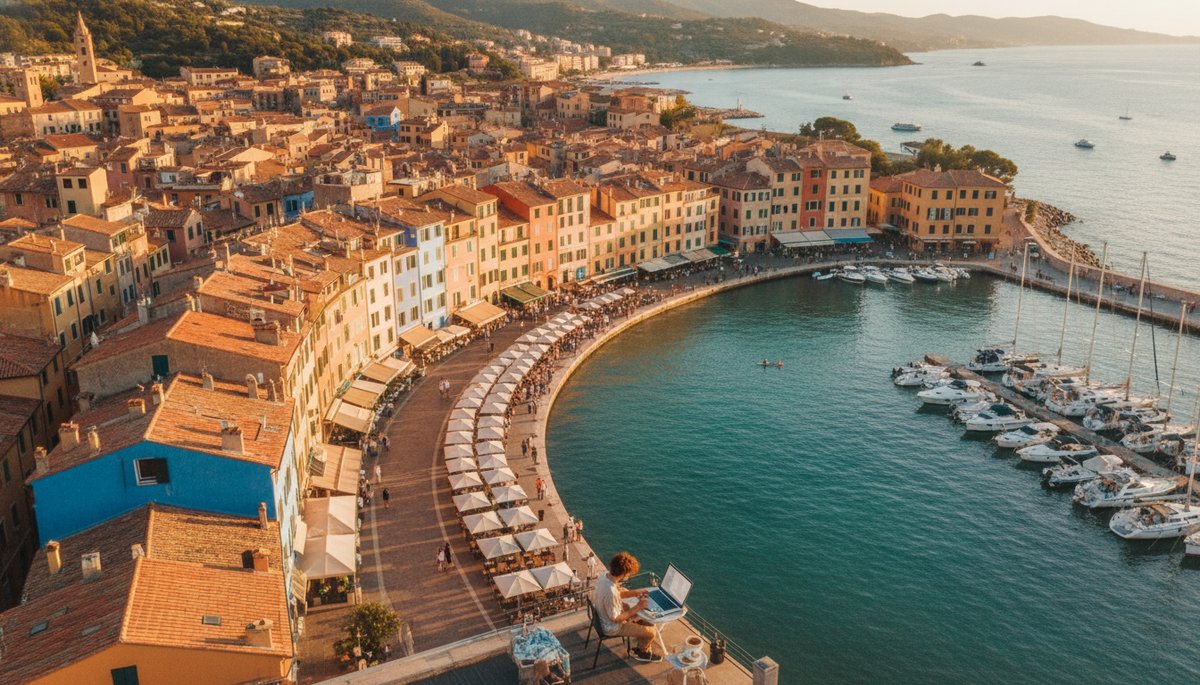
Best Mediterranean Cities for Remote Workers in 2026 (Beyond Amalfi and Santorini)
Every summer, the same postcards go viral — the blue domes of Santorini, the cliffside villages of the Amalfi Coast. And every summer, remote workers who actually try to base themselves there discover the brutal truth: the Wi-Fi is spotty, the rent is triple-digit per night, and every cafe table is taken by a tourist with a selfie stick.
The good news: the Mediterranean is enormous, and the second cities are where the real remote work life happens.
Quick Answer: The best Mediterranean cities for remote workers in 2026 are Valencia (Spain), Split and Zadar (Croatia), Thessaloniki (Greece), Antalya (Turkey), and Palermo (Italy). All five offer coworking spaces, liveable costs, and genuine nomad communities — at a fraction of what their famous neighbors charge.
What Are the Best Mediterranean Cities for Remote Workers in 2026?
The best Mediterranean cities for remote workers in 2026 are Valencia, Split and Zadar, Thessaloniki, Antalya, and Palermo. Each one has earned its place for a different reason: Valencia for infrastructure and community, Split for coastal charm at Adriatic prices, Thessaloniki for affordability inside the EU, Antalya for extreme value, and Palermo for Italian culture without northern Italy price tags.
Below is a city-by-city breakdown — vibe, verified costs, internet reality, coworking options, visa angle, and who it actually suits.
Valencia, Spain — Mediterranean Infrastructure Without Barcelona Prices
Valencia is the standout of this list for nomads who want serious infrastructure. It now hosts over 15,000 international remote workers, making it one of Europe's fastest-growing remote work hubs, and fiber internet at 100–600 Mbps is standard in modern apartments — though the city-wide average across all connection types sits closer to 34 Mbps (per Nomads.com).
Vibe: Sunny, walkable, beach-adjacent. Three hundred days of sunshine per year is a verified meteorological average recorded by Spain's national weather agency AEMET — not a tourism slogan. The city has a proper local food scene (this is where paella was born), bike-friendly streets, and enough international community to feel connected without losing the Spanish character.
Verified costs (June 2026):
Monthly nomad budget: approximately $4,599/month (per Nomads.com data, June 2026)
One-bedroom apartment, city center: approximately $1,250/month
Coworking hot desk: approximately $254/month; budget options start at €100–200/month
Valencia is approximately 30–40% cheaper than Barcelona and modestly cheaper than Madrid across most cost categories, though rental prices rose roughly 8–12% between 2024 and 2026 due to high demand.
Coworking: Wayco is the flagship space with a strong community feel. Vortex has locations near Centro and Playa. Day passes typically run €10–18. Most spaces also organize social events, which matters for solo nomads.
Visa angle: Spain's Digital Nomad Visa requires a minimum of €2,849/month gross income (200% of Spain's Minimum Interprofessional Salary as confirmed for 2026). You apply at a Spanish consulate for a one-year visa, or enter as a tourist and apply in-country at the UGE for a three-year residence permit. EU citizens have free movement.
Who it's for: Nomads who want a proper base — good transit, urban amenities, and a city big enough to avoid getting tired of. It's a step up from the "ultra-budget" tier but still a serious value compared to Lisbon or Barcelona.
Split and Zadar, Croatia — Adriatic Coast at a Fraction of the Price
Croatia entered the Eurozone in 2023 and gained Schengen membership, which simplified both finances and border crossings for EU-based nomads. The south Dalmatian coast is genuinely one of Europe's most beautiful stretches of water — just ask anyone who tried to book accommodation there last July.
Vibe: Split is ancient and alive at the same time: Diocletian's Palace is a living city center with restaurants, apartments, and cafes inside a Roman fortress. Zadar is smaller, quieter, and has a sea organ. Both have a real summer-boom dynamic — coworking and cafe culture is quieter in winter, which is actually ideal if you want affordable, undistracted work time.
Verified costs:
Monthly budget: €1,500–2,500/month covers rent, food, coworking, and weekend island trips
Zadar Digital Nomad Valley: accommodation with coworking access starts at approximately €130/week (minimum two-week stay)
Croatia Digital Nomad Visa income threshold (2026): €3,622.50/month (updated March 2026)
The visa allows up to 18 months in Croatia with full exemption from Croatian income tax
Coworking: Saltwater Split is the go-to — coworking with coliving attached, strong community. COIN in Zadar is the main dedicated coworking venue, with nearly 370 m² of workspace. Summer rental availability is the main watch-out: many landlords switch to nightly tourist rates between June and September, making long-term accommodation harder to lock in.
Visa angle: Non-EU nationals who earn above the threshold should look at the Digital Nomad Visa seriously — the Croatian income tax exemption is a genuine financial benefit for higher earners. EU citizens have freedom of movement.
Who it's for: Nomads who prioritize natural beauty and lower costs over urban infrastructure. If you want to swim in the Adriatic before your morning standup, Split is hard to beat. Come in spring or autumn to dodge summer tourist pricing.
Thessaloniki, Greece — The Affordable EU Option Nobody Talks About
While everyone is debating Athens, Thessaloniki quietly offers EU residency access, Greek food and culture, and one of the lowest cost-of-living profiles among Schengen capitals.
Vibe: Greece's second city is a port city with Byzantine architecture, a massive university population, and a food-obsessed culture (Thessaloniki's pastry and street food scene is legitimately world-famous among Greeks). The nightlife is lively, the waterfront is walkable, and the vibe is noticeably more local than in the tourist-saturated islands.
Verified costs:
One-bedroom apartment: €300–600/month depending on neighborhood (Kalamaria: €400–600; Ano Poli: €300–500)
Coworking: The Cube from approximately €100/month; other shared-desk options start around €89–139/month at dedicated spaces (per Nomads.com Thessaloniki coworking data)
Internet: average around 113 Mbps download in the city (per TestMy.net); fast enough for video calls, cloud tools, and hotspotting
Cost of living is modestly lower than Athens — roughly 5–11% less when rent is included (per Numbeo and Expatistan data)
Visa angle: Greece's Digital Nomad Visa was restructured as of February 5, 2026 under Law 5275/2026. Applications are now consulate-only (no more in-country applications). Requirements: minimum €3,500/month income, private health insurance. The initial consulate visa fee is approximately €75–150 (varies by consulate); if you later convert to a two-year residence permit inside Greece, expect a separate residence permit fee of around €1,000. The visa is valid for 12 months, then renewable as a two-year residence permit. EU citizens travel and reside freely.
Who it's for: Budget-conscious nomads who want EU Schengen access and genuine European city life. If the overcrowded Athens vibe (or Athens pricing) isn't for you, Thessaloniki offers the same Greek experience at a meaningful discount.
Antalya, Turkey — Mediterranean Value at Its Most Extreme
Turkey is not in the EU, not in Schengen, and not expensive. For nomads who have hit their 90-day Schengen limit or are simply chasing value, Antalya delivers: warm winters, a functioning Old Town (Kaleiçi), and a cost structure that feels genuinely unfair to the rest of the continent.
Vibe: Antalya sits on the Turkish Riviera — turquoise water, dramatic cliffs, old Roman harbor. It's a city with real residents, not just tourists, which means normal grocery stores, cheap local restaurants, and neighborhoods that function year-round. Spring and autumn are the sweet spots for work-life balance; summer heat exceeds 38°C and the tourist population surges.
Verified costs (May 2026):
Monthly nomad budget: approximately $2,133/month
One-bedroom apartment: broadly $280–650/month depending on neighborhood and proximity to the coast (per Investropa January 2026 data; typical inland units run at the lower end, beachside areas at the higher end)
Coworking hot desk: approximately $101/month
Mobile data (~10 GB): approximately $9/month
Home internet: $15–30/month at 100 Mbps
Internet reality: Average internet speed in Antalya is around 11 Mbps city-wide (per Nomads.com data), which is the main limitation. Dedicated coworking spaces offer faster connections, and most new apartments have fiber — but verify before you sign anything. A VPN is also advisable; some services are restricted in Turkey.
Visa angle: Turkey launched a formal Digital Nomad Visa via the GoTürkiye platform — apply online for the Digital Nomad Identification Certificate, then finalize at a Turkish consulate. Consulate fees vary by nationality and are confirmed at the time of appointment; the online identification certificate itself is free to obtain. The visa is valid for one year. Alternatively, many nationalities can enter Turkey visa-free or on arrival for 30–90 days.
SIM card tip: Hopping between Turkey and EU countries is where a multi-country eSIM genuinely earns its keep. Airalo's Eurolink plan uniquely includes Turkish coverage alongside 42 European countries — handy for the Croatia-to-Turkey-to-Greece routing pattern many nomads use to reset Schengen time.
Heading across multiple Mediterranean countries this year? An eSIM saves the hassle of buying a new SIM at every airport. Airalo's Europe eSIM covers 42 countries with plans starting at $5 — activate before you land and stay connected across borders.
>
Affiliate link — we may earn a commission at no extra cost to you.
Who it's for: Nomads chasing extreme value or resetting Schengen time. Not ideal if reliable high-speed internet is non-negotiable for your work — but at $2,133/month all-in, the trade-off math is obvious.
Palermo, Italy — Italian Culture, Southern Prices
Italy's most famous cities are not the cheapest. Palermo is the exception: affordable rent, genuine local culture, UNESCO World Heritage architecture, and food that will ruin you for every other pizza forever.
Vibe: Palermo is messy, loud, beautiful, and deeply Sicilian. Markets like Ballarò and Capo are actual neighborhood markets, not tourist reconstructions. The city's Arab-Norman architecture reflects a thousand years of layered history. The pace is unhurried, which suits some remote workers and frustrates others.
Verified costs:
One-bedroom apartment, city center: approximately $571/month (Nomads.com June 2026)
Monthly expat budget: approximately $2,345/month
Italian Bari: broadly similar, with digital nomads citing approximately $1,400/month total costs as achievable
Coworking reality: The scene is smaller than northern Italian cities. BeetCommunity is a coliving and coworking option; Magneti Cowork offers free access; Neomedia and FabLab Palermo serve the local tech community. Fiber coverage in central Palermo has improved significantly, though older buildings may still have slower connections — ask landlords directly before committing. Average speed is around 18 Mbps (per Nomads.com data), so verify your specific accommodation.
Visa angle: Italy does not yet have a dedicated digital nomad visa at the same tier as Spain or Greece. Non-EU nationals typically enter on the standard 90-day Schengen allowance. Italy's "Italy Startup Visa" and freelancer visa options exist but have narrow eligibility criteria. EU citizens have freedom of movement. Worth noting: VisaHQ's 2026 remote-work index ranked Bari and Catania among Italy's top cities for remote workers. Bari in particular benefits from Italy's Impatriate tax regime, which offers a 50% income exemption for qualifying inbound workers who establish Italian tax residency — though eligibility rules are specific and you should verify with a tax professional.
Who it's for: Nomads who prioritize cultural richness and low rent over coworking infrastructure. If you're self-contained with a good laptop setup and your work doesn't demand monster upload speeds, Palermo offers a genuinely rare combination: Italian quality of life at a fraction of Italian prices.
How Do These Mediterranean Cities Compare to Other Remote Work Destinations?
For context: these Mediterranean second cities sit in a different tier from the ultra-budget destinations covered in our guide to working remotely in Southeast Asia — Chiang Mai or Bali will still undercut them on pure cost. But Mediterranean Europe offers something Southeast Asia doesn't: EU visa pathways, direct flights from the US and UK, Western time zones for client calls, and familiar legal and healthcare infrastructure.
They also fill a different niche than the Scandinavia coolcation destinations we've covered — the Mediterranean wins on warmth, food, and cost; Scandinavia wins on work culture alignment and summer daylight hours.
Getting There and Getting Around Safely
All five cities have good international airport connections. Valencia, Thessaloniki, and Antalya have their own airports with frequent European routes. Split and Zadar are served by seasonal and year-round international flights. Palermo has Falcone-Borsellino airport with connections across Europe.
A few practical safety notes:
Valencia and Thessaloniki are large cities with the usual urban precautions — watch for pickpocketing in tourist areas and on public transit.
Split is generally very safe; the main practical issue is summer crowd management and pricing volatility.
Antalya: the city itself is safe for tourists and expats; Turkey has some regional tensions unrelated to tourist areas, so check current UK FCDO or US State Department travel advisories before you go. A VPN is strongly recommended.
Palermo: the reputation for petty crime is real but often exaggerated. Use reputable transport, don't leave valuables visible in cars, and ask your accommodation which neighborhoods are best for evening walks. Standard urban common sense applies.
Which Mediterranean City Should You Choose?
The right pick depends on two things: your budget and your visa situation.
Best infrastructure: Valencia
Lowest cost (EU/Schengen): Thessaloniki
Best coast-to-cost ratio: Split or Zadar
Extreme value, non-Schengen: Antalya
Italian culture, low rent: Palermo
For most nomads doing their first Mediterranean stint, Valencia or Thessaloniki are the safest choices — you'll get reliable internet, a real coworking scene, and a community of people doing the same thing you are. From there, you can branch out to the coast, the islands, or south to Sicily as the mood takes you.
The overcrowded classics will always be there for a long weekend. Your actual working life belongs somewhere better.
Frequently Asked Questions
What is the cheapest Mediterranean city for digital nomads in 2026?
Can Americans work remotely from Mediterranean EU countries legally?
Is Valencia or Split better for remote workers?
What is the best way to get a SIM card or data plan as a remote worker in Mediterranean Europe?
Which Mediterranean cities have the best coworking spaces for remote workers?
You Might Also Like
Travel + Remote Work Briefing — October 18, 2026

Travel + Remote Work Briefing — October 17, 2026
Travel + Remote Work Briefing — October 15, 2026