Coolcations: Best Scandinavia Remote Work Destinations 2026
Coolcations: Best Scandinavia Remote Work Destinations 2026
Every summer, the digital nomad internet fills up with the same photos: laptop on a beach in Bali, iced coffee in Chiang Mai, poolside work session in Medellín. It is a beautiful life. It is also 38 degrees Celsius, and the humidity is doing something unspeakable to your keyboard.
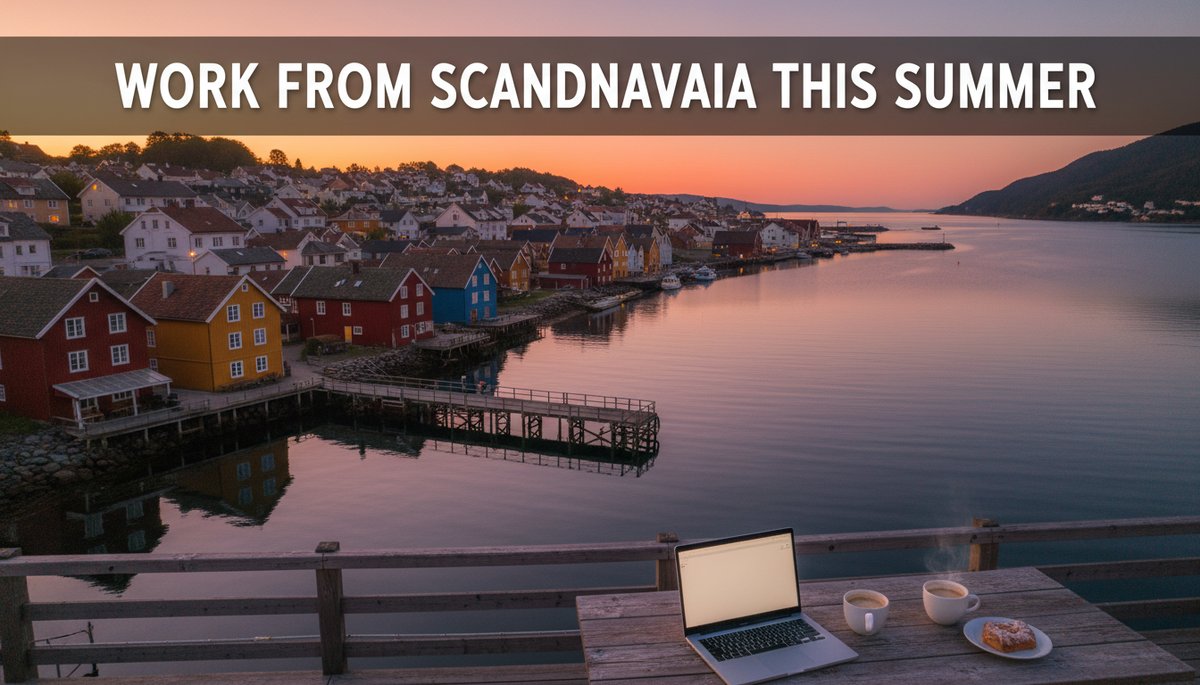
Enter the coolcation. While everyone else chases sun, the smartest remote workers are heading north — to Scandinavia — where summer means 20 hours of golden daylight, fiber-optic internet in tiny fishing villages, and a quality of life that routinely tops global rankings. If you have been eyeing a summer of productive work from genuinely beautiful places, coolcation remote work Scandinavia is your best option in 2026.
Disclosure: This post contains affiliate links. If you make a purchase through these links, we may earn a small commission at no extra cost to you. We only recommend products we genuinely believe in.
This guide covers six specific Nordic cities worth your time, real cost breakdowns, coworking options, visa logistics, and the best months to go. Think of it as the practical counterargument to another sweaty summer in a tropical coworking space — and a companion to the essential digital nomad skills for 2026 you will want in place before you land.
Why Scandinavia Is the Smartest Coolcation Move
The coolcation trend is not just a travel buzzword. It is a logical response to two real problems: climate-driven heat waves making tropical destinations increasingly miserable from June through September, and nomad oversaturation pushing costs up in traditional hubs like Bali and Chiang Mai.
Scandinavia solves both.
The light. Scandinavian summers are genuinely surreal. In Stockholm, the sun sets around 10 PM in June and rises before 4 AM. In Tromsø, Norway, it does not set at all for weeks. This is not a gimmick — it rewires your relationship with productivity. Long bright evenings mean you can work your full hours and still have time for a kayak, a hike, or a waterfront dinner in full daylight.
The infrastructure. Nordic countries consistently rank among the top five in the world for internet speed and digital infrastructure. Sweden and Denmark regularly hit average fixed broadband speeds above 150 Mbps. Coworking spaces are modern, well-equipped, and often surprisingly affordable when you compare them to their Southeast Asian equivalents in terms of quality.
The nature. Fjords, archipelagos, forests, and midnight sun hikes are the kind of after-work activities that make remote work feel like an actual life upgrade, not just a change of scenery.
The crowd. Scandinavia does not yet have the nomad infrastructure overload of Bali or Lisbon. You will find excellent coworking spaces, but you will not be fighting forty other nomads for a power outlet.
The trade-off is cost — Scandinavian cities are expensive by global standards. But when you factor in what you get (world-class nature, safety, quality of life, reliable tech), the value calculation shifts. More on actual numbers below.
Stockholm, Sweden — The Nordic Capital That Works
Stockholm is the most accessible Scandinavian city for first-time Nordic nomads. It has a major international airport, a thriving tech scene, and a coworking culture that is embedded in the city's DNA — Stockholm has produced more billion-dollar startups per capita than any city outside Silicon Valley.
What makes it work for remote workers:
- Fast, reliable internet everywhere. Most coworking spaces sit at 100-300 Mbps.
- An excellent public transit system that makes getting around cheap and easy.
- Summer temperatures around 20-25°C — warm enough to enjoy, cool enough to actually think.
- A genuinely international English-speaking environment. You will not need Swedish for daily life.
Coworking options: WeWork has a central Stockholm location, but the local scene is stronger. Convendum has multiple locations across the city. Epicenter Stockholm is worth checking out if you want a more innovation-focused community atmosphere. Day passes run 200-350 SEK ($19-33 USD). Monthly memberships start around 3,500 SEK ($330 USD).
Monthly cost estimate: | Expense | Budget Range | |---|---| | Private studio/1BR (central) | $1,400–$2,000 | | Food (mix of cooking + cafes) | $400–$600 | | Coworking membership | $280–$450 | | Transit | $100 | | Entertainment + day trips | $200–$400 | | Total | $2,380–$3,550 |
Best months: June and July for the longest daylight and warmest weather. August is excellent and slightly less crowded.
Bergen, Norway — Fjords, Fiber, and a Smaller Footprint
Bergen is Norway's second city and the gateway to the Western fjords. It is smaller than Oslo (about 285,000 people), which makes it more livable, less frantic, and genuinely easier to navigate on foot or by bike. The backdrop — mountains on three sides, a UNESCO-listed wharf, and fjord access minutes from the center — is hard to beat.
What makes it work for remote workers:
- Smaller city means shorter commutes and a stronger sense of community.
- The Bergen area is compact enough that coworking, accommodation, and the city's best cafes are walkable from each other.
- Internet speeds are reliable throughout the city center.
- Bryggen (the old wharf district) is genuinely beautiful to work from in good weather.
Coworking options: Spaces like Teft and Bergen Teknologioverføring offer desk and membership options. The startup scene is smaller than Oslo but growing. Expect day rates around 200-300 NOK ($18-28 USD).
Monthly cost estimate: | Expense | Budget Range | |---|---| | Private studio/1BR | $1,600–$2,200 | | Food | $450–$650 | | Coworking | $300–$500 | | Transit | $80 | | Weekend fjord excursions | $150–$300 | | Total | $2,580–$3,650 |
Tip: Bergen is famously rainy — it gets around 240 rainy days per year. Summer is actually its driest season, but bring a solid rain layer regardless. The city is very much used to the weather; it does not slow things down.
Best months: June and July. August can be rainy toward the end.
Copenhagen, Denmark — The Nomad-Friendly Capital of the North
Copenhagen consistently ranks in the top five of global livability indexes, and for good reason. It is bike-friendly, walkable, architecturally beautiful, and has one of the most developed startup and creative ecosystems in Europe. It also sits at a slightly lower price point than Oslo and is significantly cheaper than many people expect for a Scandinavian capital.
What makes it work for remote workers:
- Copenhagen has the most established coworking scene in Scandinavia, with dozens of options across the city.
- The city is extremely bike-friendly — a used bike costs $100-150 and makes getting around effortless.
- English fluency is universal. Copenhagen has a large expat community and events in English are common.
- Excellent connections to the rest of Europe for weekend escapes.
Coworking options: Rainmaking Loft, Republikken, and Talent Garden Copenhagen are well-regarded. Monthly memberships run 2,500-4,500 DKK ($360-$650 USD) depending on the space and level of access.
Monthly cost estimate: | Expense | Budget Range | |---|---| | Private studio/1BR | $1,200–$1,800 | | Food | $400–$600 | | Coworking | $350–$600 | | Transit/bike | $50–$100 | | Entertainment | $200–$350 | | Total | $2,200–$3,450 |
Best months: June through August. Copenhagen summers are reliably pleasant, with temperatures around 20-23°C.
Gothenburg, Sweden — The Underrated Alternative
If Stockholm is the obvious choice, Gothenburg (Göteborg) is the insider pick. Sweden's second city is more relaxed, cheaper, and has a distinct personality shaped by its maritime history and its reputation as the country's cultural city. The Haga neighborhood, with its wooden 18th-century houses and indie cafes, is one of the most charming urban environments in all of Scandinavia.
What makes it work for remote workers:
- Noticeably cheaper than Stockholm across all categories.
- A strong university presence means a young, international crowd and good cafe culture.
- Great access to the Swedish west coast archipelago — island hopping by ferry after work is genuinely an option.
- Direct international flights from most European hubs.
Coworking options: Cowork Lindholmen (in the tech district), Impact Hub Gothenburg, and Goto 10 are the main players. Day rates around 150-250 SEK ($14-24). Monthly memberships from 2,500 SEK ($235 USD).
Monthly cost estimate: | Expense | Budget Range | |---|---| | Private studio/1BR | $1,100–$1,600 | | Food | $350–$550 | | Coworking | $235–$400 | | Transit | $90 | | Weekend archipelago trips | $100–$200 | | Total | $1,875–$2,840 |
Best months: Late June through August. Gothenburg's summer festival season adds a lot of energy to the city.
Malmö, Sweden — Budget-Friendly with Copenhagen Access
Malmö sits right on the Danish border, connected to Copenhagen by a 16-minute train ride across the Øresund Bridge. This makes it a genuinely clever base: you get cheaper Swedish prices while having easy access to Copenhagen's coworking scene, restaurants, and social life whenever you want them.
What makes it work for remote workers:
- The cheapest major city in the Scandinavia lineup, by a significant margin.
- A young, multicultural city with good cafe culture and a growing tech scene.
- The bridge connection to Copenhagen is fast, cheap, and runs constantly.
- Malmö has done significant urban renewal work in the last decade — it is more modern and interesting than its reputation suggests.
Coworking options: Minc is the main startup hub. Day passes from around 150 SEK ($14). Monthly memberships from 2,000 SEK ($190 USD).
Monthly cost estimate: | Expense | Budget Range | |---|---| | Private studio/1BR | $900–$1,400 | | Food | $300–$500 | | Coworking | $190–$350 | | Transit (incl. Copenhagen day trips) | $120 | | Entertainment | $150–$300 | | Total | $1,660–$2,670 |
Best months: June through August.
Tromsø, Norway — The Midnight Sun Bucket List Destination
Tromsø is not a standard nomad city, and that is the point. It sits 350 kilometers above the Arctic Circle, which means that from late May to late July, the sun genuinely does not set. This is the midnight sun experience at its full, borderline hallucinatory intensity.
Tromsø is smaller (population 75,000) and more expensive than the other cities on this list, but for a month-long stint during peak midnight sun season, it offers something none of the others can: an experience you will talk about for the rest of your life.
What makes it work for remote workers:
- A surprising amount of coworking infrastructure for a city this size. The University of Tromsø has a strong tech presence that supports the ecosystem.
- Very fast internet throughout the city.
- The opportunity to work normal hours and then hike at midnight in full golden light.
- The Norwegian archipelago and fjord access is extraordinary.
Coworking options: Siva Arctic has coworking spaces. University facilities sometimes offer short-term access. Expect to pay $20-35/day for hot desks.
Monthly cost estimate: | Expense | Budget Range | |---|---| | Private studio/1BR | $1,500–$2,000 | | Food | $500–$700 | | Coworking | $300–$500 | | Activities | $200–$400 | | Total | $2,500–$3,600 |
Best months: June and July for uninterrupted midnight sun. May has the sun dipping low but not fully setting.
Visa and Entry Logistics
The good news: for most remote workers, Scandinavia is straightforward to enter.
Schengen Zone: Sweden, Norway, Denmark, and Finland are all Schengen Area countries. Citizens of the US, Canada, Australia, the UK, and most of the EU can enter without a visa for up to 90 days in any 180-day period. This covers a full summer season.
No dedicated digital nomad visa: Unlike Estonia, Portugal, or Croatia, Scandinavia has not launched a specific remote worker visa. You are entering as a tourist and working for your home-country employer. For most remote workers, this is the standard arrangement, but if you have any specific legal questions, consult an immigration lawyer or your employer's HR team.
ETIAS incoming: The EU's ETIAS travel authorization system is expected to launch for non-EU travelers in 2026. It will apply to Schengen countries including Sweden and Denmark. Keep an eye on the launch date — it will require a pre-travel application (similar to the US ESTA), not a visa, but you will need to register before you go.
Norway (not EU, but Schengen): Norway uses the same Schengen rules for entry, but since it is not an EU member, a few administrative differences apply. In practice, it makes no difference for a summer stay.
Getting There: Flights to Scandinavia
This is where the coolcation math can surprise you — Scandinavia is not as far or as expensive to reach as many people assume, especially from Europe and increasingly from North America.
From Europe: Budget airlines like Ryanair, Norwegian Air, and EasyJet run regular routes to Stockholm Arlanda, Copenhagen, and Oslo from most major European hubs. Flights from London, Amsterdam, or Berlin routinely dip below €80 one-way if you book with any lead time.
From North America: Transatlantic fares to Copenhagen and Stockholm have gotten more competitive. The trick is knowing when fares drop. Going tracks fare deals on long-haul routes and alerts members when prices hit unusual lows — on routes like New York to Copenhagen or Toronto to Stockholm, that can mean catching a round-trip for $400-$550 instead of the typical $700-$900. Set up an alert a few months out and let the deals come to you. It is also worth cross-referencing with the broader advice on how to save thousands on travel in 2026.
Within Scandinavia: Once you are in the region, trains and budget flights between cities are easy. Stockholm-Gothenburg by high-speed rail is about 3 hours. Stockholm-Copenhagen is overnight by train or a short flight. Getting around is genuinely straightforward.
What to Pack for a Nordic Summer
Nordic summer is not cold, but it is not tropical either. Stockholm in July averages 23°C. Bergen in June is around 17°C. This calls for a slightly different kit than your usual nomad setup.
- Layers, not bulk. A packable fleece or light down jacket for evenings. A solid waterproof shell (Bergen especially). You will not need anything heavier.
- Sunglasses that actually block light. The late evening sun at 60+ degrees north hits at a low angle and is surprisingly intense. Polarized lenses are worth it.
- Eye mask for sleeping. Non-negotiable above the Arctic Circle. Even in Stockholm, summer nights are genuinely bright. A quality sleep mask will save your circadian rhythm.
- Your standard nomad tech. Scandinavia uses Type C/F plugs (same as most of Europe). Power adapters from the US, UK, or Australia — the same ones you use for any European trip.
The same rules apply here as anywhere: pack less than you think you need. Scandinavian cities have excellent shops if you realize you are missing something once you arrive.
Working Remotely in Scandinavia: Practical Reality Check
A question worth answering honestly before you book: is Scandinavia actually productive for remote work, or is the experience so novel that you spend the first two weeks wandering around in amazement and forgetting to log into Slack?
The honest answer is that the adjustment period is real — but it works in your favor faster than you expect. The culture helps. Scandinavians have a deeply embedded work-life balance ethic. Seeing locals methodically finish their workday, close the laptop, and go out to enjoy the evening normalizes doing the same. You will find yourself more focused during work hours, not less.
The practical considerations:
- Time zones: Stockholm and Copenhagen are UTC+2 in summer (CEST). This is ideal for European teams and workable for East Coast US teams (6 hours behind). West Coast US is 9 hours behind — expect some evening calls.
- Coworking culture: Scandinavian coworking spaces tend to be quieter than their Southern European counterparts. The expectation is that you are there to work. This suits some remote workers perfectly and feels slightly austere to others. Most spaces have social areas and events if you want connection.
- Language: English fluency across all Scandinavian countries is exceptional. You will never struggle to be understood, read a menu, or navigate public transit.
For context, the experience is quite different from working remotely from Southeast Asia — lower temperature, higher cost, but a completely different quality-of-life flavor that many nomads find more sustainable for longer stretches.
Your Nordic Coolcation Plan
The best summer you can have as a remote worker in 2026 does not have to mean beach humidity and fighting for a power outlet. Scandinavia is the answer to a question many nomads have not thought to ask yet: what if the summer destination was spectacular precisely because it was not tropical?
Here is a simple starting framework:
- Budget-conscious: Base in Malmö, day-trip to Copenhagen for coworking and culture.
- First-time Nordic nomad: Stockholm for a month — established infrastructure, maximum accessibility, genuinely beautiful.
- Nature-first: Bergen as your base, with weekend fjord excursions built into the schedule.
- Bucket list addition: Two to three weeks in Tromsø during June for the midnight sun, combined with a longer stint in a cheaper city before or after.
Set up your flight alerts now, check your Schengen day count, and give yourself the kind of summer that makes your next tropical stint feel earned rather than default.
The coolcation remote work Scandinavia moment is here. The nomad crowds have not caught up yet — which means you have a window to experience it before that changes.
You Might Also Like
Travel + Remote Work Briefing — October 21, 2026

Travel + Remote Work Briefing — October 20, 2026
Travel + Remote Work Briefing — October 19, 2026