
Oaxaca Guelaguetza 2026: Festival, Food & Nomad Guide
Oaxaca Guelaguetza 2026: Festival, Food & Things to Do (Traveler + Nomad Guide)
Oaxaca might be Mexico's best-kept not-so-secret. It has a UNESCO-protected historic center, a food scene that regularly tops "best in the world" lists, and an indigenous cultural festival — the Guelaguetza — that draws visitors from every continent. If you have been sleeping on Oaxaca, July 2026 is the year to change that.
Quick Answer: The Oaxaca Guelaguetza 2026 festival runs on Monday, July 20 and Monday, July 27, with performances at 10:00 AM and 5:00 PM each day at the Auditorio Guelaguetza on Cerro del Fortín. Beyond the festival, Oaxaca rewards slow travel with incredible food, mezcal, ancient ruins, and a growing nomad community — all at a cost of living well below Mexico City or Guadalajara.
Disclosure: This post contains affiliate links. If you make a purchase through these links, we may earn a small commission at no extra cost to you. We only recommend products we genuinely believe in.
When Is Guelaguetza 2026?
The two main Guelaguetza performances — called Lunes del Cerro (Mondays of the Hill) — are held on Monday, July 20 and Monday, July 27, 2026. Each date has a morning show at 10:00 AM and an afternoon show at 5:00 PM. Both take place at the Auditorio Guelaguetza on Cerro del Fortín, the open-air hillside amphitheater that overlooks all of Oaxaca City.
The broader festival calendar starts earlier. A Convite Popular (community procession) opens the season on July 1, and the Feria Internacional del Mezcal runs July 17–28 at the Centro Cultural y de Convenciones de Oaxaca. Plan at minimum a week in the city to absorb the full atmosphere.
Tickets and Free Options
Paid seats (Sections A and B) sell exclusively through Superboletos (superboletos.com). As of the 2026 regular sale, Section A costs 1,632 MXN and Section B costs 1,321 MXN, with a maximum of two tickets per account. Buy early — seats sell out weeks in advance, especially for the afternoon shows.
Sections C and D are free, but you must collect physical vouchers at the venue before the event. Arrive early — lines form hours ahead. There are also free Guelaguetza Popular performances at outdoor venues around the city on July 19, 20, 21, and 27, so even travelers on a tight budget can experience the dancing.
What Is There to Do in Oaxaca?
Oaxaca packs more culture into a few square kilometers than almost anywhere in Mexico. These are the must-do experiences, festival aside.
Eat Your Way Through the Food Scene
Oaxacan cuisine is considered one of the great regional cuisines of the world. The essentials:
Mercado 20 de Noviembre — the city's famous covered market, where rows of charcoal grills cook up tlayudas, chapulines (toasted grasshoppers), and Oaxacan cheese. Breakfast or lunch here is a non-negotiable.
Mole Negro — the complex, chile-dark sauce that takes days to prepare. Order it over turkey or chicken at a traditional comedor.
Mezcal — Oaxaca produces the overwhelming majority of Mexico's artisanal mezcal. Visit a mezcaleria in the city or take a half-day tour to a palenque (distillery) in the valley.
Explore Monte Albán
The Monte Albán archaeological site, a UNESCO World Heritage site, sits about 9 km west of the city center and is one of the most significant pre-Columbian cities in Mesoamerica. Zapotec civilization built the hilltop ceremonial center around 500 BCE; at its peak it held a population estimated in the tens of thousands. Allow two to three hours on-site. Tours run daily and cost around $15–25 USD including transport; independent taxis charge a fixed rate.
Day Trip to Hierve el Agua
Hierve el Agua is a set of petrified waterfall formations and natural rock pools about 70 km from Oaxaca City. The views over the valley are extraordinary. Organized day tours from the city are the most practical option — the road conditions in the area can be variable, and some tour operators combine the stop with visits to Mitla ruins and the artisan weaving village of Teotitlán del Valle.
Wander Jalatlaco and the Historic Center
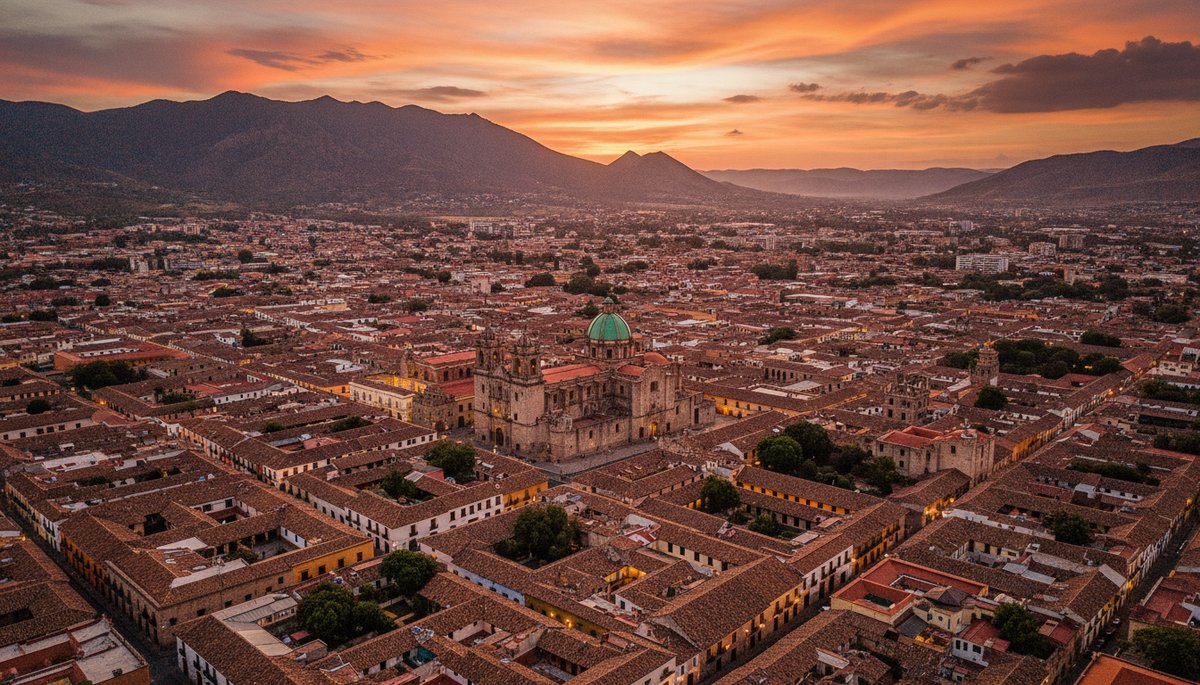
The barrio of Jalatlaco — cobblestone streets, pastel facades, tucked-away cafes — is the neighborhood most nomads and slow travelers end up loving most. The broader historic center anchors around the Zócalo (main plaza) and the jade-green Templo de Santo Domingo, both worth lingering at morning and evening when the light is best.
Is Oaxaca Good for Digital Nomads?
Yes, and increasingly so. Oaxaca has earned a reputation as one of Mexico's best mid-sized nomad bases for a few reasons that go beyond the obvious.
Cost of living is genuinely low. Our research into 2026 nomad cost data puts a comfortable solo month in Oaxaca at roughly $800–$1,400 USD, depending on accommodation choice. Furnished apartments in Jalatlaco and Reforma rent for the equivalent of $400–$750/month. Market meals (comedores) cost $2–4 USD. Coworking day passes run $10–15 USD, and monthly memberships are significantly cheaper.
Internet is reliable enough for most remote work. Home internet in the popular central neighborhoods averages 50–100 Mbps, which handles video calls and cloud work comfortably. Gubixi Coworking is frequently cited as the fastest option in the city, with speeds reportedly reaching 300 Mbps. For important calls, a dedicated coworking space or a personal hotspot backup gives you peace of mind.
The community is real but not overwhelming. Oaxaca draws nomads who chose the city deliberately — for the food, culture, and pace — rather than travelers cycling through on a highlights tour. The community is small enough that you actually meet people.
If you're planning to stay multiple weeks or months and want a read on the visa situation, our guide to working remotely on a tourist visa covers the practical and legal angles for Mexico.
Staying Connected in Oaxaca
One thing worth sorting before you land: Mexican SIM cards from airport kiosks are often overpriced and under-powered. An Airalo Mexico eSIM is a faster and cheaper solution — you activate it before your flight, and you are online the moment you step off the plane at OAX. Airalo offers Mexico data packages starting at a few dollars for short trips, up to larger monthly buckets for longer stays.
Affiliate link — we may earn a commission at no extra cost to you.
For a full checklist of what to set up before a long nomad stint, check out our digital nomad starter kit.
Is Oaxaca Safe for Tourists in 2026?
Oaxaca City is safe for tourists. The US State Department rates Oaxaca state at Level 2: Exercise Increased Caution — the same advisory level applied to France, Germany, and dozens of other popular travel destinations. The crime that drives the state-level rating is concentrated in rural areas and the Isthmus of Tehuantepec region, far from the city and tourist corridors.
Practical precautions for the city:
Use hotel-arranged taxis or ride-sharing apps rather than flagging down unmarked vehicles
Keep bags close in markets; petty theft (pickpocketing) is the main risk in crowded areas
The main day-trip routes — Monte Albán, Hierve el Agua, Mitla — are well-traveled and considered safe, especially with a reputable tour operator
Check the latest advisory at travel.state.gov before you go, particularly if you plan to travel outside the city
The Guelaguetza festival itself draws large, festive crowds. General common-sense festival rules apply: watch your belongings, keep a phone charged, and stay aware in dense crowds.
How Many Days Do You Need in Oaxaca?
Four to five days covers the city highlights, one or two day trips, and enough time to genuinely settle into the food scene. That said, Oaxaca is a place that rewards staying longer. One week is better; two weeks lets you slip into a comfortable routine.
If you are visiting specifically for the Guelaguetza, structure your trip around the performance dates:
Arrive a few days before July 20 to catch the warm-up events and secure vouchers for free sections if needed
Stay through both Mondays (July 20 and 27) for both performances
Use the days between to do Monte Albán, day trips, and mezcal tours
Nomads typically book one to three months, finding that the pace, cost, and food quality make Oaxaca one of the easier places to be genuinely productive.
How to Get to Oaxaca
By air: Oaxaca International Airport (OAX) is 10 km south of the city center. Aeroméxico, Volaris, and VivaAerobus all serve the Mexico City (MEX)–Oaxaca route with multiple daily flights; travel time is around one hour. Direct international connections exist from some US cities via connecting flights. From the airport, fixed-rate taxis to the city center charge a modest flat fare.
By bus from Mexico City: ADO and OCC operate first-class overnight buses from TAPO (Terminal de Autobuses de Pasajeros de Oriente, near Metro San Lázaro) in Mexico City to Oaxaca. The journey takes roughly six hours; you can book an overnight departure, skip a hotel night, and arrive in Oaxaca in the early morning. Tickets run approximately 520–680 MXN one-way and can be booked online at ado.com.mx.
Getting around the city: Oaxaca's historic center is very walkable. Taxis are inexpensive for anything further out. For day trips, organized tour minibuses are the most hassle-free option and often the safest choice on rural roads.
Best Time to Visit Oaxaca
July is peak season thanks to the Guelaguetza, so expect higher accommodation prices and full hotels during the festival weeks. The broader dry season (October through April) is the most comfortable weather window, with clear skies and cooler evenings.
The rainy season (May through September) brings afternoon showers — usually quick and intense rather than all-day — and significantly lower accommodation prices. If you are visiting outside the festival period, the shoulder months of May, June, or September offer a good balance of manageable weather and lower costs.
Oaxaca rewards the kind of traveler who slows down, eats well, and pays attention. The Guelaguetza is a once-in-a-lifetime cultural experience — but the city is worth the trip any time of year. Whether you are coming for one week or three months, it tends to stay with you. Plan around the digital nomad starter kit essentials, sort your connectivity with an Airalo Mexico eSIM, and book your Guelaguetza tickets through Superboletos the moment they go on sale.
Affiliate link — we may earn a commission at no extra cost to you.
Frequently Asked Questions
When is Guelaguetza 2026?
How much do Guelaguetza 2026 tickets cost?
Is Oaxaca good for digital nomads?
Is Oaxaca safe for tourists in 2026?
How many days do you need in Oaxaca?
You Might Also Like

Travel + Remote Work Briefing — October 18, 2026

Travel + Remote Work Briefing — October 17, 2026
Travel + Remote Work Briefing — October 15, 2026