
Best US Cities for Remote Workers Summer 2026
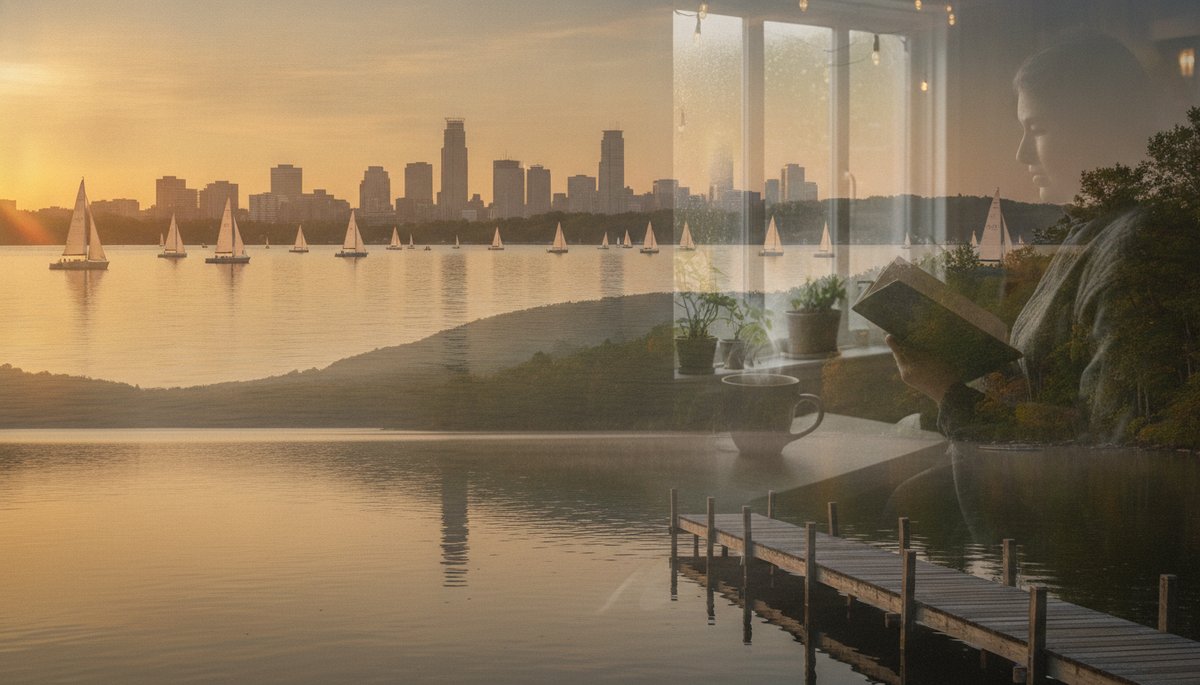
Best US Cities for Remote Workers Summer 2026
Summer 2026 is shaping up to be the most domestic-heavy US summer in years for remote workers. Booking.com's mid-May data shows US domestic accommodation searches up 21% year-over-year and US domestic flight searches up 29% YoY for June-August check-in dates — and a few cities are absolutely on fire (Austin's accommodation searches are up 423% YoY). The catch? A lot of the trendiest picks are also brutally hot in July. This guide gives you the cool-weather, cost-conscious shortlist, with WiFi reality checks and a 30-day road-trip plan you can actually pull off.
Quick Answer: For summer 2026, the strongest cooler-weather US remote-work cities are Minneapolis MN, Portland OR, Burlington VT, Bend OR, and Asheville NC — all averaging July highs in the low 80s°F, all with real coworking and cafe infrastructure. Skip Austin (avg July high ~96°F) until fall. Budget a 30-day trip at $2,200-$3,500 for a single nomad, rent a car for everything except Portland, and carry an Airalo USA eSIM so a flaky Airbnb router doesn't cost you a meeting.
Disclosure: This post contains an affiliate link. If you make a purchase through it, we may earn a small commission at no extra cost to you. We only recommend products we genuinely use and believe in.
Where Are Remote Workers Traveling in the US This Summer?
Domestic travel. Lots of it, and earlier than usual. According to Booking.com's Great American City Break report, US travelers' searches for domestic accommodation are up 21% YoY for summer 2026, and domestic flight searches are up 29% YoY — both based on searches made between March 1 and May 15, 2026 for June 1-August 30 stays. Expedia's Unpack '26 Summer report adds context: travelers are choosing shorter, closer, more measured trips, often city breaks built around live music, food, and sports rather than long international resort stays.
For remote workers, that means three real-world consequences. First, popular city Airbnbs are filling up earlier — last-minute summer availability in mid-tier markets is getting tight by mid-June. Second, flights between hub cities are pricier than they were in 2025 on the same routes. Third, the "trending" lists are dominated by hot-weather destinations (Austin, Florida, Phoenix-adjacent metros) that don't actually make sense if you need to think clearly at 2 p.m. for a Zoom call. That's the gap this guide fills.
If you're putting together your kit before you go, our digital nomad starter kit covers the gear and accounts to set up first; this guide focuses on where.
What Are the Best Cool-Weather US Cities for Remote Work This Summer?
The honest shortlist of US cities where you can keep a normal workday in July without your laptop overheating on a patio: Minneapolis MN, Portland OR, Burlington VT, Bend OR, and Asheville NC. All five sit around 82-83°F average July highs, all have real (not theoretical) coworking infrastructure, and all give you a meaningful outdoor "after-work" payoff — lakes, rivers, mountains, or trails within a 10-minute drive.
1. Minneapolis, MN — The All-Around Pick
Avg July high: ~83°F.
Why it works: Twin Cities punches way above its weight on remote-work infrastructure. Strong fiber footprint, lots of independent coffee shops with usable WiFi, lakefront paths (Lake Harriet, Lake of the Isles, Lake Calhoun/Bde Maka Ska) for lunch walks, and an MSP airport that connects everywhere domestic.
Coworking: WeWork Capella Tower downtown, plus local picks like CoCoMSP-area spaces and Industrious in the North Loop.
Watch out for: Mosquitos near the lakes at dusk, and sudden Midwest thunderstorms that can knock out residential WiFi briefly — see the eSIM section.
2. Portland, OR — Best Car-Free Option
Avg July high: ~83°F (occasionally hotter heatwaves push above 90°F for 2-4 day stretches).
Why it works: Best US remote-work city you can do without a car. MAX light rail, bike lanes, and walkable Pearl District / Alberta / Hawthorne neighborhoods. Cafe density is genuinely world-class.
Coworking: WeWork US Bancorp Tower, CENTRL Office (multiple locations), Hatch.
Watch out for: Heat dome events — keep a Plan B (a strongly AC'd coworking day pass) for the 3-5 days each summer when Portland gets uncharacteristically hot.
3. Burlington, VT — The Lake Champlain Pick
Avg July high: ~82°F.
Why it works: Small (pop. ~45k) but college-town walkable, with Lake Champlain at the doorstep and the Adirondacks across the water. Quietest of the five — easier for deep work, fewer distractions.
Coworking: Hula on the lakefront is the standout. Multiple cafes downtown on Church Street.
Watch out for: Smaller flight network out of BTV — usually need to connect through Boston, NYC, or Philly.
4. Bend, OR — Mountain-Town Remote Work
Avg July high: ~83°F, dry, low humidity.
Why it works: High-desert town surrounded by the Cascades. Deschutes River runs through downtown. Outdoorsy weekend payoff is unmatched: Smith Rock, Mt. Bachelor, dozens of trails within 30 min.
Coworking: The Haven, BendTECH, Outsite Bend.
Watch out for: Wildfire smoke risk in late July/August some years — check airnow.gov before you book a long stay.
5. Asheville, NC — Mountain-South Pick
Avg July high: ~82°F (cooler than the surrounding Carolinas thanks to elevation).
Why it works: Blue Ridge Parkway out the back door, real food/brewery scene, strong independent cafe culture in River Arts District and downtown.
Coworking: THRIVE in the Grove Arcade, Hatch Coworking downtown.
Watch out for: Summer afternoon thunderstorms are routine — finish outdoor meetings by 2 p.m. when possible.
Honorable mentions worth a look if those five don't fit: Bozeman MT (CoWork Bozeman, mountain access, but pricey housing for what it is), Duluth MN (Duluth Creative coworking on Superior Street, Lake Superior, genuinely cool summers in the 70s°F), and Pittsburgh PA (cheap, underrated, July highs in the low-mid 80s°F).
Why Is Austin +423% in Summer Searches — and Should You Go?
Austin's accommodation searches are up roughly 423% YoY for summer 2026 per Booking.com — by far the biggest jump of any major US city. The pull is real: live music, food, a strong tech-job scene, and a city marketing engine that's been excellent for a decade. But for working remotely in July specifically, the math doesn't work.
Average July high in Austin is around 96°F, with afternoons routinely touching 99°F-plus and overnight lows in the mid-70s. That means: no comfortable outdoor lunch breaks, no patio happy hours until well past 8 p.m., a dependence on heavily AC'd indoor spaces (which spikes your coworking and cafe spending), and the very real risk that the Airbnb's AC unit is the difference between a productive week and a miserable one.
Better play: if Austin is on your bucket list this year, target late September through early November. Same city, average highs drop into the 80s°F, ACL Festival in early October, and the Airbnb rates ease post-summer. Use Memorial Day through Labor Day for the cooler picks above and save Austin for fall.
What's the Cheapest US City for a Month of Remote Work This Summer?
For a 30-day stay where housing is the dominant cost, Pittsburgh, PA is the realistic answer for most remote workers — cheap monthly Airbnbs (often $1,400-$1,800 for a 1BR in a good neighborhood), surprisingly walkable in Shadyside/Lawrence/Squirrel Hill, July highs in the low-80s°F, and a quietly excellent food scene. Memphis TN and Green Bay WI are the next-cheapest options, with Green Bay specifically ranked No. 1 for affordability in recent remote-work studies (top-25% on internet speed and quality of life).
Realistic 30-day budget breakdown for a single person in Pittsburgh:
Line item | Range |
|---|---|
Monthly Airbnb (1BR) | $1,400-$1,800 |
Coworking day passes (2-3/week) | $160-$240 |
Groceries | $300-$400 |
Eating out (modest) | $300-$500 |
Transit + occasional rideshare | $80-$150 |
Airalo USA eSIM backup | $20-$30 |
Total | ~$2,260-$3,120 |
That's well under the $3,500-$4,500 you'd spend doing the same month in Denver, Seattle, or NYC.
How Do You Stay Connected Across Multiple US Cities?
The honest answer: assume some WiFi will fail, and have a backup ready before it does. The three failure modes that wreck remote-work trips are (1) Airbnb routers that the host hasn't restarted in 6 months, (2) cafes with capped or filtered WiFi that block video calls, and (3) coworking day-pass guest networks that throttle after 30 min. A US data eSIM solves all three.
Airalo USA eSIM is the cleanest backup. You install it before you leave home, it activates the moment you land or cross a state line, and you can tether your laptop to your phone hotspot for any call that the Airbnb or cafe WiFi can't handle. Coverage runs on T-Mobile and AT&T networks across all 50 states, so it works in Minneapolis, Bend, Burlington, and Asheville equally — no per-state setup. Pricing is per-GB, which suits the "use it only when WiFi dies" pattern far better than a US prepaid phone plan.
If you want the full kit (laptop stand, noise-canceling headphones, the right power bank), our guide to travel gadgets for digital nomads covers what to pair the eSIM with.
One more practical note: on day one in each city, run a Speedtest on both the Airbnb WiFi and your Airalo connection in the room you'll work from. If WiFi is under 25 Mbps down / 5 Mbps up, plan to do calls on the hotspot from the start of the trip rather than scrambling mid-meeting.
What's the Best US City for Outdoor Weekends + Weekday Remote Work?
Bend, OR if you're a mountains-and-rivers person. Asheville, NC if you're a hiking-and-breweries person. Both punch well above their size on outdoor-payoff-per-square-mile, and both have enough WiFi and coworking infrastructure that a Monday-to-Thursday workweek works without compromise.
The Bend case is strongest if you ski/snowboard (Mt. Bachelor opens early-season), climb (Smith Rock is 30 min north), or paddle (the Deschutes River runs through downtown). Asheville's case is strongest if you like a denser walkable downtown plus easy access to the Blue Ridge Parkway and Great Smoky Mountains on weekends. Both have small but real airports (RDM, AVL), so you can fly out for the occasional in-person work trip without a 4-hour drive.
For an even more remote/quiet outdoor option, Jackson Hole WY is a real (if pricey) third pick — covered in our Jackson Hole guide.
How Do You Plan a 30-Day US Remote-Work Road Trip on a Budget?
The repeatable playbook for a 30-day US remote-work road trip is: pick two or three cities (not five), do 8-12 nights in each, book monthly-discounted Airbnbs rather than nightly stays, and use Airalo USA eSIM as your tether-anywhere backup so a single bad router doesn't tank a week.
A worked example — 30 days, cool-weather, ~$2,800 single nomad
Week 1-2 (Minneapolis): Fly in Sunday, monthly-discounted Airbnb in Northeast or Uptown ($1,000 for ~12 nights), day pass at WeWork or a local coworking 2-3 times a week. Lake walks at lunch. Weekend trip to Stillwater or the North Shore.
Week 3-4 (Burlington): Drive or fly to BTV (cheaper to drive if you have a car; the route via Chicago is long but doable as two driving days). Lakefront Airbnb 12 nights (~$1,000). Coworking at Hula. Weekend in the Adirondacks or up to Montreal (passport!).
Buffer days: 2-3 flex nights in a midpoint city like Madison WI or Pittsburgh PA.
Cost-saving moves that actually matter
Filter Airbnb by "monthly stay" only — the 28+ night discount is usually 20-40% off nightly rates. That alone often beats hotels and most apartment-rental platforms.
Buy coworking day passes, not memberships, for stays under 3 weeks. Memberships rarely pay off below a 4-week stay.
Eat one real meal out per day, max — cook breakfast and lunch in the Airbnb. This single rule saves more than every other tactic combined.
Carry an Airalo USA eSIM instead of paying a US prepaid SIM activation fee in each city.
Drive between cities you can drive, fly between ones you can't. The savings on one-way rental car fees often beat short flights.
For the broader trip-planning stack — flights, accommodation alerts, and AI tools that actually save money — our AI tools for budget travelers guide goes deeper on the booking side.
The Bottom Line
The trending list for summer 2026 (Austin, Florida cities, etc.) is shaped by demand, not by livability for remote workers in July. The actually-livable shortlist is shorter, cooler, and cheaper: Minneapolis, Portland, Burlington, Bend, and Asheville, with Pittsburgh as the budget standout. Add a US data eSIM as your "in case the WiFi dies" insurance, stack two monthly Airbnbs back-to-back, and you've got a workweek-friendly, weekend-rewarding 30 days for $2,500-$3,000 — without the 99°F afternoons.
Pack your laptop, your Airalo eSIM, and a real plan for where you'll work when the router quits. You'll like summer 2026 a lot more than the trending list suggests.
Frequently Asked Questions
What is the best US city for remote work in summer 2026?
Is Austin too hot for remote work in July?
How do I stay online when WiFi at an Airbnb or cafe fails?
What's a realistic budget for a 30-day US remote work trip in summer 2026?
Should I rent a car for a US remote-work summer trip?
You Might Also Like
Travel + Remote Work Briefing — October 18, 2026
Travel + Remote Work Briefing — October 17, 2026

Travel + Remote Work Briefing — October 15, 2026