
AI Travel Insurance Cuts Claims From Weeks to Hours
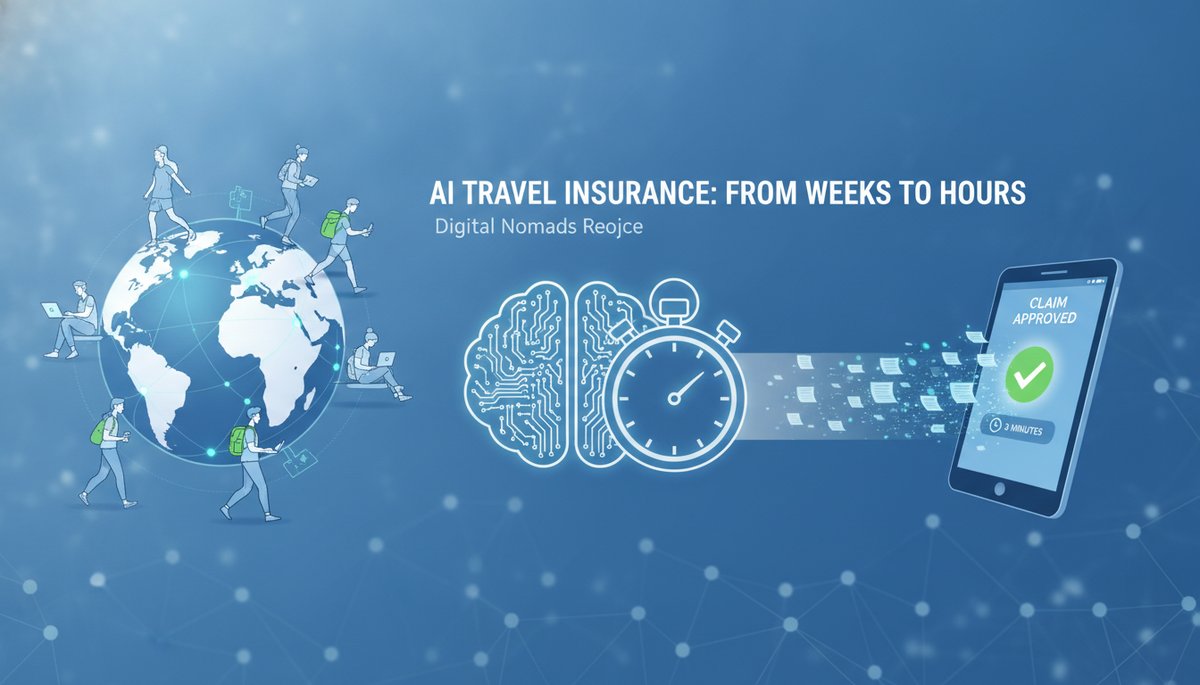
Travel insurance has long been the category remote workers tolerate rather than trust: file a claim, wait weeks, receive a check that arrives after the crisis has passed. A new wave of AI-native insurtech companies is working to collapse that timeline to hours — and the shift is drawing serious investor attention in 2026.
Faye, an AI-powered travel insurance startup whose July 2024 Series B raised $31 million and pushed total funding to $49 million, was built on the premise that claims should be handled digitally and resolved quickly. The round was led by Portage Ventures, with participation from Munich Re Ventures and others. The company's Faye Wallet feature loads approved funds onto a digital card that can be added to Apple Pay or Google Pay — so a traveler whose bag is lost at an airport can buy replacement clothing without paying out of pocket first. According to Faye's own documentation, the company aims to process claims within 48 hours of receiving all necessary information.
Faye is not the only insurtech betting on this model. Genki, which provides international health insurance specifically for digital nomads and long-term travelers and has covered more than 75,000 travelers from 196 countries, acquired Wave Claims and its Claim OS platform in July 2026 — the company's first acquisition. That platform reads medical paperwork automatically, organizes it into structured data, codes diagnoses to international ICD standards, and flags unusual patterns as potential fraud signals. The acquisition marks how central AI claims infrastructure has become to competing in nomad-focused insurance.
The broader market data supports the urgency. According to FinanceX Magazine's analysis of Q1 2026 global InsurTech funding, more than 95 percent of the $1.63 billion raised that quarter — spread across 68 deals — went to AI-focused insurtech companies, a 27 percent increase year over year. Operationally, the same analysis found that straight-through processing rates across the sector have jumped from 10 to 15 percent to between 70 and 90 percent, and that underwriting timelines have compressed from three days to three minutes at leading platforms.
What This Means for Remote Workers and Nomads
For years, the practical calculus for long-term travelers was simple: travel insurance is worth buying for catastrophic coverage, but don't count on it for the friction of everyday disruptions — delayed flights, lost luggage, a clinic visit in a country where you don't speak the language — because claims take too long and require too much paperwork to be worth the effort while you're still on the road.
That calculus is changing. When claims pay out in hours rather than weeks, and when funds land in a digital wallet you can spend immediately, insurance becomes a usable tool rather than a retrospective reimbursement. For digital nomads and remote workers who treat travel as a baseline rather than an occasional trip, the ability to file a claim via a mobile app mid-trip and receive funds before the situation worsens changes the practical risk profile of working abroad. The AI investments flowing into this sector — and the product decisions companies like Faye and Genki are making — suggest the industry is structurally moving toward the real-time model, not just experimenting with it.
Sources
Faye raises $31 million Series B for fintech platform for travelers — Calcalist Tech, accessed August 5, 2026
How to file a travel insurance claim quickly — Faye Blog, accessed August 5, 2026
InsurTech 2026: AI Claims, $108M Deals & Parametric Boom — FinanceX Magazine, accessed August 5, 2026
Genki Acquires AI Insurtech Startup Wave Claims and Claim OS — PRWeb, accessed August 5, 2026
You Might Also Like

Travel + Remote Work Briefing — October 24, 2026

Travel + Remote Work Briefing — October 22, 2026

Travel + Remote Work Briefing — October 21, 2026