Dallas World Cup 2026: Stadium, Transit & Travel Guide
Dallas World Cup 2026: Stadium, Transit & Travel Guide
The Dallas-Fort Worth-Arlington metro is hosting nine matches at the 2026 FIFA World Cup — more than any other venue in the tournament. That includes a semifinal. Whether you're arriving for one group-stage game or staying through the knockout rounds, this guide covers everything from the airport to the stadium, where to stay across the sprawling DFW area, and how to actually get around a region that was not built for non-drivers.
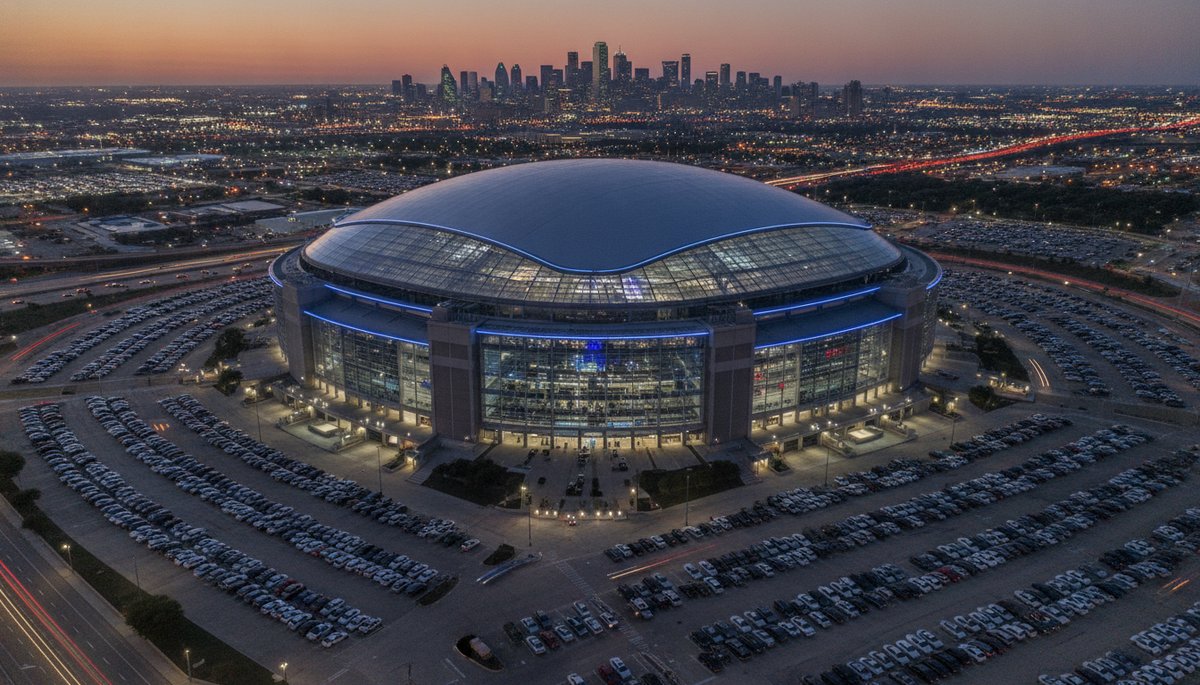
Quick Answer: Dallas's World Cup venue is AT&T Stadium in Arlington (officially "Dallas Stadium" during FIFA), with a capacity of ~94,000 — the largest in the tournament. Nine matches run June 14 through July 14, including Argentina, England, Netherlands, and a semifinal. Arlington has no public transit, so fans without a car use the TRE commuter train + charter bus, DART express buses, or rideshare. The fan festival is at Fair Park in Dallas, reached directly by DART Green Line rail.
Disclosure: This post contains affiliate links. If you make a purchase through these links, we may earn a small commission at no extra cost to you. We only recommend products we genuinely believe in.
Getting to DFW: Which Airport Should You Use?
The Dallas-Fort Worth area is served by two airports:
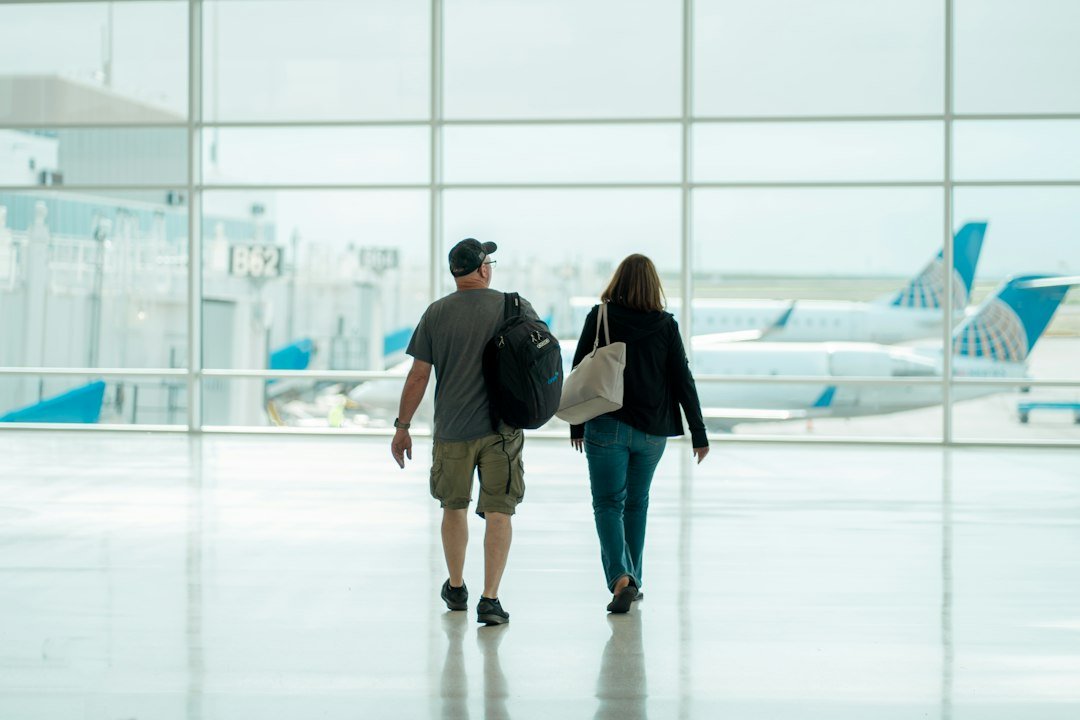
Dallas/Fort Worth International Airport (DFW) is the primary international gateway and the closer airport to AT&T Stadium — roughly 11–16 miles, approximately 20 minutes by car in normal traffic. It has five terminals, direct international routes from Europe, Latin America, and beyond, and the DART Orange and Blue Lines connect it to downtown Dallas.
Dallas Love Field (DAL) is the Southwest Airlines hub about 15–20 miles from AT&T Stadium — around 25 minutes. It handles primarily domestic US flights. DART's Orange Line connects it to downtown Dallas in about 25 minutes.
For most international travelers, DFW is the better choice for this tournament: more routes, easier transfer connections, and marginally shorter ground travel to Arlington.
From either airport to your hotel, rideshare (Uber/Lyft) is the default. DART rail from DFW drops you at Victory Station in downtown Dallas, from where TRE and DART buses connect onward.
How Do You Get to AT&T Stadium Without a Car?
Arlington is the largest city in the United States without a public mass transit system. There is no rail line, no local bus network, and no light rail stop at the stadium. This is the single biggest logistics challenge of the Dallas World Cup, and it requires planning before match day.
Your options:
Option 1: Trinity Railway Express (TRE) + Charter Bus
The most reliable car-free route to the stadium:
- Board the TRE commuter train at Victory Station in downtown Dallas or Fort Worth Central Station in downtown Fort Worth. The one-way fare is roughly $9 for a regional day pass (GoPass app).
- Ride to CentrePort/DFW Airport Station.
- Board a complimentary charter bus (reserved for match-ticket holders) that runs to the Bus Hub just north of Dallas Stadium — about a 10-minute walk to the gates.
For the World Cup, the TRE is running enhanced service with expanded trains (four cars, augmented by equipment leased from Minnesota's Northstar commuter line). Trains run every 30 minutes on match days.
Tip: Buy your TRE ticket on the GoPass app before game day. Return queues for the bus and train after the final whistle can be long — build in at least 45 minutes of buffer.
Option 2: DART Express Bus Bridge
DART is running an express bus service of approximately 50 buses between Dallas and Arlington on I-30, dropping fans at Lot H near the stadium. This is the best option if you're staying in central Dallas without easy TRE access.
Option 3: Rideshare (Uber/Lyft)
The simplest option for those staying in Arlington or who want door-to-door service. There is a designated rideshare pickup and drop-off lot about a half-mile from the stadium entrance. On match days, surge pricing will apply — budget accordingly and book early.
Option 4: Drive and Park
Official match-day parking at Dallas Stadium is managed through FIFA's partner JustPark: $75 per space for group stage and Round of 32 matches, $100 for Round of 16, and $125–$175 for the semifinal. Pre-book online — lots fill up fast and walk-up availability is limited.
Staying Connected in Dallas
Coordinating stadium transit, rideshare pickups, and group meet-ups across the DFW sprawl without reliable data is a real problem. If you're also watching games in Mexico or crossing into another host city, the Airalo USA & Mexico Unlimited eSIM covers both countries on a single plan — no SIM swap at the border. As part of Airalo's World Cup 2026 promotion, the USA & Mexico Unlimited plan is 26% off through July 18, 2026. (Affiliate link — I may earn a commission at no extra cost to you.)
Install before you fly, activate on landing, and you'll have your own data plan independent of whatever the stadium network looks like at 94,000 capacity. If you're planning a multi-country tournament trip, see our no-SIM-swap multi-country World Cup plan or the full best eSIM for the 2026 World Cup comparison.
Dallas and the 2026 World Cup: The Stadium
Dallas Stadium (AT&T Stadium), Arlington
AT&T Stadium carries the commercial name it was built with, but during the FIFA tournament it is officially designated Dallas Stadium — a standard FIFA naming practice that removes commercial brand names from tournament venues. The stadium is in Arlington, Texas, roughly midway between Dallas and Fort Worth.
For the 2026 World Cup, it is the largest venue in the tournament, with a configured capacity of approximately 94,000 spectators. Preparing it for soccer required over $350 million in renovations: the natural-grass pitch was raised several feet to be installed over the existing turf, all club-level seating was reconfigured to widen the field to FIFA standard, new field-level hospitality suites were added, the center-hung video board was upgraded, and concession infrastructure was expanded.
Match Schedule: Nine Matches (Most in the Tournament)
Dallas hosts nine 2026 World Cup matches — the most of any venue:
Group Stage (five matches):
- June 14 — Netherlands vs Japan (Group F), 3:00 pm CT
- June 17 — England vs Croatia (Group L), 3:00 pm CT
- June 22 — Argentina vs Austria (Group J), 12:00 pm CT
- June 25 — Japan vs European Playoff B Winner (Group F), 6:00 pm CT
- June 27 — Jordan vs Argentina (Group J), 9:00 pm CT
Knockout Rounds (four matches):
- June 30 — Round of 32: Côte d'Ivoire vs. Norway, 12:00 pm CT
- July 3 — Round of 32: Australia vs. Egypt, 1:00 pm CT
- July 6 — Round of 16, 2:00 pm CT
- July 14 — Semifinal: Spain 2–0 France, 2:00 pm CT
Semifinal result: Dallas's semi-final was Spain 2–0 France at AT&T Stadium (Dallas Stadium) on Tuesday, July 14. Spain advanced to the Final and went on to win the 2026 World Cup, beating Argentina 1–0 after extra time at MetLife Stadium in New York/New Jersey on July 19.
Confirmed group-stage nations include Argentina (two group games), England, Netherlands, Japan, Croatia, and Jordan.
Fan Festival at Fair Park
The official FIFA Fan Festival is at Fair Park, the historic 1-million-square-foot fairgrounds in east Dallas. It runs the full tournament — June 11 through July 19 — with free and ticketed areas, live match broadcasts on giant screens, concerts (confirmed: Major Lazer, the Latin Legacy Tour, Turnpike Troubadours), interactive games, cultural showcases, and food. Capacity is up to 35,000 fans.
Getting there: The DART Green Line stops directly at Fair Park Station — no car needed. From downtown Dallas hotels, it's a straightforward trip. Bars and restaurants line Exposition and Parry avenues adjacent to the park.
Where to Stay: Navigating the DFW Triangle
Dallas-Fort Worth is a sprawling metro of six million people spread across dozens of cities. Where you stay determines how your match days unfold.
Book now: As of early 2026, an estimated 85–90% of hotel inventory in Arlington and downtown Dallas is reserved for World Cup dates. Arlington Entertainment District hotels are effectively sold out for match nights.
Arlington (Closest to the Stadium)
The most practical base if you're attending multiple matches and want to minimize transit logistics. The Entertainment District around AT&T Stadium is designed for sports crowds — the Texas Live! complex is steps from the stadium with sports bars, restaurants, and live music. Live! by Loews is directly across the street. Rates are highest here, and there's not much to do beyond the stadium ecosystem. Best for: fans attending three or more matches who prioritize convenience over character.
Downtown Dallas
A solid central hub roughly 20–25 miles from the stadium by car or transit. Walkable by Texas standards, dense with hotels across all price points, connected to everything by DART rail and TRE. Easy rideshare to the stadium, walking distance to the Fan Festival via DART Green Line. Best for: first-time Dallas visitors who want to explore the city between matches, and anyone not attending every game.
Uptown Dallas
Dallas's most walkable neighborhood, centered on Klyde Warren Park (a landscaped deck park built over a freeway), Victory Park, and the Arts District. Excellent restaurants and nightlife. Easy rideshare to the stadium, DART connection available. Best for: travelers who want Dallas's best food-and-drink scene as their base.
Fort Worth (The Sleeper Pick)
Fort Worth hotels are running 30–50% lower rates than Dallas during the tournament, and the TRE from Fort Worth Central Station is one of the cleanest transit options to the stadium. The Stockyards National Historic District is genuinely worth a visit — twice-daily longhorn cattle drives, honky-tonks, world-class Texas BBQ. About 30 miles from AT&T Stadium. Best for: budget-conscious fans and anyone who wants an experience beyond soccer crowds.
Getting Around the DFW Area
Dallas is built for cars. The DART rail network (Green, Orange, Blue, Red Lines) covers downtown Dallas, Uptown, Addison, Garland, and DFW Airport — but stops before it reaches Arlington or Fort Worth's main attractions.
DART Light Rail is useful for: airport arrivals (Orange/Blue Line from DFW), Fair Park Fan Festival (Green Line), and moving around central Dallas.
Trinity Railway Express (TRE) is the commuter rail that connects downtown Dallas (Victory Station) to downtown Fort Worth (Fort Worth Central) with stops at CentrePort/DFW Airport and several suburbs. It's the spine of stadium transit — but always ends with a bus transfer.
Rideshare (Uber/Lyft) is the default for anything the rail network doesn't cover, including the stadium itself. The DFW metro is heavily rideshare-dependent; both apps have strong driver availability.
Driving is efficient outside peak hours but congested during match days. If you're renting a car, be aware that I-30 between Dallas and Arlington backs up significantly before and after games.
Things to Do in Dallas-Fort Worth
Dallas and Fort Worth offer enough to fill a week. A few verified highlights:
Klyde Warren Park (Dallas): A 5-acre deck park built over Woodall Rodgers Freeway, connecting Downtown to Uptown. Free, open daily, with food trucks, free concerts, fitness classes, and a sculpture garden. One of the best free public spaces in Texas.
Deep Ellum (Dallas): The city's historic music district — birthplace of Dallas blues and jazz, now the most concentrated nightlife neighborhood in North Texas. Dozens of murals, independent restaurants, and live music venues on every block.
Perot Museum of Nature and Science (Dallas): World-class science museum in a striking building near Victory Park. Tickets are timed, book online. Good option for a non-match afternoon with kids or a break from the heat.
Fort Worth Stockyards National Historic District: The most authentically Texan experience in the metro. A twice-daily longhorn cattle drive runs down Exchange Avenue. The Stockyards Hotel, Billy Bob's Texas (the world's largest honky-tonk), and a cluster of excellent BBQ joints are all within walking distance. Reachable by TRE from Dallas.
Fair Park (Dallas): Beyond the Fan Festival, Fair Park's 1930s Art Deco buildings and museums — including the Dallas Museum of Art annex, the Aquarium, and the Texas Discovery Gardens — are worth a slow afternoon.
Before You Go: Practical Logistics
Currency: US dollars; ATMs widely available. No transaction fee worries on most US credit cards.
Heat: Dallas in June and July is hot — regularly 95–100°F (35–38°C) with high humidity. The stadium is fully air-conditioned for indoor seating, but the walk from the transit hub and tailgating areas are open-air. Pack sunscreen and hydrate.
Language: English. DFW has a large Spanish-speaking population; menus and transit signage are often bilingual.
Driving: Texas law requires a valid driver's license. International visitors can drive on their home license for up to 90 days. Traffic is heavy during match days — plan an extra 30–45 minutes each way if driving.
For context on traveling across multiple host cities, our World Cup 2026 host cities travel guide covers the full picture. If you're pairing Dallas with a US coastal match, check the guides for World Cup 2026 in Los Angeles and World Cup 2026 in Miami.
Ready to sort your connectivity before you fly? The Airalo USA & Mexico Unlimited eSIM covers both the US and Mexico on one plan — no SIM swap if you're crossing the border for more games. (Affiliate link — I may earn a commission at no extra cost to you.)
Frequently Asked Questions
How many World Cup 2026 matches does Dallas host?
How do you get to AT&T Stadium without a car for World Cup 2026?
Which airport is closer to AT&T Stadium — DFW or Love Field?
What is the capacity of Dallas Stadium (AT&T Stadium) for the 2026 World Cup?
Where is the FIFA Fan Festival in Dallas for the 2026 World Cup?
You Might Also Like
Travel + Remote Work Briefing — October 24, 2026
Travel + Remote Work Briefing — October 22, 2026
Travel + Remote Work Briefing — October 21, 2026