Mexico City Independence Day 2026: El Grito Guide
Mexico City Independence Day 2026: Your El Grito Guide
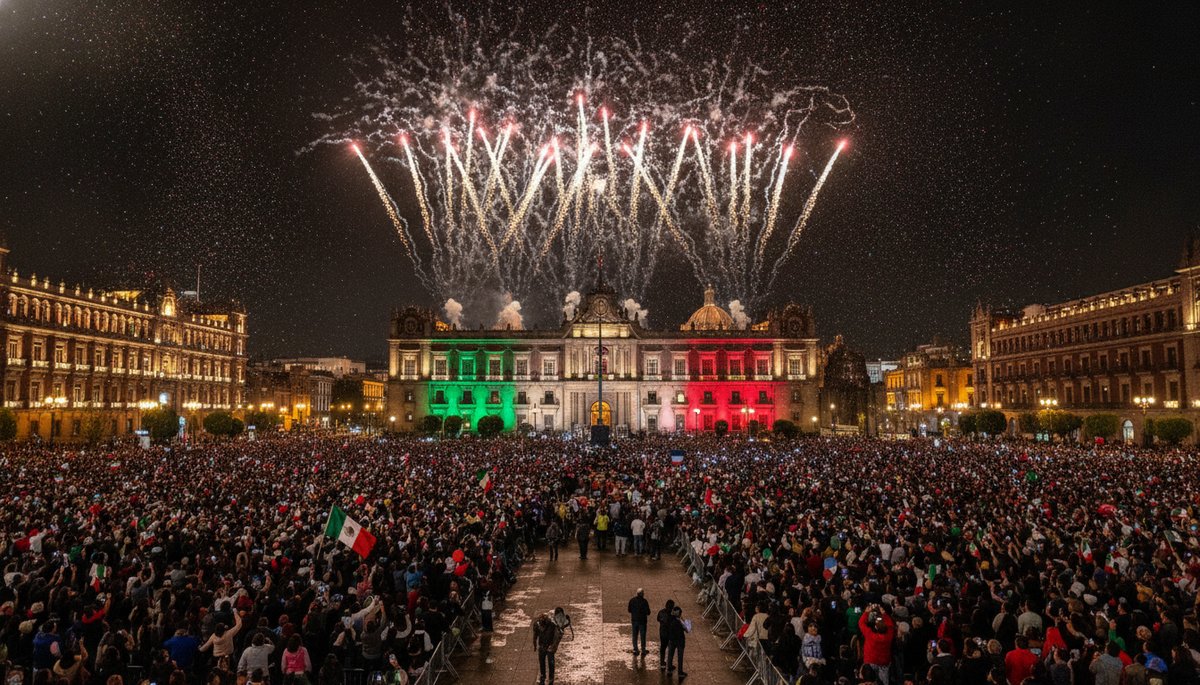
Every year on the night of September 15, something extraordinary happens in the heart of Mexico City. Hundreds of thousands of people pack the Zócalo — one of the world's largest city squares — to watch the President ring Hidalgo's historic bell and shout the cry that launched Mexican independence back in 1810. Fireworks erupt over the National Palace. The crowd roars back. The whole city feels electric.
Whether you're a traveler landing in CDMX specifically for the celebrations, a digital nomad who happens to be based there in September, or a local looking to plan your weekend, this guide covers what to expect: the ceremony logistics, the Sept 16 parade, where to eat, rooftop alternatives to the Zócalo crush, safe neighborhoods to base yourself, and how to get around without a headache.
Quick Answer: El Grito de Independencia takes place at 11:00 PM on September 15 at the Zócalo in Mexico City, led by President Claudia Sheinbaum from the National Palace balcony. Arrive by 7–8 PM for a good spot. The Sept 16 military parade follows the next morning along Paseo de la Reforma. The Zócalo/Tenochtitlan Metro station closes for the holiday — use Pino Suárez or Allende instead.
Disclosure: This post contains affiliate links. If you make a purchase through these links, we may earn a small commission at no extra cost to you. We only recommend products we genuinely believe in.
What Is El Grito de Independencia and Why Does Everyone Go to the Zócalo?
El Grito de Independencia is the moment Mexico relives the night of September 15–16, 1810, when Father Miguel Hidalgo rang the church bell in the town of Dolores and called the people to rise up against Spanish rule. That cry — the Grito de Dolores — ignited Mexico's war of independence.
Every year since, Mexican presidents have re-enacted the moment. They ring a replica of Hidalgo's original bell (which hangs above the balcony of the National Palace in Mexico City) and shout the names of the independence heroes, ending with the crowd's thunderous "¡Viva México!" In 2025, President Claudia Sheinbaum became the first woman to lead the ceremony — a historic occasion that drew even larger crowds than usual.
The Zócalo (formally the Plaza de la Constitución) is ground zero because the National Palace, which faces the square, is the seat of the Mexican presidency. Nowhere else in the country does the cry happen with the same scale: hundreds of thousands of people — documented recent ceremonies drew around 280,000 — assemble in and around the plaza each year.
How to Experience El Grito at the Zócalo: Logistics for September 15
Arrive much earlier than 11 PM. The Zócalo fills up fast. Streets start to close and crowds build throughout the afternoon. Aim to be in the plaza by 7:00–8:00 PM. A free concert typically kicks off around 8:00 PM on a main stage in the square — that's a good anchor to arrive by.
The ceremony itself is at 11:00 PM. President Sheinbaum appears on the central balcony of the National Palace, rings Hidalgo's bell, and delivers the Grito. The square responds with cheers, then fireworks light up the sky above the Cathedral and Palace. It's loud, it's packed, and it's genuinely one of the most impressive public spectacles in Latin America.
Plan your exit before the ceremony ends. Fireworks typically follow the 11 PM ceremony and last about 10–15 minutes; once they finish, every exit point fills instantly. The streets around the Zócalo will be heavily crowded for at least another hour. Staying put in the square or a nearby bar for 30–45 minutes after fireworks is often more comfortable than fighting the initial wave.
What to bring:
Cash. Street vendors selling pozole, churros, tamales, and elotes only take cash — ATMs near the Zócalo can run dry or have long lines on the night.
Comfortable shoes. You'll be standing for 3+ hours.
A light jacket. September evenings in Mexico City (altitude: 2,240 meters / 7,350 feet) cool off noticeably after 9 PM.
Wear the colors: green, white, and red. This is one of those occasions where locals genuinely embrace the dress code and it makes the atmosphere even better.
Getting to the Zócalo for El Grito: Metro and Transport Tips
Do not drive. The Historic Center shuts down to private vehicles for the celebrations, and traffic across the city is chaotic.
Metro is the best option — with one important caveat. The Zócalo/Tenochtitlan station on Line 2 closes on September 15 due to the celebrations. The Metro operates with extended hours on the night (service runs until at least midnight), but you need to use alternative stations:
Pino Suárez (Line 2 / Line 1) — roughly 5–10 minutes walk to the Zócalo
Allende (Line 2) — similar walking distance
Bellas Artes (Lines 2 and 8) — a slightly longer walk but a useful hub
San Juan de Letrán (Line 8) — good southern approach
Rideshare (Uber/DiDi) for the last mile. Use an app-based ride for getting to a Metro station or for the return trip if you miss the last Metro. App-based services are consistently safer and more transparent on pricing than street taxis — more on that in the safety section below.
What Happens on September 16: The Military Parade
The celebrations don't end at midnight. September 16 is Mexico's official Independence Day — a national holiday — and Mexico City hosts the Desfile Cívico-Militar (civic-military parade) each year.
The parade follows a route from the Zócalo along Paseo de la Reforma toward Campo Marte. It typically begins at 10:00 AM (this was the confirmed start time for the 2025 parade; the 2026 timing traditionally follows the same format). The procession includes Army, Navy, Air Force, and National Guard contingents, armored vehicles, military drones, paratroopers, and aerial flyovers by fighter jets.
The parade route along Paseo de la Reforma is one of the best spots in the city to watch: the wide boulevard gives clear sightlines, there are multiple spots to stake out along the roughly 10-kilometer route, and crowds are spread out rather than compressed into one square. Arrive at the Reforma viewing area by 9:00 AM for a comfortable position.
Street closures along Reforma and in the Historic Center will be in effect from the early morning. Metro is again the recommended transport.
What to Eat for Mexican Independence Day in CDMX
September in Mexico City is also September on the plate — and the seasonal food calendar aligns beautifully with independence celebrations.
Chiles en Nogada is the undisputed star of the season. A roasted poblano pepper stuffed with savory picadillo (a mix of meat, fruit, and spices), then topped with walnut cream sauce, pomegranate seeds, and parsley — the dish is literally the Mexican flag on a plate. It's a Puebla-origin dish available only in the late summer and early fall (when pomegranates and walnuts are fresh). Mexico City's Centro Histórico typically hosts a dedicated Chiles en Nogada festival running from mid-August through September 30, with participating restaurants across the Historic Center. This is a dish worth planning a meal around.
Pozole is the other traditional centerpiece. This thick hominy-and-pork soup gets loaded with toppings — shredded lettuce, radishes, onion, oregano, lime, and tostadas on the side. It has pre-Hispanic origins and is found at street stalls and cantinas throughout the city on independence weekend. Red and green versions (rojo and verde) are both common in CDMX.
Street food around the Zócalo on Sept 15: tamales, elotes (grilled corn), churros, tostadas, and sopes. Bring cash; vendors don't take cards.
Cantinas near the Zócalo: Traditional cantinas in Centro Histórico stay open late on Sept 15, often with live mariachi. This is the local experience — cold beer, pozole, and the sounds of the city celebrating around you.
If you want to combine a culinary experience with an Oaxacan angle later in the season, our Oaxaca's Guelaguetza festival guide covers a sister celebration where the food scene is equally unmissable.
Rooftop and Terrace Alternatives to the Zócalo Crowd
Not everyone wants to be shoulder-to-shoulder with a massive crowd at 11 PM. Fair. There are great elevated alternatives that let you watch the fireworks without the compression.
Balcón del Zócalo (Hotel Zócalo Central, 6th floor) — the rooftop restaurant looks directly over the square and the Metropolitan Cathedral. It books up for El Grito weeks in advance; reserve as early as you can.
El Mayor — a rooftop restaurant behind the Metropolitan Cathedral, with views over the Templo Mayor archaeological site and toward the National Palace. Check current reservation policy directly with El Mayor — El Grito night may differ from their usual walk-in approach; arrive early if you plan to go without a booking.
Miralto / Nivel 40 SkyBar (Torre Latinoamericana, floors 40–41) — panoramic city views from the iconic Art Deco skyscraper on Eje Central. The tower is close enough to the Zócalo that fireworks are visible in every direction. Booking ahead is strongly recommended for El Grito night.
Neighborhoods with local block parties: Roma Norte, Condesa, and Coyoacán all have their own smaller celebrations on Sept 15 — local bars put up screens, neighbors gather in parks, and the vibe is festive without the Zócalo density. This is the option that lets you celebrate, sleep at a reasonable hour, and catch the parade refreshed the next morning.
Where to Base Yourself for Independence Weekend
Roma Norte and Condesa are the best bases for most travelers and nomads. Both neighborhoods are safe, walkable, full of restaurants and cafes, and well-connected by Metro and Metrobús to both the Zócalo (for El Grito) and Paseo de la Reforma (for the parade). Roma Norte in particular has a consistent reputation as one of the lowest-crime, most tourist-friendly areas in the city.
Centro Histórico puts you walking distance from the Zócalo, which is ideal if the El Grito experience is your priority. The trade-off is that streets will be closed, noisy, and crowded on Sept 15; it's a livelier base than Roma but a less relaxed one.
Polanco is quieter and more upscale — a solid choice if you're combining the independence weekend with business or want lower street noise. It's a longer Metro or rideshare hop to the Zócalo but perfectly comfortable.
Coyoacán (south of the center) is charming and worth considering if you want a village-within-the-city feel, but the commute to the Zócalo takes about 45 minutes via Metro.
Working remotely while in Mexico? CDMX has an exceptionally strong co-working scene, particularly in Roma and Condesa. If you're weighing longer-term options, check out our overview of digital nomad visa options for 2026 — Mexico City consistently ranks as one of the most established nomad bases in Latin America.
Getting Connected in Mexico City
Mexico City has strong 4G/LTE coverage city-wide and expanding 5G in central areas, but international roaming rates can be steep. An eSIM is the cleanest solution: you install it before you fly, activate on landing, and your home SIM stays live for calls and texts.
Airalo's Mexico eSIM offers data-only plans starting from a few dollars for short stays, with longer-duration and unlimited plans available for extended trips. Plans run on the Movistar network. (Affiliate link — we may earn a commission at no extra cost to you.)
Inside the Zócalo at peak capacity on El Grito night, cellular congestion can slow networks significantly. Download offline maps (Google Maps, Maps.me) and your translation tools before you arrive at the plaza.
A Few Spanish Phrases That Will Go a Long Way
Most vendors, Metro staff, and locals in tourist areas have limited English. A handful of phrases makes a noticeable difference — and they're appreciated.
"¡Viva México!" — you will need this one. Shout it when the crowd shouts it.
"¿Cuánto cuesta?" — how much does it cost?
"Una pozole, por favor" — functional and delicious.
"¿Dónde está la salida del Metro?" — where is the Metro exit?
If you're spending more than a few days in Mexico City or plan to return, a few sessions with a native Spanish tutor can transform the experience. Preply connects you with native Spanish-speaking tutors for one-on-one video lessons at flexible times — even a couple of sessions before your trip makes a real difference at the market and the cantina. (Affiliate link — we may earn a commission at no extra cost to you.)
Is Mexico City Safe for Independence Day? An Honest Read
Mexico City carries a Level 2 (Exercise Increased Caution) US State Department travel advisory — the same level as many popular European cities. This is not a "do not travel" warning; it reflects that crime exists in a major urban area, not that tourists are in constant danger.
The Zócalo and Centro Histórico on El Grito night are heavily policed — the federal government deploys a significant security presence for the ceremony. The main risks at the Zócalo are common crowd-event concerns: pickpockets and the physical pressure of a massive crowd, not violence.
Practical precautions that matter:
Use Uber or DiDi, not street-hailed taxis. App-based rideshare has a clear safety record in CDMX; unregistered street taxis do not. This is the single most consistent piece of safety advice from locals and long-term expats.
Leave non-essentials at the hotel. At the Zócalo on El Grito night, carry only your phone (in a front pocket), a small amount of cash, and your ID. Leave the DSLR, the second card, and the passport at your accommodation.
Watch your phone in crowds. Phone theft peaks in crowded transit hubs and dense events. A simple cross-body bag or a phone kept in a front zipper pocket dramatically reduces risk.
Avoid Tepito and Doctores after dark — those neighborhoods are explicitly flagged as higher-risk in current advisories. Stay in Roma, Condesa, Polanco, or the well-lit parts of Centro Histórico.
Acclimatize to the altitude. At 2,240 meters, exertion (including hours of standing in a crowd) hits harder than at sea level. Drink water. Go easy on alcohol your first night.
In February 2026 the US Embassy lifted a nationwide security alert it had issued during operations tied to a cartel leader's killing; that alert was not specific to Mexico City. Always check current travel advisories at travel.state.gov before your trip, as conditions can change.
Before You Go: Quick-Reference Checklist
Dates: El Grito — night of September 15, ceremony at 11:00 PM. Independence Day — September 16 (national holiday). Parade: Sept 16 morning from ~10:00 AM.
Transport: Metro (avoid Zócalo/Tenochtitlan station — closed). Use Pino Suárez, Allende, or Bellas Artes instead. App-based rideshare for late-night returns.
Arrive early for Zócalo: 7:00–8:00 PM for El Grito. For the parade, 9:00 AM along Paseo de la Reforma.
Food: Chiles en nogada (book a restaurant; try the Historic Center festival). Pozole, tamales, and elote from street vendors — bring cash.
Stay: Roma Norte or Condesa for best all-around base. Centro Histórico for proximity to El Grito.
Safety: Uber/DiDi only. Front pockets. Minimal valuables on El Grito night.
Connectivity: Install a Mexico eSIM before you fly. Download offline maps for the Zócalo area.
Independence Day in Mexico City is one of Latin America's great public celebrations — chaotic, joyful, and genuinely moving when hundreds of thousands of people shout "¡Viva México!" into the night sky together. Plan a little, dress in green-white-red, and you're ready for it.
Thinking about extending your Mexico trip or going remote while you're there? Browse our guide to digital nomad visa options for 2026 or, if you're comparing Latin American bases, our roundup of the best US cities for remote workers in summer 2026 gives a useful North American contrast.
Frequently Asked Questions
What time does El Grito happen in Mexico City?
Is the Zócalo Metro station open for El Grito?
Is Mexico City safe to visit for Independence Day?
What food should I try for Mexican Independence Day in CDMX?
When is the September 16 military parade in Mexico City?
You Might Also Like
Travel + Remote Work Briefing — October 24, 2026
Travel + Remote Work Briefing — October 22, 2026
Travel + Remote Work Briefing — October 21, 2026