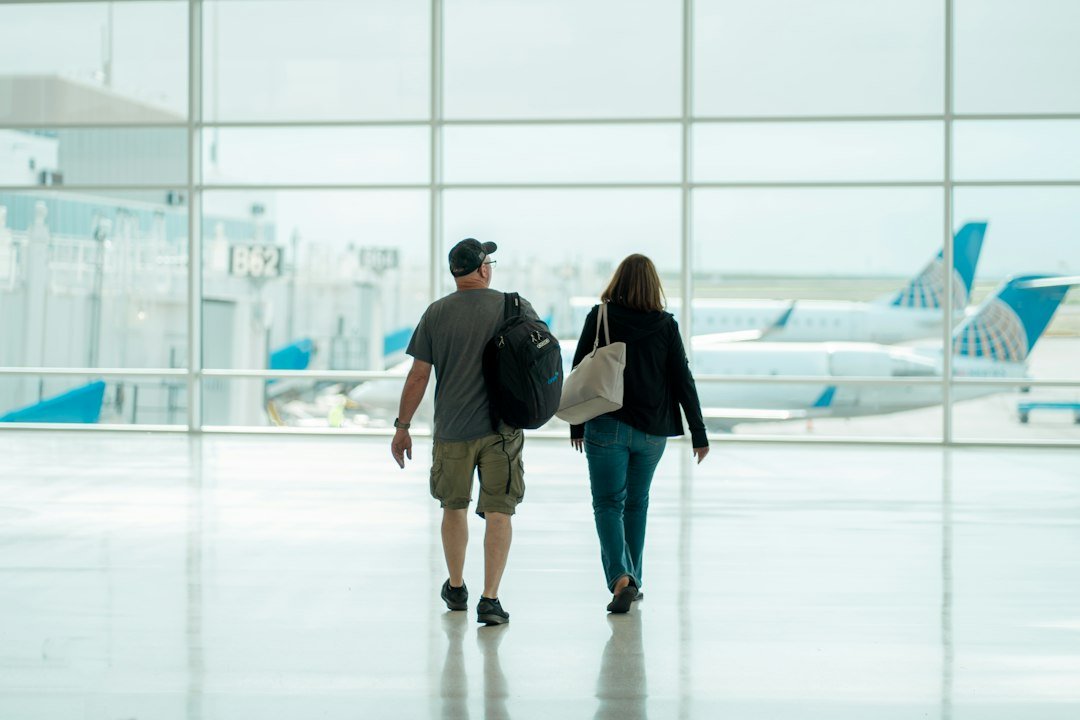
Digital Nomad Packing Checklist 2026: What to Carry
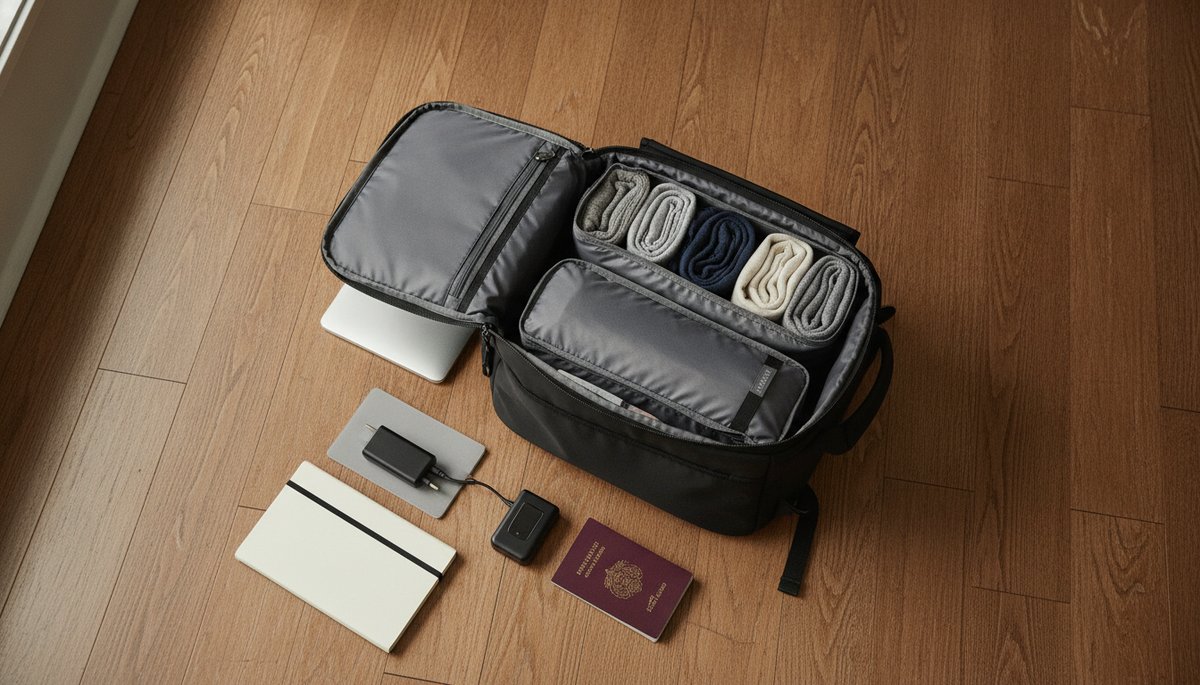
Digital Nomad Packing Checklist 2026: What to Carry
Most digital nomads pack twice. The first time, they bring everything they think they will need. The second time — usually three weeks in, after dragging 50 lb through a sixth airport — they pack what they actually use. This guide skips that first version. It is built from the questions real travelers type into Google ("packing tips carry on only," "packing tips for international travel," "best packing strategies for travel") and from products with verified specs you can actually check today.
Quick Answer: For full-time remote work and travel, pack into ONE carry-on backpack (35-45L) plus a personal item containing your laptop. Build a 7-10 piece capsule wardrobe around merino wool and quick-dry layers, use 3-5 packing cubes, keep your tech kit (charger, universal adapter, power bank under 100Wh, eSIM) in your personal item, and stay under the standard 22 x 14 x 9 in carry-on size. Everything else you can buy locally.
Disclosure: This post contains affiliate links. If you buy through them, we may earn a small commission at no extra cost to you. We only recommend gear we have tested or whose specs we have verified on the manufacturer's site.
What Should a Digital Nomad Pack? The Carry-On Philosophy
Direct answer: pack one carry-on backpack (35-45L), one personal item with your laptop, and a 7-10 piece clothing capsule. The rule that keeps the bag light is unforgiving — if you can buy it for under $20 anywhere in the world (shampoo, a beach towel, a phone charger cable), do not bring it.
The reason carry-on-only beats checked luggage is structural, not stylistic:
No lost luggage. Your work, passport, and gear stay with you.
No checked-bag fees. Ryanair, Wizz Air, Spirit, and Frontier charge per leg. Over a year, this is hundreds of dollars.
Faster border transits. You walk straight past baggage claim.
A natural limit. A bag that fits in the overhead bin cannot grow into 60 lb of "maybe."
The carry-on philosophy is the constraint that makes long-term travel sustainable. Everything below is built around it.
What Is the Best Backpack for Digital Nomads?
Direct answer: the Peak Design Travel Backpack 45L is the most-recommended one-bag pick. It expands from 35L to 45L, weighs 2.05 kg (4.52 lb / about 4 lb 8 oz) without a camera cube, has a dedicated laptop sleeve, and opens like a suitcase. At 45L expanded, it still falls within the 22 x 14 x 9 in (56 x 36 x 23 cm) carry-on envelope used by most US and international carriers — including Delta, which lists the same 22 x 14 x 9 in spec on its current baggage page.
But it is not the only good pick. The decision matrix:
Bag | Capacity | Best For |
|---|---|---|
Peak Design Travel Backpack | 35-45L | One-bag travelers who fly with a laptop and the occasional camera |
Tortuga Travel Backpack | 40L | Pure carry-on minimalists; suitcase-style clamshell |
Osprey Farpoint 40 | 40L | Budget-conscious travelers and longer trekking detours |
Two notes before you click "buy":
Torso fit matters more than brand. A 45L pack that is too long on your back will hurt within an hour. Measure your torso (nape to iliac crest) and check the manufacturer's size chart.
Match the airline you fly most. US/most-international standard is 22 x 14 x 9 in. Ryanair's priority cabin bag is smaller at 55 x 40 x 20 cm (and the free under-seat bag is just 40 x 30 x 20 cm). A 45L pack only flies free on Ryanair with priority boarding.
For a deeper review, see our Peak Design Everyday Backpack review.
What Is a One-Bag Carry-On Packing List for a Year of Travel?
Direct answer: roughly 30 items split across clothing (10), tech (8), toiletries (8), and documents (4). The full list:
Clothing (capsule of 7-10):
3 merino wool T-shirts (Smartwool 150 weighs ~6.8 oz; Icebreaker 175 weighs ~6.25 oz per medium, both verified on manufacturer pages)
1 long-sleeve merino base layer
2 quick-dry pants or 1 pants + 1 shorts
1 packable rain shell
1 packable down or synthetic mid-layer (for cold climates)
4-5 pairs underwear (quick-dry — wash in the sink)
3 pairs socks (2 merino, 1 athletic)
1 pair lightweight sneakers + 1 pair flip-flops or sandals
Tech (in personal item):
Laptop + sleeve
Phone + charger
Universal travel adapter with USB-C PD (100W GaN models cover 150+ countries)
Power bank, under 100Wh (a 20,000 mAh / ~74 Wh model like the Anker 325 PowerCore 20K is TSA-approved for carry-on; over 100 Wh requires airline approval; over 160 Wh is banned)
USB-C cable (one good one beats three cheap ones)
Earbuds or noise-cancelling headphones
eSIM activated before takeoff
Hard-drive or cloud-synced backup
Toiletries (TSA 3-1-1 friendly):
Toothbrush + toothpaste
Solid shampoo bar (no liquid-limit issue)
Sunscreen (small)
Deodorant
30-day supply of any prescription meds + a copy of the script
Razor, nail clippers, basic first-aid kit
A microfiber travel towel
Documents (digital + paper):
Passport + 2 copies (one paper, one in cloud)
Vaccination card
Travel insurance card (e.g., SafetyWing)
A printed list of emergency contacts
If your list is much longer, look at the duplicates: 5 t-shirts instead of 3, two pairs of jeans, a "what if I get invited to a nice dinner" outfit. The first month on the road will quietly cut those for you anyway.
For a kit-style breakdown, our digital nomad starter kit post pairs items to specific work styles (writer, developer, creator).
Do You Really Need Packing Cubes?
Direct answer: yes — but only compression cubes actually save space. Standard cubes organize; compression cubes shrink. For a year-long trip where you re-pack every few weeks, that is the difference between 35L and 45L of the same wardrobe.
A 7-set system (e.g., the BAGSMART 7 Set Packing Cubes, ASIN B09JNWJM4W on Amazon) typically includes 1 large cube (13.8 x 3.9 x 13.8 in), 3 medium, 2 small, and 1 shoe bag. The sub-frame keeps each cube's shape so they tessellate inside your pack instead of collapsing. The cost ($25-40) pays itself back the first time you avoid a checked-bag fee.
How to actually use them:
Cube 1 (large): rolled t-shirts and mid-layers
Cube 2 (medium): bottoms (pants, shorts)
Cube 3 (medium): underwear + socks
Cube 4 (small): dirty laundry — keeps clean clothes from absorbing odor
Cube 5 (small): tech accessories (cables, adapters, dongles)
Shoe bag: shoes or wet swimwear
The dirty-laundry cube is the underrated one. It also makes airport security checks faster — when an agent asks to see the inside of your pack, you hand over labeled, neat cubes instead of unpacking a tornado.
What Clothes Pack the Smallest for Long Trips?
Direct answer: merino wool tops, quick-dry synthetic bottoms, and one packable shell. Merino is the long-term traveler's cheat code because it stays odor-free for 3-5 wears, dries overnight in a hotel bathroom, and packs smaller than cotton.
Verified weights from manufacturer pages:
Smartwool Merino 150 short-sleeve tee (Medium): ~6.8 oz / ~193 g
Icebreaker Tech Lite 175 (Medium): ~6.25 oz / ~177 g
That means three merino tees weigh less than a pound and replace 5-7 cotton tees in functional rotation. Cotton holds water, holds smell, and takes 12-24 hours to dry. On the road, it is the wrong choice for everything except sleepwear.
For bottoms, look at quick-dry travel pants (Prana, Outlier, Bluffworks) — they double as hike pants and dinner pants. One pair plus one pair of shorts covers most climates.
The one piece almost everyone over-packs: jeans. They are heavy, slow to dry, and uncomfortable on long flights. Bring zero, or one pair if you cannot live without them.
For a category-by-category gear deep dive, see our travel gadgets for digital nomads post.
How Do You Pack for Hot and Cold Climates in One Bag?
Direct answer: build a 4-layer system, not two wardrobes. Each layer earns its slot by working solo in mild weather and combining for extremes.
Layer 1 (base): 2-3 merino T-shirts + 1 long-sleeve merino
Layer 2 (insulation): 1 packable down or synthetic mid-layer (compresses to the size of a Nalgene)
Layer 3 (shell): 1 lightweight rain shell with hood
Layer 4 (bottoms): 1 pair quick-dry pants + 1 pair lightweight thermal leggings (worn under pants when it is cold)
A merino tee + long-sleeve + mid-layer + shell is enough for ~30°F / -1°C with movement. The same tee alone handles ~85°F / 29°C. You will not be the most stylish person at the rooftop bar in Bangkok or the most thermally optimized person in Reykjavik, but you will be comfortable in both with the same 8 pieces.
If you are heading somewhere extreme on either end (skiing, desert summer), rent or buy locally — do not haul gear you will use once.
How Do You Pack Tech Gear Safely?
Direct answer: laptop in a padded sleeve inside your personal item (not the main pack), cables in a small cube, power bank carry-on only, and back up your work before every flight. The non-negotiable rules:
Power banks must be in carry-on. Anything 100Wh or under is fine without airline approval; 101-160Wh needs airline approval and is capped at two per person; over 160Wh is banned. Most 20,000 mAh power banks are ~74 Wh, well under the limit.
Lithium batteries are forbidden in checked baggage. This includes spare laptop batteries and most camera batteries.
Carry one good universal adapter, not three cheap ones. A 100W GaN adapter with USB-C PD covers 150+ countries and replaces a separate laptop charger.
Tile or AirTag your bag. Once. It is the cheapest piece of insurance on the trip.
For the personal-item bag itself, look for one with a built-in laptop sleeve (sized correctly — a 16" sleeve is loose around a 13" laptop and will let it knock around).
For Creators: One Camera Add-On That Earns Its Slot
If you are not making content, skip this section. If you are, the highest-ROI single piece of camera gear for a phone-first creator is a wide mobile lens. The Moment Wide 18mm M-Series Lens (verified on shopmoment.com: 100-degree field of view, 73.1 g, <0.5% distortion, 6-element HD glass) clips into a Moment phone case and gives your iPhone or Pixel a usable architectural wide that the built-in ultrawide cannot match in low light. It weighs 73 grams — lighter than a candy bar — and slots into your tech cube.
Caveat: it requires a Moment phone case (sold separately). If you are not going to use it weekly, do not bring it. Slots in a one-bag setup are too expensive for "maybe" gear.
What Is the Most Important Thing Digital Nomads Forget?
Direct answer: a universal travel adapter with USB-C Power Delivery, and a 30-day spare of any prescription medication. These are the two items that are genuinely hard to source on the road — every other category (clothes, toiletries, even a backup charger) is buyable in any midsize city in under an hour.
Close runners-up that travelers report wishing they had brought:
eSIM activated before takeoff (you want data the moment you clear customs, not while hunting Wi-Fi)
Paper photocopies of passport + insurance card (when your phone dies, the photocopy is the only ID some hostels accept)
A small dry bag or Ziploc for wet swimwear and rainy-day phone protection
Earplugs and an eye mask (every hostel, every long flight, every loud Airbnb)
A 30-day supply of any contact lenses you wear
The pattern: small, light, hard to replace internationally. Everything heavy and easy to buy can wait.
A Final Sanity Check Before You Zip the Bag
Lay everything out on the bed before you pack. Then remove a third of it. Pack what is left into your cubes. Weigh the bag — a fully packed carry-on for one-bag travel should land at 18-25 lb (8-11 kg). If you are over 25 lb, you are bringing things you will not use.
Then take a photo of the contents. In six months, when you have learned which items earned their slot and which did not, that photo becomes the most useful packing list you will ever have — yours.
Travel light. Work from anywhere. Buy the rest there.
Frequently Asked Questions
What should a digital nomad pack for a year of travel?
What is the best backpack for digital nomads in 2026?
Do you need a checked bag as a digital nomad?
Do packing cubes actually save space?
What is the most important thing digital nomads forget to pack?
You Might Also Like
Travel + Remote Work Briefing — October 24, 2026

Travel + Remote Work Briefing — October 22, 2026
Travel + Remote Work Briefing — October 21, 2026