Bangkok Vegetarian Festival 2026: Full Visitor Guide
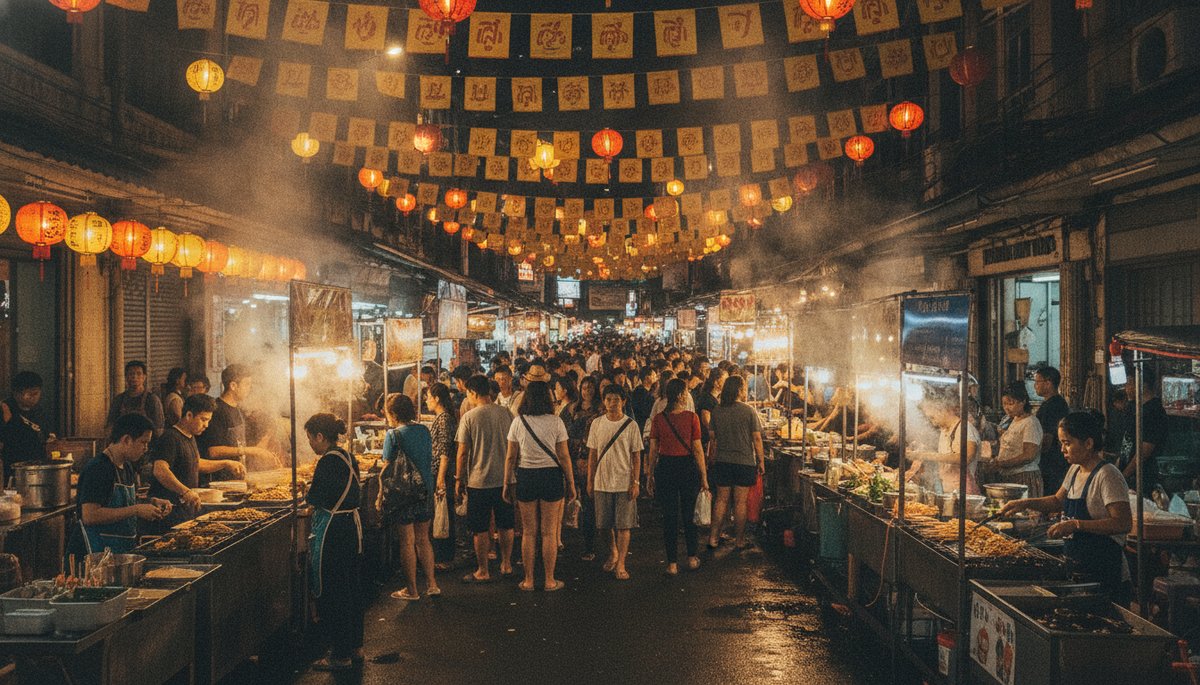
If you're in Bangkok in October and every third shophouse on Charoen Krung Road suddenly has a yellow flag hanging outside it, you haven't wandered into a parallel city — you've landed in the middle of Tesagan Gin Je, the Vegetarian Festival. For nine days, a big chunk of Chinatown switches to a strict plant-based diet, temples fill with incense smoke, and Yaowarat Road turns into one of the densest street-food strips in the country. It's genuinely one of the best times to be in Bangkok, whether you're a nomad passing through for a week or you've been based here for years and just never made it down to Chinatown for this.
Quick Answer: Bangkok's Vegetarian Festival runs its core nine ritual days from October 10-18, 2026 (with opening and closing ceremonies just outside that window), centered on Yaowarat Road and Charoen Krung in Chinatown. Look for yellow flags marked with the red Thai character "เจ" (jay) to find qualifying food — it's fully plant-based, but stricter than typical vegan cooking because it also bans garlic, onion, and a few other pungent plants. The easiest way in and out is the MRT Blue Line to Wat Mangkon station; one evening is enough to get the full experience, but the festival rewards a longer visit if you're already living or working remotely in the city.
When Is the Bangkok Vegetarian Festival 2026?
The nine core ritual days of the 2026 Vegetarian Festival run October 10 to October 18, with an opening pole-raising ceremony around October 9 and a closing ceremony around October 19 bookending that window. Multiple 2026 event guides converge on the same October 10-18 range for both Bangkok and Phuket, since the festival is observed nationwide on the same lunar dates.
That's because the festival isn't pinned to a fixed date on the Western calendar — it always falls on the first nine days of the ninth month of the Chinese lunar calendar, so the exact dates move every year (it landed in September in some past years and October in others). If you're planning a trip specifically around it, treat "October 10-18, 2026" as the reported window rather than a guaranteed fixed date, and double-check as your travel dates get closer.
What Is Tesagan Gin Je?
Tesagan Gin Je (เทศกาลกินเจ) — literally the "eating jay festival" — is a nine-day Chinese-Thai Buddhist and Taoist observance connected to the Nine Emperor Gods, brought to Thailand by Hokkien Chinese immigrant communities. It's most elaborate in Phuket, where it's tied directly to Nine Emperor Gods rituals, but Bangkok's Chinatown, Trang, and Hat Yai all hold their own versions centered on temples with large Hokkien-descended congregations.
During the festival, devotees commit to eating only jay food and to a period of physical and spiritual purification — some also abstain from alcohol and observe other personal restrictions. For visitors, the religious side is visible mostly through temple ceremonies, incense, and the sheer number of yellow flags; the food-street side is the part most people come for, and you don't need to be a participant in the religious observance to enjoy it respectfully.
How the Yellow Flag System Works
Any stall, cart, restaurant, or even 7-Eleven shelf marked with a small yellow flag or sticker printed with the red Thai character "เจ" is committing to serving jay-compliant food for the duration of the festival. It's a simple, unmissable visual system — during the festival weeks, thousands of these flags go up across Bangkok, not just in Chinatown, since many ordinary restaurants temporarily add a jay menu or convert entirely for the nine days.
You don't need to speak Thai to use it: if you see the flag, you can order confidently without a long conversation about ingredients. If you don't see it, assume the kitchen is cooking as normal (meat, fish sauce, and all).
What Can You Not Eat During the Vegetarian Festival?
Jay food is fully plant-based, but it's noticeably stricter than a standard vegetarian or even vegan diet elsewhere in the world. On top of meat, poultry, seafood, eggs, dairy, and honey, it also excludes fish sauce, oyster sauce, and shrimp paste — all common backbone ingredients in everyday Thai cooking — plus a handful of "pungent" plants that Chinese-Buddhist belief holds overstimulate the senses and cloud clarity: garlic, onion, chives, and leeks (some versions of the rule also list tobacco or strong spices).
Here's how the three tiers compare:
| Diet | Meat/fish/seafood | Eggs & dairy | Fish sauce/oyster sauce | Garlic, onion, chives, leeks |
|---|---|---|---|---|
| Standard vegetarian | Excluded | Often allowed | Sometimes allowed | Allowed |
| Vegan | Excluded | Excluded | Excluded | Allowed |
| Jay (เจ) | Excluded | Excluded | Excluded | Excluded |
Vendors get creative around the restrictions — mock "meats" made from soy, mushroom, and wheat gluten stand in for pork and duck, and noodle dishes, curries, and soups are rebuilt without any of the banned ingredients. A couple of practical notes: some dessert and drink stalls still use condensed or evaporated milk, so if you're strictly vegan (not just following jay), it's worth asking; and festival stalls are cash-based, so carry small baht notes.
Where Is the Best Street Food During the Festival?
Yaowarat Road in Chinatown is the main event — roughly two to three traffic lanes get closed off and more than 150 jay food stalls line the road for the nine days, making it the single densest concentration of festival food in the city. Vendors typically start setting up around 4 p.m., with the street building through the evening.
For a slightly calmer second stop, Charoen Krung Road Soi 20, near the Chow Sue Kong Shrine, has its own run of vendors and sometimes a Chinese opera performance nearby — a good option if Yaowarat itself feels like too much. If you'd rather sample jay food without fighting a street crowd at all, some shopping malls near Chinatown (IconSiam is the most commonly cited) run indoor jay food sections during the festival.
A realistic Yaowarat evening, if you want a plan rather than just wandering:
| Time | What's happening | Where |
|---|---|---|
| 5:00-6:30 p.m. | Arrive early, fewer crowds, easier to actually see the stalls | Odeon Circle (Chinatown Gate) → west along Yaowarat Road |
| 6:30-8:00 p.m. | Peak vendor lineup, main food street in full swing | Yaowarat Road main strip, plus Soi Padungdao and Yaowarat Sois 6 and 11 |
| 8:00-9:00 p.m. | Duck off the main road when it gets too dense | Side alleys off Yaowarat — often where the best small stalls hide |
| 9:00-10:00 p.m. | Wind down, visit a temple before it closes for the night | Wat Mangkon Kamalawat or Chow Sue Kong Shrine |
Weeknights (Wednesday-Thursday) are noticeably calmer than the Friday-through-Sunday crush, so if your schedule is flexible — which, if you're a remote worker reading this, it probably is — pick a weekday evening.
Is the Bangkok Vegetarian Festival Vegan?
Yes — jay food is entirely plant-based, so anyone eating vegan will find plenty to order. The catch is that jay goes further than typical vegan cooking by also excluding garlic, onion, chives, and leeks, which are staples in most vegan cuisines elsewhere. If you're vegan and don't mind cooking (or eating) without those aromatics for a week, the festival is close to a dream scenario: hundreds of stalls that are automatically safe for you by default, no menu-interrogation required.
If you're vegetarian rather than strictly vegan and normally still eat eggs or dairy, don't expect to find them at jay stalls — but you'll eat completely fine, since the entire festival menu is designed around the stricter rule anyway.
Visiting the Temples and Shrines
The festival's religious center in Bangkok is Wat Mangkon Kamalawat (also called Wat Leng Noei Yi), the city's largest Chinese Buddhist temple, on Charoen Krung Road in the heart of Chinatown. It holds special prayer sessions and ceremonies throughout the festival, and its dragon-roofed halls and incense-filled courtyards are worth a visit even outside festival dates. The nearby Chow Sue Kong Shrine on Charoen Krung is a second active site, often paired with vendor stalls and occasional opera performances during the nine days.
You can watch respectfully as devotees make merit — lighting candles and incense, and observing personal purification rules — without joining the religious practice yourself. Modest dress is appreciated at any Bangkok temple, and if you want to blend in visually, plain white clothing is a nod to the festival's tradition, though it's entirely optional if you're there mainly for the food.
Navigating the Crowds Without Losing Your Group
The single easiest way in and out of the festival zone is the MRT Blue Line to Wat Mangkon station, which sits directly on Charoen Krung Road in the middle of Chinatown — different exits lead toward Yaowarat Road's main food street and toward Wat Mangkon Kamalawat temple, so it's a genuinely central drop point for both the food and the religious side of the festival. Coming from elsewhere in the city, this beats surface transport by a wide margin once the evening crowds build.
If you do need a taxi or tuk-tuk to or from the area, insist on a metered taxi (or book through Grab) rather than negotiating with a street tuk-tuk, since drivers around busy tourist areas are known to quote inflated flat fares — agree on a price before you get in if you do take a tuk-tuk, and carry small bills since drivers sometimes claim they lack change. Expect the sidewalks themselves to be crowded and uneven at night — think propane tanks, motorbikes, and steam from woks all in the same three feet of pavement — so it's more of a slow shuffle than a stroll, especially after 8 p.m. on weekends.
If you're going to be wandering Chinatown's alleys at night trying to coordinate plans, keep an eye on your phone signal — dense old shophouse streets aren't always kind to it. A local data eSIM is worth having sorted before you land; Airalo's Thailand eSIM activates in minutes and means you're not hunting for wifi to pull up a map while dodging a food cart. (This is an affiliate link — we may earn a small commission at no extra cost to you if you buy through it.)
One Evening vs. the Full Nine Days: What's Actually Worth It
One evening (about three hours, arriving 5-6 p.m.) is genuinely enough to get the core experience: walk Yaowarat, try a handful of jay dishes, watch one temple in the evening light, and head out before the latest crowds. If you're only in Bangkok briefly or just curious, this is the sensible plan — you don't need all nine days to "get" the festival.
The full nine days makes more sense if you're already based in Bangkok — working remotely between coworking sessions, say, or just living there — since different days bring different temple ceremonies and processions, and returning on a quiet weeknight versus a packed Saturday gives you a genuinely different feel for the same street. If that's you, it's also a good excuse to finally do the Chinatown deep-dive you've been putting off, and to pair it with a broader look at working remotely in Southeast Asia if Bangkok is turning into more than just a stopover.
Practical Notes Before You Go
Bring cash — festival stalls overwhelmingly run on baht, not cards. Expect near-continuous firecracker noise day and night near active temples; it's part of the ritual, not a malfunction. If you're prone to food sensitivities, jay cooking is meat- and dairy-free by design but still uses shared woks and utensils across dozens of vendors packed into a small space, so use the same commonsense hygiene judgment you would at any dense street-food market anywhere, and don't assume "vegetarian" automatically means allergen-safe if you have a specific allergy.
If Chinatown is a stop on a longer Thailand trip, it's worth running through a general digital nomad packing checklist before you fly — humid, crowded night markets have their own packing logic (comfortable closed shoes over sandals, a small cross-body bag instead of anything with an open top). Solo travelers, especially those navigating Chinatown's alleys after dark for the first time, may also want to skim our solo female travel guide for general night-market and transport safety habits that apply just as well here as anywhere else. And if this festival is nudging you toward a longer stay in Thailand rather than just a visit, our rundown of digital nomad visa countries is a reasonable next stop.
Either way — one plate of jay noodles on a Wednesday evening or all nine days of it — the Vegetarian Festival is one of the few times Chinatown's food street outdoes itself, and it's worth building an evening around even if you weren't planning to be in Bangkok in October at all.
Frequently Asked Questions
When is the Bangkok Vegetarian Festival 2026?
What is Tesagan Gin Je?
What can you not eat during the vegetarian festival?
Where is the best street food during the festival?
Is the Bangkok Vegetarian Festival vegan?
You Might Also Like

Travel & Remote Work Briefing — October 4, 2026

Travel & Remote Work Briefing — October 3, 2026

Travel & Remote Work Briefing — October 2, 2026