Cabo Verde's World Cup Run Opens a Door for Nomads
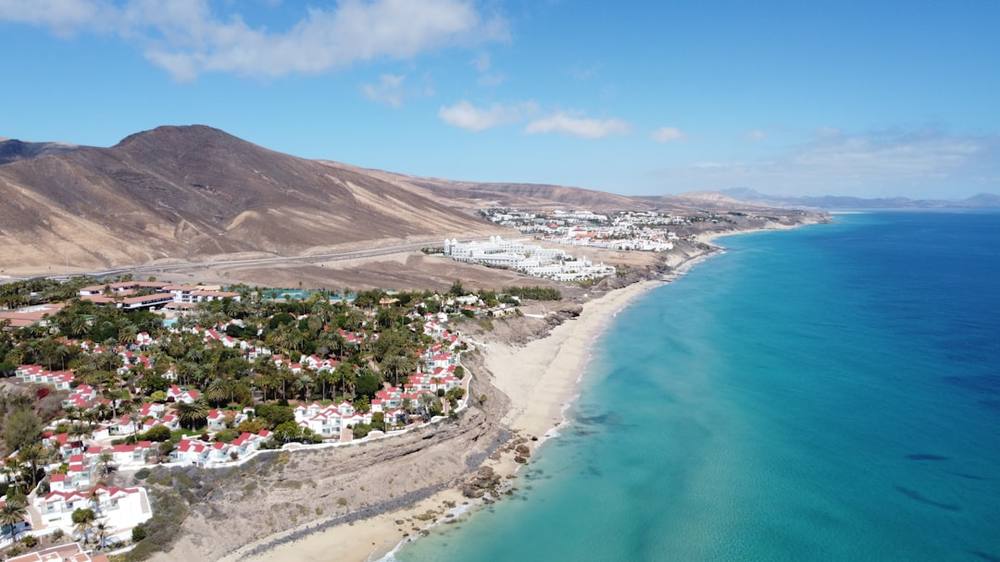
Cabo Verde — a ten-island Atlantic archipelago of just under 525,000 people — walked onto the world's biggest football stage for the first time in July 2026, and the resulting attention is pushing the nation into travel searches in a way no advertising budget could buy.
The Blue Sharks qualified for the FIFA World Cup for the first time on Oct. 13, 2025, after defeating Eswatini 3-0, making them one of the smallest nations ever to qualify for the tournament. At the 2026 tournament in North America, they drew with Spain, Uruguay, and Saudi Arabia in Group H before falling to Argentina 3-2 in extra time in the Round of 32 — the only World Cup debutant at the 2026 tournament to advance past the group stage.
The football performance converted into immediate travel demand. According to Tornos News, citing Skyscanner data, searches from Germany for trips to Cape Verde rose 177% compared with the same period last year, peaking around June 15 — the day of the team's opening draw against Spain. TUI reported that searches through its travel offices almost doubled, with bookings showing increases of up to 20% for the coming months. The country was, in most European source markets, already popular as a package beach destination. What's new is the breadth: interest is spreading beyond the traditional charter-holiday crowd to independent travelers and, based on search patterns reported by travel platforms, people who had never previously considered the islands.
What this means for remote workers and nomads
The timing matters. Cabo Verde has had a formal remote-working program for several years — a six-month renewable visa available through the official tourism body for a combined fee of just €54 (€20 visa fee plus €34 one-time airport fee on arrival), with income exempt from local taxation under the program. Third-party guide NomadX cites an income threshold of around €1,500 per month, though the official page only lists "Proof of Income" without a specific number — making it one of the more accessible nomad visa programs in the Atlantic basin. The program includes community hubs with coworking infrastructure and organized programming for participants.
Infrastructure on the main nomad islands has improved significantly. According to NomadX's 2026 guide, fiber speeds reach 50-200 Mbps on Sal and 50-300 Mbps on São Vicente; Santiago (the capital island) has 100-500 Mbps connections in central Praia, with 5G beginning to roll out. A comfortable monthly budget on Sal or São Vicente runs €1,500 to €2,000 all-in, according to NomadX, putting it in the same range as parts of Southeast Asia with considerably shorter Europe flight times.
The practical case for nomads was already there before the World Cup. What the tournament has changed is the awareness curve. When reviewing destination patterns in our research, we consistently find that the window between "goes viral globally" and "prices normalize upward and tourist infrastructure strains" is narrow — often six to 18 months. Cabo Verde is Portuguese-speaking, is roughly a four-to-five-hour flight from Lisbon and around six hours from London (times vary by island), and sits outside the Schengen zone, which means it doesn't eat into Schengen allowances. For EU-based nomads managing 90/180-day limits, that last point alone is meaningful. The World Cup spotlight won't last forever. For nomads who have been watching this destination from a distance, the door is open now.
Sources
Cape Verde at the FIFA World Cup — Wikipedia, accessed July 4, 2026
The World Cup surprise is boosting tourism in Cape Verde — Tornos News, accessed July 4, 2026
Remote Working Program in Cabo Verde — Visit Cabo Verde, accessed July 4, 2026
Cape Verde for Digital Nomads: Visa, Internet & Cost of Living (2026) — NomadX, accessed July 4, 2026
Messi scores again but Argentina given World Cup upset fright by Cape Verde — Al Jazeera, accessed July 4, 2026
You Might Also Like
Travel + Remote Work Briefing — October 15, 2026

Travel + Remote Work Briefing — October 14, 2026

Travel + Remote Work Briefing — October 13, 2026