Seattle World Cup 2026: Stadium, Transit & Travel Guide
Seattle World Cup 2026: Stadium, Transit & Travel Guide
Seattle has been waiting for this. The Emerald City — ringed by mountains, threaded with waterways, alive with food and music — gets six FIFA World Cup 2026 matches including a USA group-stage game on Juneteenth. Whether you're flying in for one match or threading Seattle into a Pacific Northwest World Cup road trip, this guide covers everything: the stadium, how to get there on the Link light rail, where to stay, what to see, and how to keep your phone connected without a roaming bill that ruins the trip.
Quick Answer: Seattle hosts six 2026 World Cup matches at Lumen Field (officially renamed Seattle Stadium for the tournament), seating approximately 69,000 in soccer configuration. The venue sits in the SoDo district and is served directly by two Link Light Rail stations — Stadium Station and ID/Chinatown Station — making it one of the most transit-accessible venues in the entire tournament. From SEA-TAC Airport, a direct light rail ride takes about 40 minutes with no transfers. Best neighborhoods to stay: Pioneer Square (5-minute walk to the stadium), Capitol Hill (quick rail connection), Downtown/Belltown (walkable to everything), and South Lake Union.
Disclosure: This post contains affiliate links. If you make a purchase through these links, we may earn a small commission at no extra cost to you. We only recommend products we genuinely believe in.
Which Stadium Hosts the 2026 World Cup in Seattle?
The venue is Lumen Field in Seattle's SoDo (South Downtown) district — officially renamed Seattle Stadium for the duration of the FIFA tournament, in line with FIFA's policy on corporate-sponsored venue names. The stadium sits adjacent to T-Mobile Park (home of the MLB's Seattle Mariners) and is one of the most recognizable sports arenas in the Pacific Northwest.
Lumen Field holds approximately 69,000 spectators in its soccer configuration. Unlike some tournament venues, it's an open-air, partially covered stadium — the iconic blue roof shelters the upper seating tiers from Seattle's famously drizzly weather, but the pitch itself is open. Pack a light waterproof layer for evening matches in June, even if the forecast looks clear.
The stadium is the permanent home of three professional teams: the NFL's Seattle Seahawks, MLS's Seattle Sounders FC, and NWSL's Seattle Reign — which means the facility is well-practiced at handling large, passionate crowds. Sound Transit rates it as having some of the best stadium-to-transit connectivity of any major US venue.
Seattle draws six matches total:
| Date | Match | Round |
|---|---|---|
| June 15 | Belgium vs. Egypt | Group Stage |
| June 19 | USA vs. Australia | Group Stage |
| June 24 | Qatar vs. Bosnia and Herzegovina | Group Stage |
| June 26 | Egypt vs. Iran | Group Stage |
| July 1 | Belgium vs. South Korea | Round of 32 |
| July 6 | TBD vs. TBD | Round of 16 |
The June 19 USA vs. Australia match falls on Juneteenth — a national holiday in the US — adding a cultural dimension to an already significant fixture. Book accommodation for that weekend as early as possible.
How Do You Get to Lumen Field by Light Rail?
Sound Transit's Link Light Rail is the definitive answer for getting to Seattle Stadium on match day. The stadium sits directly adjacent to two Link stations, and 80% of fans are expected to arrive without a personal vehicle — an impressive figure for a US city.
Link Light Rail: Station Options
Two stations serve Lumen Field with direct stadium access:
- Stadium Station (1 Line / 2 Line): Serves the south entrances of Lumen Field. This is the most direct stop for most visitors.
- International District/Chinatown Station (1 Line / 2 Line): Serves the north entrances, a short walk through the SoDo/ID neighborhood. This station also connects to the downtown transit tunnel.
On match days, Sound Transit runs the 1 Line and 2 Line every eight minutes throughout the day, with extended service until 1:00 a.m. — late enough to cover post-match crowds even for evening kick-offs.
Payment: Tap an ORCA card, download the Transit GO Ticket App (prepay for a Day Pass, $21 for three days), or tap a contactless credit or debit card at the fare machines. Avoid cash queues at the machines on match days.
From SEA-TAC Airport to Lumen Field
This is the cleanest transit route in the tournament for international arrivals. Take the 1 Line (Link Light Rail) from Sea-Tac Airport (SEA) directly to Stadium Station — zero transfers, approximately 40 minutes. Trains depart from the airport every 8 minutes during peak hours and connect directly underground.
Tip: For late-night arrivals heading to a morning match, note that Link Light Rail stops service around midnight. Plan accordingly or use a rideshare.
From Downtown Seattle and Capitol Hill
From Westlake Station (downtown core): 4 stops, about 8 minutes. From Capitol Hill Station: 5 stops, about 12 minutes. From University of Washington Station: 7 stops, about 18 minutes.
Driving is strongly discouraged on match days. The SoDo neighborhood has limited parking, and traffic backups after matches can add an hour or more to any drive. The light rail is genuinely faster.
Staying Connected in Seattle
Seattle has strong 4G/LTE and 5G coverage across the city and inside Lumen Field, but international roaming on a home-country SIM can still run $15–30/day — or more if you're in the stadium for three hours with your navigation, group chats, and live score apps all running.
If you're combining Seattle with other US cities or crossing into Mexico at any point during the tournament, the Airalo USA & Mexico Unlimited eSIM covers both countries on one plan — no SIM swap at the border, no fumbling with physical cards. (Affiliate link — I may earn a commission at no extra cost to you.)
As part of Airalo's World Cup 2026 promotion, the USA & Mexico Unlimited plan is 26% off through July 18, 2026.
Install it before you fly, activate on arrival, and keep your home SIM live for calls. Inside a packed Lumen Field, cellular networks can get congested near capacity — having your own data plan (rather than relying on public WiFi) keeps you connected for mobile ticketing, navigation, and sharing moments live.
For a full comparison of eSIM packages for the whole tournament, our best eSIM for the 2026 World Cup guide covers all the top plans. If you're attending games in multiple countries, see our no-SIM-swap multi-country World Cup plan for the cross-border strategy.
Where to Stay: Neighborhoods Worth Knowing
Seattle's compact urban core and strong light rail network mean you don't need to stay in SoDo to get to the stadium on time. Here are the neighborhoods that make the most sense for World Cup visitors:
Pioneer Square is the closest neighborhood to Lumen Field — Seattle's oldest district, with brick buildings, art galleries, and bars that fill up fast on match days. You're a 5–10 minute walk to the stadium gates and directly over Stadium Station. The catch: hotel options are limited, so book the moment you confirm match tickets.
Downtown / Belltown puts you in the heart of Seattle within easy walking distance of Pike Place Market, the waterfront, and Seattle Center fan zone activations. Hotel density is high — best chance of finding availability, especially for the June 19 USA match when Pioneer Square and SoDo sell out early.
Capitol Hill is the arts, nightlife, and LGBTQ+ culture hub of Seattle — dense with restaurants, bars, and live music. Capitol Hill Station on the 1/2 Line puts you 12 minutes from the stadium on the light rail. A strong choice for fans who want the full Seattle cultural experience alongside their match-going.
South Lake Union blends modern tech-company energy with lakefront paths, restaurants, and easy transit to both downtown and the stadium. Less tourist-heavy than Capitol Hill or Pioneer Square, with newer hotel stock.
Book early. The June 19 (USA vs. Australia / Juneteenth) and July 6 (Round of 16) windows will see the tightest inventory. Lock in accommodation when you confirm tickets.
Things to Do in Seattle
The World Cup is the reason, but Seattle rewards extra time before or after your matches.
Pike Place Market — One of the country's oldest continuously operating farmers' markets (open since 1907), right on the waterfront. Walk the stalls, watch the famous fish toss, grab a coffee at the original Starbucks (just down the street at 1912 Pike Place), and explore the warren of specialty food vendors below the main arcade. Free to walk, easy to spend a couple of hours.
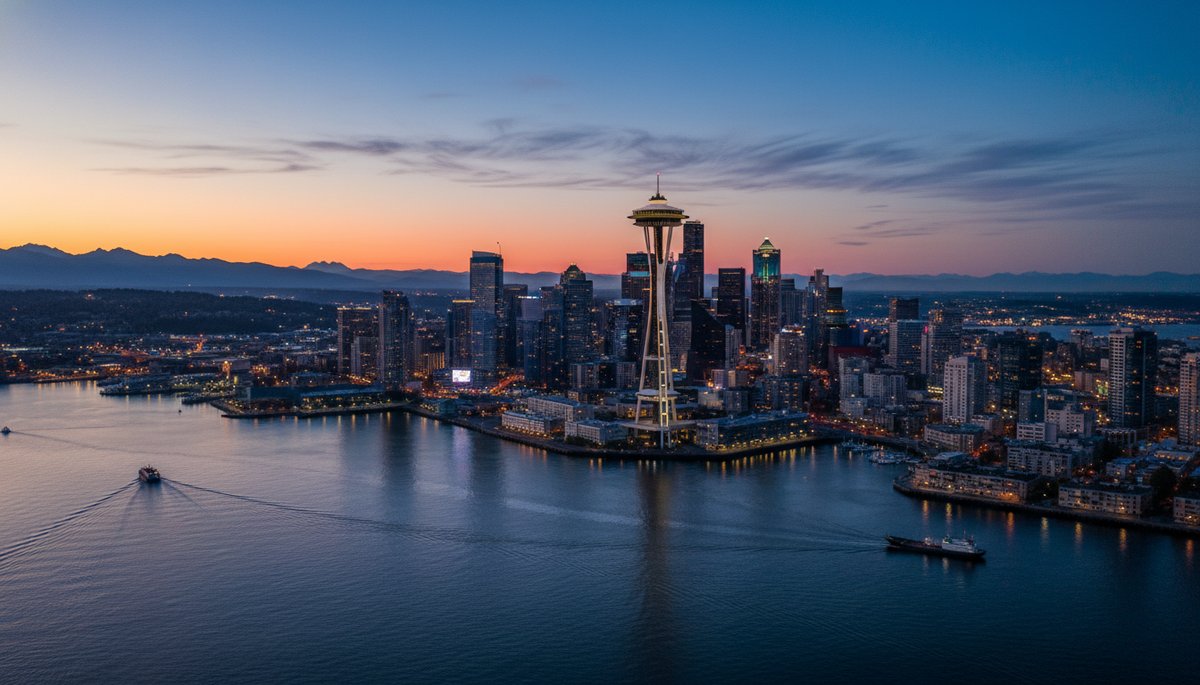
Space Needle and Seattle Center — The Space Needle's observation deck delivers 360-degree views of the Olympic Mountains, Mount Rainier, Puget Sound, and the city skyline. Seattle Center is also the home of the official World Cup Fan Celebration — large-screen match viewing, live music, and cultural programming throughout the tournament. The center-city monorail connects downtown to Seattle Center in about two minutes.
Chihuly Garden and Glass — Located at Seattle Center, this museum showcases the iconic glass sculptures of Seattle native Dale Chihuly across multiple galleries and an outdoor garden. The greenhouse installation is one of the most photographed spots in the city.
Museum of Pop Culture (MoPOP) — Also at Seattle Center, this Frank Gehry–designed museum covers music, film, sci-fi, and gaming with hands-on exhibits. The permanent collection includes the "What Is Music?" exhibit with instruments you can play and a deep dive into Seattle's grunge era.
Olympic Sculpture Park — A free, outdoor sculpture park on the waterfront with sweeping views of Elliott Bay and the Olympic Mountains. Best visited at golden hour before an evening match — the walk from Belltown to the park is part of the experience.
West Seattle Water Taxi — A quick ferry ride from Pier 50 (downtown waterfront) puts you in West Seattle, with beach access at Alki Beach and iconic views of the downtown skyline from across the bay. The water taxi runs every 30 minutes on weekdays, roughly every hour on weekends.
Seattle and the 2026 World Cup
The Stadium: Key Facts
Lumen Field opened in 2002 and was purpose-built as a multi-sport stadium with a strong soccer pedigree — the Seattle Sounders have played there since 2009 and the stadium's atmosphere on sold-out MLS nights is considered among the best in North American soccer. For the World Cup it becomes Seattle Stadium — all FIFA tickets, signage, and broadcasts use this name.
Key numbers: ~69,000 capacity (soccer configuration), 6 matches total (4 group stage, 2 knockout), Round of 16 on July 6 is the tournament highlight for Seattle.
The stadium's partially covered design means rain protection for most spectators. In June, Seattle averages 14–18 days of rain in the month, though most precipitation is light drizzle rather than heavy downpour. A light packable rain jacket is more useful than an umbrella in the stands.
Fan Zones: Seattle's Distributed Model
Seattle takes a different approach from the centralized FIFA Fan Festival model used in some other cities. The city runs four free public fan zones across the Unity Loop:
- Seattle Center — The flagship hub with large-screen viewing at the International Fountain, music programming, cultural activations, and food vendors. Served by the downtown monorail and multiple bus lines.
- Waterfront Park at Pier 62 — A floating watch party experience on Elliott Bay. One of the most visually unique fan experiences in the tournament, with open-air viewing on the water.
- Pacific Place — A five-story downtown mall with a 70-by-40-foot interior LED screen surrounded by interactive activations, info booths, and food. Located in the heart of the shopping district.
- Victory Hall (SoDo) — The closest fan zone to Lumen Field itself, ideal for pre- and post-match gatherings.
All four are free and open to the public, running from June 11 through the end of Seattle's match schedule.
Do I Need a Visa for the 2026 World Cup in Seattle?
Visitors from the 42 Visa Waiver Program (VWP) countries — including most EU nations, the UK, Japan, South Korea, Australia, and New Zealand — can apply for ESTA authorization online ($21, takes minutes, valid two years) and don't need a full visa. Canadian citizens require neither a visa nor an ESTA.
All other nationalities need a US B1/B2 visitor visa. FIFA PASS gives ticket holders who purchased directly from FIFA priority access to US visa appointment scheduling — it doesn't guarantee approval, but it helps you get an interview slot faster during the pre-tournament rush. Apply as early as possible: US consular processing times have been running long in 2026.
Before You Go: Quick Logistics
Weather: June in Seattle averages highs of 65–68°F (18–20°C) and lows of 50–52°F (10–11°C). Expect overcast mornings and occasional light rain, with the best weather typically mid-afternoon through evening. Pack layers and a packable waterproof jacket — they're used year-round in Seattle and will serve you well in the stands.
Currency: US dollars, accepted everywhere. Contactless payments are standard at virtually all venues, restaurants, and transit machines.
Language: English. Seattle has a significant multilingual population, particularly Korean, Vietnamese, Chinese, and Spanish-speaking communities.
Tickets: No over-the-counter sales. All tickets are purchased and managed via FIFA's official ticketing platform (Ticketmaster Last-Minute Sales Phase for remaining inventory).
Safety: Downtown Seattle, Pioneer Square, Capitol Hill, and the SoDo stadium district are all well-patrolled during major events. Exercise normal city awareness — keep bags close in crowded transit areas, use rideshare apps rather than unmarked taxis for late-night travel.
Planning to take in games in Vancouver as well — just 143 miles north by Amtrak Cascades? See our World Cup 2026 in Vancouver guide for the border-crossing and transit details. For the full picture of all 16 host cities, start with the World Cup 2026 host cities travel guide.
Also heading to the Bay Area? Check our World Cup 2026 in the San Francisco Bay Area guide for the Silicon Valley → Pacific Northwest leg of a West Coast tournament trip.
Ready to lock in connectivity before you fly? The Airalo USA & Mexico Unlimited eSIM covers the US and Mexico on one plan — install before departure, activate on landing, no SIM swaps needed. (Affiliate link — I may earn a commission at no extra cost to you.)
Frequently Asked Questions
Which stadium hosts the 2026 World Cup in Seattle?
How do you get to Lumen Field by light rail for the World Cup?
How many matches does Seattle host at the 2026 World Cup?
Do I need a visa to attend the 2026 World Cup in Seattle?
Where are the FIFA fan zones in Seattle for the 2026 World Cup?
You Might Also Like
Travel & Remote Work Briefing — October 4, 2026
Travel & Remote Work Briefing — October 3, 2026
Travel & Remote Work Briefing — October 2, 2026