Boston World Cup 2026: Gillette Stadium & Travel Guide
Boston World Cup 2026: Gillette Stadium & Travel Guide
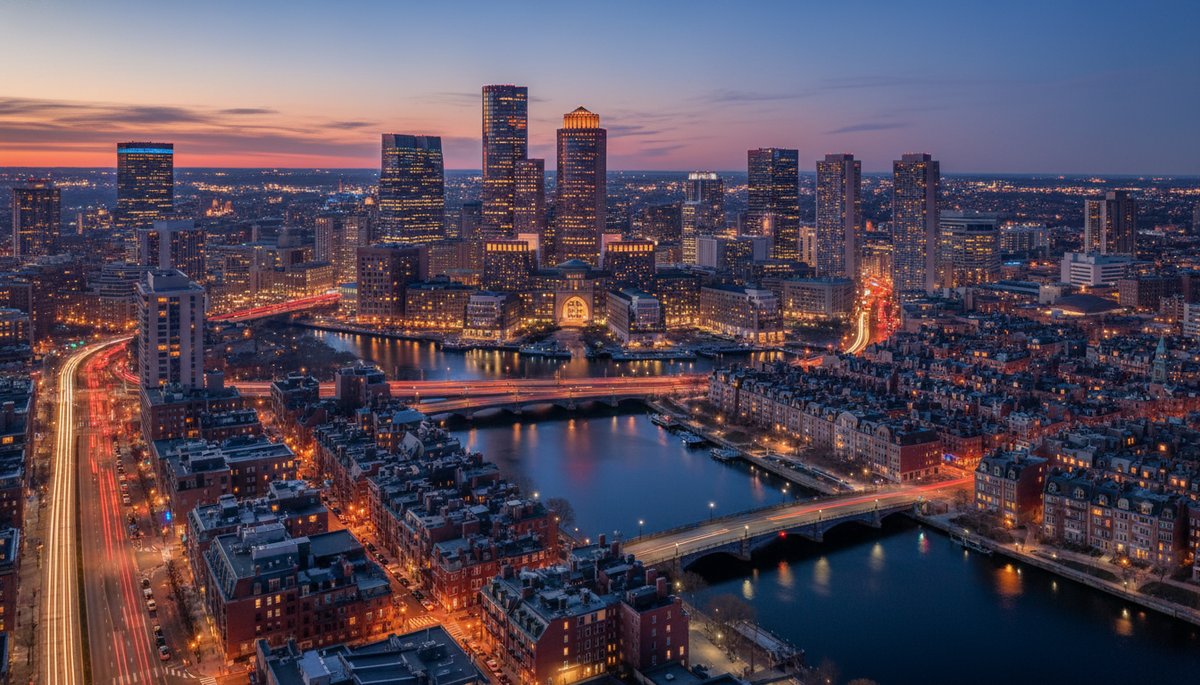
Boston brings something few World Cup host cities can match: a compact, walkable downtown packed with history, a world-class university scene, and some of the most passionate sports fans in the country. When the 2026 FIFA World Cup rolls around, the city becomes one of seven US host cities — but the twist is that the matches don't take place in Boston proper. The stadium is Gillette Stadium in Foxborough, about 30 miles southwest of the city, officially renamed Boston Stadium for the duration of the tournament. This guide covers how to get there, where to stay, what to see, and how to stay connected from the moment you land.
Quick Answer: Boston hosts seven 2026 World Cup matches at Boston Stadium (Gillette Stadium, Foxborough, MA). The stadium seats 63,815 in its World Cup configuration. Fixtures span June 13–July 9 and include a quarterfinal on July 9 — a marquee assignment for the Boston host city. The smartest way to get to the stadium: the MBTA special-event commuter rail from South Station ($80 round trip, ~1 hour each way). Best neighborhoods to stay: Back Bay, Downtown/Seaport, and the Fenway–Kenmore area.
Disclosure: This post contains affiliate links. If you make a purchase through these links, we may earn a small commission at no extra cost to you. We only recommend products we genuinely believe in.
Which Stadium Hosts the 2026 World Cup in Boston?
The venue is Gillette Stadium in Foxborough, Massachusetts — officially renamed Boston Stadium for the FIFA tournament, following FIFA's standard policy on corporate-branded names. All tickets, signage, and broadcasts use the Boston Stadium designation during the event.
The stadium sits about 30 miles southwest of downtown Boston, making it closer to Providence, Rhode Island, than to the city center. In its World Cup configuration, the stadium seats 63,815 spectators. For the tournament, the venue's artificial-turf surface is being replaced with natural grass, as required by FIFA for all World Cup matches.
Boston draws seven matches total:
| Date | Match | Round |
|---|---|---|
| Sat, June 13 | Haiti vs. Scotland | Group C |
| Tue, June 16 | Iraq vs. Norway | Group I |
| Fri, June 19 | Scotland vs. Morocco | Group C |
| Tue, June 23 | England vs. Ghana | Group L |
| Fri, June 26 | Norway vs. France | Group I |
| Mon, June 29 | Germany vs. Paraguay | Round of 32 |
| Thu, July 9 | TBD | Quarterfinal |
The England vs. Ghana and Norway vs. France group fixtures are among the highest-profile matches assigned to Boston. The July 9 quarterfinal makes Boston one of the deeper tournament hosts among US cities.
How Do You Get to Gillette Stadium From Boston?
The distance — 30 miles each way — makes getting to Boston Stadium the most important logistical question for World Cup visitors. The answer is clear: take the MBTA Boston Stadium Train.
MBTA Boston Stadium Train (Commuter Rail)
The MBTA and Keolis operate special event commuter rail service to every World Cup match at Gillette Stadium. Here's what you need to know:
- Departure point: South Station, Boston
- Arrival point: Foxboro Station (~0.25 miles from Gillette Stadium entrance)
- Journey time: Approximately 1 hour each way
- Cost: $80 round trip per person
- Requirement: You must have a same-day World Cup match ticket to purchase a Boston Stadium Train ticket
- Boarding groups: Each ticket is assigned a boarding group (A–E) indicating when to check in at South Station
- Last inbound train: Arrives at Foxboro Station approximately 90 minutes before kick-off
- Return service: Trains depart Foxboro Station starting 30 minutes after the final whistle
Activate your train ticket in the mTicket app on the day of your match before boarding.
Getting to South Station
South Station is one of Boston's main transit hubs. You can reach it via:
- Red Line (MBTA subway) — Downtown Crossing → South Station (1 stop)
- Silver Line SL1 — Direct from Logan Airport, free from the airport to South Station (~20 minutes)
- Commuter Rail — Regional services from Providence, Worcester, and other New England cities all terminate at South Station
Tip: Plan to arrive at South Station earlier than your boarding group window — security checks and ticket verification are in place for World Cup services, and queues build quickly before high-profile matches.
Driving to Gillette Stadium
If you choose to drive, Gillette Stadium is accessed via I-95 South to Route 1 South in Foxborough. Dedicated event parking is available on-site. On match days, expect significant traffic on Route 1 in both directions, particularly in the two hours before kick-off and one hour after the final whistle. The MBTA train eliminates this entirely.
From Boston Logan Airport
Boston Logan Airport (BOS) is only about 2 miles from downtown Boston — one of the most city-center airport locations in the US. For World Cup travel:
- Take the Silver Line SL1 (free from the airport) directly to South Station (~20 minutes)
- At South Station, board the Boston Stadium Train to Foxboro
This is the fastest, cheapest, and most reliable airport-to-stadium route. A Lyft or Uber from Logan to South Station takes roughly 10–20 minutes in normal traffic; allow extra time on match days.
Staying Connected in Boston
Coverage across Greater Boston — including Foxborough — is solid on all major US carriers, but international roaming can quickly rack up $15–30/day or more. If you're combining the Boston leg with other US or Mexico fixtures on a multi-city tournament trip, the Airalo USA & Mexico Unlimited eSIM covers both countries on one plan — no SIM swaps, no border surprises. As part of Airalo's World Cup 2026 promotion, the USA & Mexico Unlimited plan is 26% off through July 18, 2026. (Affiliate link — I may earn a commission at no extra cost to you.)
Install it before you fly, activate on landing, and keep your home SIM active for calls. At capacity in the stadium and on packed commuter rail platforms, your own data connection is more reliable than public Wi-Fi for checking ticket barcodes, train departure times, and navigation.
For a full comparison of eSIM options across the whole tournament, our best eSIM for the 2026 World Cup guide covers all the main plans. Watching games in multiple countries? See our no-SIM-swap multi-country World Cup plan for the full cross-border strategy.
Where to Stay: Neighborhoods Worth Knowing
Boston is compact by American standards — most neighborhoods are connected by the MBTA subway (the T) and are within reasonable walking or rideshare distance of each other. All routes to the stadium funnel through South Station, so proximity to the Red Line or Silver Line is the practical filter.
Back Bay is the most well-rounded base for World Cup visitors. It's geographically central, dense with hotels (including international-brand properties on Boylston Street and around Copley Square), and offers walkable access to Newbury Street shops, restaurants, and the Fenway area. Commuter rail access: Back Bay Station is one stop from South Station on the Providence/Stoughton and Needham lines — a 5-minute ride.
Downtown / Seaport District puts you within walking distance of South Station itself, making match-day mornings simple. The Seaport District (a 10-minute walk from South Station across Fort Point Channel) has developed rapidly into one of Boston's most hotel-dense areas, with waterfront restaurants and harbor views. A practical, no-fuss base if stadium logistics are your priority.
Fenway–Kenmore is a great pick for visitors who want Boston's sports-bar energy on non-match days. Fenway Park is the anchor; the neighborhood has a strong restaurant and bar scene and good Green Line connections to downtown and Back Bay.
Foxborough area (nearest to the stadium) is an option if you're attending multiple Boston matches and want to minimize daily commute. The area has limited hotel inventory compared to Boston proper, so book early. For most visitors, staying in the city and taking the train is the better experience.
Book early. Match weekends around England vs. Ghana (June 23) and Norway vs. France (June 26) will see the highest demand. Lock in accommodation as soon as your match tickets are confirmed — Back Bay and Seaport hotels are already running tight on availability for those dates.
Things to Do in Boston
The World Cup is the draw, but Boston rewards those who arrive a day or two early.
Freedom Trail — A 2.5-mile walking trail connecting 16 historic sites from the Boston Common to the Bunker Hill Monument. Free to walk; guided tours available. Boston's most efficient single-day history experience, and genuinely interesting even for non-Americans.
Fenway Park — The oldest ballpark in Major League Baseball (opened 1912). Guided tours run daily. If the Red Sox are in town during your visit, a game is worth the detour — the atmosphere at Fenway is unlike any other ballpark in the country.
Museum of Fine Arts — One of the largest art museums in the US, with permanent collections spanning ancient Egypt to contemporary American art. Located in the Fenway area, a 10-minute walk from Kenmore Square.
Harvard Square and Cambridge — Cross the Charles River by Red Line (Kendall/MIT or Harvard stop) for MIT's campus and the lively Harvard Square area. The square has bookshops, cafes, and restaurants at every price point, and the Harvard Art Museums are worth an hour inside.
Boston Public Garden — The first public botanical garden in the US, adjacent to Boston Common. The famous Swan Boats run May through September. A calm, beautiful contrast to the intensity of match days.
North End — Boston's oldest neighborhood and its Italian district. Dense with bakeries (Mikes Pastry and Modern Pastry have been feuding for decades — try both), trattorias, and narrow streets. A 15-minute walk from South Station along the Harborwalk.
Boston and the 2026 World Cup
The Stadium: Key Facts
Gillette Stadium opened in 2002 and is the home of the NFL's New England Patriots and New England Revolution soccer club. During the World Cup it officially becomes Boston Stadium across all FIFA branding. The venue is being upgraded ahead of the tournament: the standard artificial turf is replaced with FIFA-mandated natural grass, and all corporate signage has been covered per FIFA regulations.
Key numbers: 63,815 capacity (World Cup configuration), 7 matches total (5 group stage, 1 Round of 32, 1 quarterfinal), July 9 quarterfinal is the tournament capstone for the Boston host assignment.
FIFA Fan Festival Boston
The official FIFA Fan Festival is held at City Hall Plaza in downtown Boston and runs June 12–27. Registration is free via the Boston 26 website (bostonfwc26.com); up to six people can register together and select which match days they plan to attend. Registrants receive a digital pass before their selected days along with crowd-size updates and operational information.
Key details:
- Festival hours vary by day; events begin between 11 a.m. and 3 p.m. and run until 8:30 p.m.–12:30 a.m.
- Each day includes broadcasts of two or three World Cup matches plus a Cultural Showcase
- Entry is still subject to capacity limits despite having a digital pass
- The Visa Street Soccer Park operates at West Broadway / 110 Flaherty Way in South Boston
- Six neighborhood watch parties across Boston complement the main festival
Do I Need a Visa for the 2026 World Cup in Boston?
Visitors from the 42 Visa Waiver Program (VWP) countries — including most EU nations, the UK, Japan, South Korea, Australia, and New Zealand — can apply for ESTA authorization online without a full visa. Canadian and Bermudan citizens need neither a visa nor an ESTA.
All other nationalities need a US B1/B2 visitor visa. FIFA PASS gives ticket holders who purchased directly from FIFA priority access to visa appointment scheduling — it doesn't guarantee approval, but it can help secure an interview slot faster during the pre-tournament rush. Apply as early as possible: consular processing times have been extended in 2026.
Before You Go: Quick Logistics
Weather: June in Boston averages highs of 75–80°F (24–27°C) with moderate humidity. Early July can push into the low 80s°F (27–28°C). Rain is possible year-round — pack a light waterproof layer, especially for evening matches.
Currency: US dollars. Contactless payments (Apple Pay, Google Pay, card tap) are standard across the MBTA fare gates, restaurants, and all stadium concessions.
Language: English. Boston's student population makes it one of the more globally connected US cities; finding staff who speak Spanish, Mandarin, or Portuguese (strong Brazilian community in the metro area) is common.
Tickets: No over-the-counter stadium sales. Match tickets are managed via FIFA's Ticketmaster Last-Minute Sales Phase — first-come, first-served through the end of the tournament.
Safety: Boston's core neighborhoods — Back Bay, Downtown, Seaport, Fenway, North End — are safe, well-lit, and police-patrolled during major events. As with any large city, keep bags close in crowded transit areas and use rideshare apps rather than unmarked cabs after dark.
For the full picture of all 16 host cities and how to plan a multi-city itinerary, see our World Cup 2026 host cities travel guide. Attending games up the Northeast Corridor? Our guides for World Cup 2026 in New York / New Jersey and World Cup 2026 in Philadelphia cover the two closest host cities to Boston — both accessible by Amtrak from South Station.
Ready to lock in your connectivity? The Airalo USA & Mexico Unlimited eSIM covers the US and Mexico on a single plan — no SIM swaps, no roaming surprises. (Affiliate link — I may earn a commission at no extra cost to you.)
Frequently Asked Questions
Which stadium hosts the 2026 World Cup in Boston?
How do you get to Gillette Stadium from Boston for the World Cup?
How many matches does Boston host at the 2026 World Cup?
What is the FIFA Fan Festival in Boston and where is it held?
Do I need a visa to attend the 2026 World Cup in Boston?
You Might Also Like

Travel & Remote Work Briefing — October 4, 2026
Travel & Remote Work Briefing — October 3, 2026
Travel & Remote Work Briefing — October 2, 2026