
RTO Mandates 2026: How to Go Digital Nomad Instead
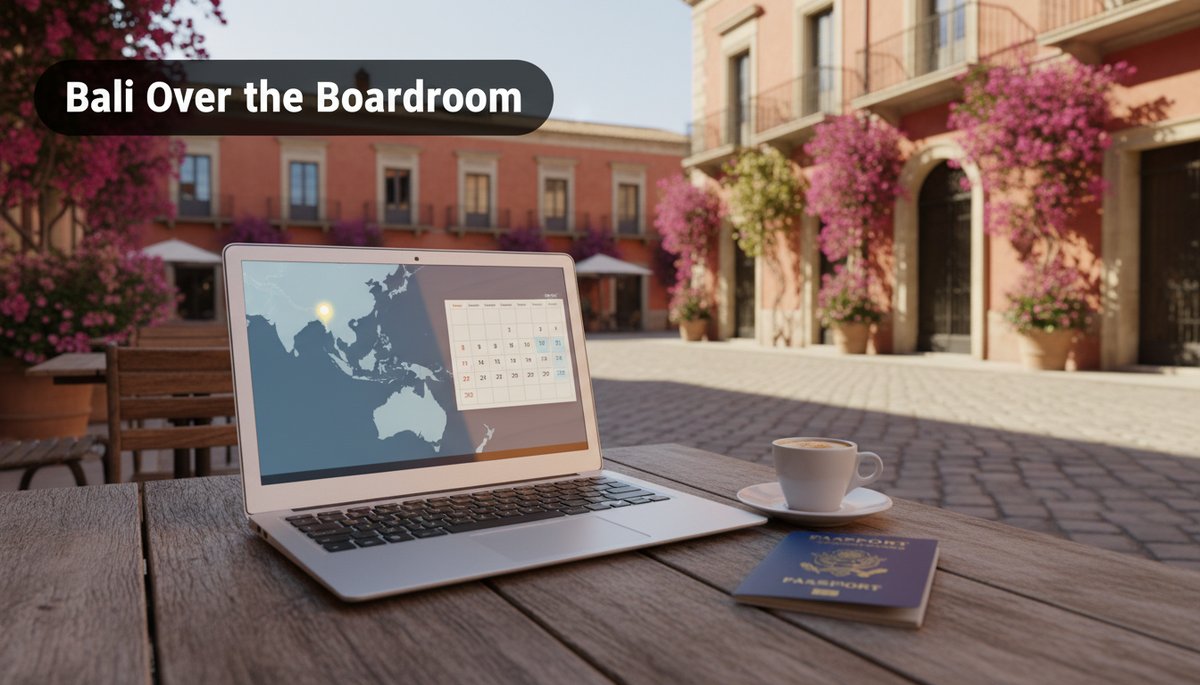
You opened the email, read it twice, and felt your stomach drop. After two or more years of proving you could do your job just as well from your kitchen table, your company is calling everyone back. Five days a week. Badge in by 9. The commute is non-negotiable.
If your first thought was there has to be another way — you're reading the right article. The return to office digital nomad path is no longer a fringe idea reserved for freelance designers and travel bloggers. In 2026, it is a structured, repeatable move that thousands of corporate employees are making every quarter. This is the practical roadmap for how to do it in 90 days.
Disclosure: This post contains affiliate links. If you sign up for a service through one of our links, we may earn a small commission at no extra cost to you. We only recommend tools we genuinely think are useful.
The RTO Wave Is Real — And So Is the Exit Ramp
Return-to-office mandates hardened sharply through 2025 and into 2026. By the end of 2025, roughly 9 in 10 companies had a return-to-office policy in place, and 30% now plan to require five full days in the office in 2026 — up from 28% in 2025 (ResumeBuilder). Among the largest employers the shift is starker still: JLL reports that 55% of Fortune 100 companies now mandate five-day office attendance, up from just 5% in 2021.
The result is predictable: a talent exodus. In 2026, 46% of US remote and hybrid workers say they would likely quit if forced back to the office full-time (ResumeBuilder) — and the share of employers tracking badge-in attendance jumped from 45% to 69% in a single year. Workers who built their lives around remote work — shorter commutes, time with family, lower cost of living in secondary cities — are not quietly accepting the reversal.
The RTO mandate, for many people, is not a crisis. It's a catalyst.
It forces a decision that was easy to postpone when things were comfortable. And once you've decided the old model doesn't fit your life anymore, the next question isn't whether to make a change — it's how fast you can make it.
Calculate Your Financial Runway First
Before you do anything else, open a spreadsheet. The most common mistake people make when dreaming about going nomad is skipping the math. The good news: the numbers are usually better than you expect.
Step 1: Calculate your monthly burn rate at home. Rent or mortgage, utilities, subscriptions, food, transport, insurance. Be honest. For most people in mid-size US or European cities, this is between $2,500 and $4,500/month.
Step 2: Research your target destination's cost of living. Lisbon, Chiang Mai, Medellín, and Tbilisi all clock in at $1,200–$2,000/month for a comfortable nomad lifestyle — accommodation, food, coworking day passes, and transport included.
Step 3: Determine how many months of savings you need. Most people feel comfortable with 3–6 months of destination costs as a buffer before their first remote paycheck. If you already have savings, you may need less runway than you think.
Quick rule of thumb: If your current savings could cover 4 months of living in your target city, you have enough cushion to make a move while actively job hunting.
The destination cost advantage is real. The math alone changes the conversation from "I can't afford this" to "I can't afford not to."
Finding Remote-First Employers (Before You Quit)
Here's the key that most people miss: find the job before you resign. This is not as hard as it sounds. The remote job market in 2026 is robust, and employers who explicitly advertise fully remote positions are genuinely committed to it — they're not going to RTO you six months later.
Start with job boards that filter for verified remote roles. FlexJobs is one of the best options here — every listing is manually screened to remove fake-remote and misleading postings, which saves enormous time. It's particularly strong for project managers, customer success, marketing, and operations roles that translate cleanly out of corporate environments.
When you're reading job descriptions, look for these signals that a company is genuinely remote-first (not just remote-tolerant):
- Asynchronous communication tools mentioned in the job description (Notion, Loom, Linear)
- No headquarters requirement — "work from anywhere" not "work from home in [state]"
- Distributed team called out explicitly, with team members listed in multiple countries
- Results-based evaluation language — deliverables, OKRs, outcomes — not hours logged
Your corporate experience is more valuable than you think. Project management, client communication, data analysis, operations, and customer success are all skills that remote-first companies actively recruit for. The skills transfer. The location doesn't have to.
Build Your Transition Timeline (The 90-Day Plan)
Ninety days is enough to go from RTO email to boarding pass. Here's how to structure it.
Days 1–30: Research and parallel-track job hunting
Update your resume to emphasize remote-work achievements: projects delivered asynchronously, distributed teams you collaborated with, metrics you hit without in-person management. Start applying to five to ten remote roles per week. At the same time, narrow your destination list to two or three options and research visa requirements, coworking options, and neighborhoods.
Days 31–60: Finalize the job, plan the logistics
By week five or six, you should have at least one offer in play. Once you have verbal confirmation, start the logistical checklist: give notice according to your contract, arrange short-term housing in your destination (Airbnb for the first month is fine while you find a proper monthly rental), and sort out your health insurance situation. Many nomads use international health insurance plans specifically designed for location-independent workers.
Days 61–90: Arrive, stabilize, then optimize
Your first month on the ground is not about productivity hacks — it's about building a reliable routine. Find your coworking spot. Learn the neighborhood. Figure out where you buy groceries. Once the basics are stable, everything else gets easier fast.
For a detailed checklist of what to bring and what subscriptions to set up before you leave, check out our digital nomad starter kit — it covers everything from SIM card strategies to the exact gear that survives long-term travel.
Your First Three Destinations (and Why They Work)
Picking a first destination matters more than people think. You want somewhere with reliable infrastructure, an established nomad community, and a cost of living that gives you breathing room while you're still settling in.
Lisbon, Portugal — The gold standard for nomads coming from the US and UK. Fast fiber internet, a large English-speaking community, walkable neighborhoods, and flights back home that are not obscene. Monthly costs run $1,600–$2,200 for a comfortable setup. The D8 digital nomad visa makes longer stays straightforward — check current income thresholds and processing times in our 2026 digital nomad visa tracker.
Chiang Mai, Thailand — Still the most cost-efficient major nomad hub in the world. Monthly costs of $900–$1,400 get you a private apartment, food, transport, and coworking. The nomad infrastructure — cafes, co-living spaces, community events — is unmatched at that price point.
Medellín, Colombia — Arguably the best value in the Americas. Spring-like weather year-round (it earns the nickname "City of Eternal Spring"), a world-class food scene, and a coworking culture that rivals Bali. If you want to stay in a similar time zone to US clients, Medellín is a natural fit. Read our full guide to the best places in Colombia for digital nomads for neighborhood-by-neighborhood breakdowns. Weighing a warm-weather base against a cooler summer escape? Our roundup of the best summer remote-work destinations compares cost, climate, and internet across the top picks.
What If You're Not a Developer or Designer?
This is the most common concern from people coming out of traditional corporate roles — and it's based on a misconception.
Remote work is not just for tech workers. The fastest-growing fully-remote categories in 2026 include customer success, marketing, content, operations, HR, finance, and sales. If you've done any of those in an office, those skills are portable.
One of the most accessible entry points is remote customer service. Pay typically starts around $16 to $22 per hour — averaging about $18.80/hour across US remote roles in 2026 (ZipRecruiter) — companies often provide equipment, and schedules are genuinely flexible. For a full breakdown of how to get hired with no tech background, see our guide to remote customer service jobs for travelers.
The broader point: your job title does not determine whether you can go remote. Your willingness to apply to companies that are already operating remotely does.
The Part Nobody Tells You
There's a version of this transition that looks like a dramatic leap — quit your job, book a one-way ticket, figure it out from a beach. That's one way to do it, and some people thrive in that mode.
But the more common version is quieter. You spend six weeks applying to remote jobs while still going into the office. You get an offer. You give notice. You spend a couple of weeks at home planning the move. And then you're on a plane.
The RTO mandate wasn't the obstacle — it was the push you needed.
The only thing standing between you and working from Lisbon, Bali, or Medellín is a realistic plan and the willingness to execute it. You already have the skills. The remote job market is there. The destinations are ready.
The 90 days start when you decide they do.
You Might Also Like

Travel + Remote Work Briefing — October 21, 2026

Travel + Remote Work Briefing — October 20, 2026

Travel + Remote Work Briefing — October 19, 2026