Día de Muertos 2026 Mexico City: Parade & Guide
Día de Muertos 2026 Mexico City: Parade & Guide
Día de Muertos in Mexico City is really two celebrations happening at once: a massive, made-for-TV public parade down Paseo de la Reforma, and a much older, quieter family tradition of candlelit altars and all-night cemetery vigils. Whether you're visiting for a long weekend or you live in the city and want to skip the worst of the crowds, this guide covers both — with verified dates, the parade route, and where locals actually go.
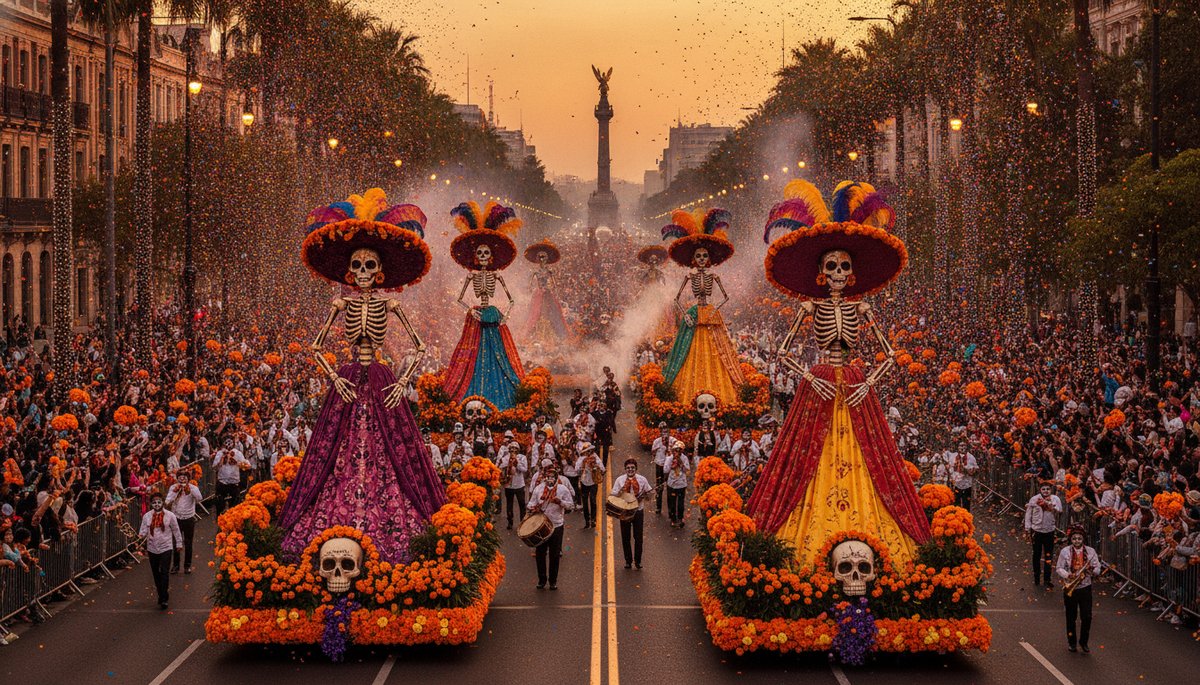
Quick Answer: The 10th Gran Desfile de Día de Muertos is confirmed for Saturday, October 31, 2026, running from Puerta de los Leones in Chapultepec down Paseo de la Reforma to the Zócalo. The traditional observance falls on November 1–2 (Día de los Angelitos, then Día de Muertos), when a mega-ofrenda goes up in the Zócalo and neighborhoods like Coyoacán, Xochimilco, and Mixquic hold their own, more intimate celebrations.
Disclosure: This post contains affiliate links. If you make a purchase through these links, we may earn a small commission at no extra cost to you. We only recommend products we genuinely believe in.
When Is Día de Muertos 2026 in Mexico City?
The traditional two-day observance is November 1–2, 2026 — November 1 is Día de los Angelitos, dedicated to deceased children, and November 2 is Día de Muertos proper, honoring adults. Mexico City's big public spectacle, the Gran Desfile de Día de Muertos, happens earlier: Saturday, October 31, 2026.
That gap surprises a lot of first-time visitors. The parade isn't a reenactment of the family ritual — it's a separate, city-organized event that grew out of the 2015 Bond film Spectre, which staged a fictional Day of the Dead parade through the historic center. Mexico City's tourism board decided a real one would be a good idea, and the first official Gran Desfile ran in late October 2016. The 2026 edition marks its 10th year, with a program built around three themes: pre-Hispanic roots, popular culture, and tributes to Mexican cultural figures including Juan Gabriel, José Alfredo Jiménez, Juan Rulfo, and Lola Beltrán.
Where Does the Gran Desfile de Día de Muertos Start and End?
The route begins at the Puerta de los Leones, the main gate of Bosque de Chapultepec, and runs along Paseo de la Reforma before finishing at the Zócalo (Plaza de la Constitución) in the historic center. This has been the parade's route since its early editions, and CDMX's Secretaría de Cultura listing for the 2026 edition confirms the same start and end points.
What's still pending official confirmation as of this writing is the exact start time and final street-by-street closures — recent years put the start around midday to early afternoon (roughly 12:00–2:00 PM), with the full procession taking about four hours to clear. In 2025, the route ran Puerta de los Leones → Paseo de la Reforma → Avenida Juárez → 5 de Mayo → the Zócalo. If you're planning a 2026 trip around this, treat the route as very likely but not locked until CDMX's official channels confirm final closures — check CDMX's official mobility and Metro accounts, including @MetroCDMX, in the days before October 31, 2026, rather than booking transit around assumptions.
Is the Día de Muertos Parade Free to Attend?
Yes — the Gran Desfile is a free, public event with no tickets or registration needed to watch. You just pick a spot along the route.
The trade-off is crowd size: recent editions have drawn crowds estimated in the millions along the roughly four-hour route, according to CDMX's own cultural authorities. If you want to actually see the floats and giant catrinas up close rather than a wall of people, arrive at least 90 minutes before the announced start, and consider a spot along Reforma nearer Chapultepec (where the parade first forms up) rather than the packed final stretch into the Zócalo.
What Happens on Each Day: A Quick Reference
| Date (2026) | What Happens | Where | Free or Ticketed |
|---|---|---|---|
| Sat, Oct 31 | 10th Gran Desfile de Día de Muertos | Puerta de los Leones (Chapultepec) → Paseo de la Reforma → Zócalo | Free, public |
| Sun, Nov 1 | Día de los Angelitos — honoring deceased children; mega-ofrenda on display | Zócalo and citywide altars | Free, public |
| Sun–Mon, Nov 1–2 (overnight) | The Alumbrada — all-night candlelit cemetery vigil | San Andrés Mixquic panteón, San Gregorio Atlapulco (Xochimilco) | Free, public |
| Mon, Nov 2 | Día de Muertos proper — honoring deceased adults; catrina exhibitions, altar contests | Coyoacán plazas, Xochimilco, citywide | Free, public |
Exact start times for the smaller neighborhood events shift year to year, so treat this table as a planning skeleton and confirm specific hours closer to the date.
Where Do Locals Actually Celebrate Día de Muertos in Mexico City?
Most CDMX residents don't fight the Reforma crowds — they go to Coyoacán, or make the trip out to Xochimilco and San Andrés Mixquic. These are older, family-centered traditions that predate the parade by generations.
Coyoacán turns its central plazas into an open-air Día de Muertos fair, with a monumental community ofrenda, a catrina and catrín costume runway, and street closures around the historic center for the free public celebrations. It's walkable, has a real neighborhood feel, and doesn't require leaving the city core.
Xochimilco and San Andrés Mixquic are where the deepest tradition lives. In the chinampa (floating-garden) neighborhoods of San Gregorio Atlapulco, Santa Cruz Acalpixca, and Santiago Tulyehualco, families spend November 1 decorating graves with cempasúchil marigolds grown locally, then hold an overnight vigil. In Mixquic specifically, this all-night graveside candlelight vigil is called the Alumbrada — thousands of candles lit across the San Andrés Apóstol cemetery starting around 7 PM on November 1 and continuing through the night, with families sitting beside decorated graves with food, music, and photos of the deceased. Entry to the Mixquic panteón is free.
Getting to Mixquic by public transit: take Metro Line 2 to Taxqueña, then a bus or combi heading directly to Mixquic (plan for 2–3 hours depending on traffic and time of day), or take Metro Line 12 to Tláhuac and connect via RTP route 149, which tends to be somewhat faster. Go early — the crowds and the one access road into the village both bottleneck badly after dark on November 1.
For getting around the city more broadly, our Mexico City travel and transit guide covers Metro and Metrobús basics that apply well beyond World Cup season.
Is Mexico City Safe During Día de Muertos?
Mexico City carries a Level 2 "exercise increased caution" rating from the US State Department, the same as Mexico nationwide — the risks cited are largely urban crime like petty theft and pickpocketing rather than cartel-related violence, which is concentrated in other states. Día de Muertos crowds don't change that risk profile fundamentally, but density does raise the odds of pickpocketing specifically.
A few practical points for the parade and panteón nights:
- Reforma and the Zócalo get genuinely packed. Keep bags zipped and in front of you, avoid back pockets for phones and wallets, and agree on a meeting point with your group in case you get separated — cell service can get patchy in the densest crowd sections.
- Expect Metro and Metrobús disruptions on parade day. In 2025, Metrobús Lines 1, 3, 4, and 7 all had service modifications along the route, and the Zócalo-Tenochtitlán Metro station (Line 2) closed for the day. CDMX hasn't published the 2026 closure map yet — check
@MetroCDMXand@MetrobusCDMXon the days leading up to October 31 rather than assuming last year's pattern holds exactly. - Late-night trips to Mixquic or Xochimilco are worth planning transport for, not improvising. The Alumbrada runs into the early morning hours in a village with limited transit options; going with a group, arranging a return ride in advance, or booking an organized tour reduces the odds of being stranded waiting for a bus at 2 AM.
- Stick to official taxi stands or app-based services like Uber and Cabify, especially at night — this is the specific recommendation the US Embassy in Mexico gives visitors, rather than hailing a cab off the street.
If you're navigating any of this solo, our solo travel safety tips cover crowd and transit precautions that apply directly to parade night and the panteón vigils.
What Should I Book and How Far in Advance?
Book accommodation for Día de Muertos weekend at least 6–8 weeks out — late October is peak season in Mexico City, and rooms near the Centro Histórico or along the parade route fill up fast. Neighborhoods like Roma, Condesa, and Coyoacán give you easy access to both the parade and the calmer altar events without staying directly on top of the Zócalo crush.
If you're working with a tighter budget, check Hostelworld's Mexico City listings (affiliate link) — many properties in Roma and Condesa now cater specifically to nomads and solo travelers with coworking-friendly common areas. Book earlier than you think you need to; this is one of the few weekends of the year when even mid-range hotels sell out citywide.
Staying Connected and Safe in the Crowds
Data coverage in Mexico City is generally solid, but dense crowds like the parade route can strain local networks right when you need maps or a rideshare app most. Setting up a prepaid data eSIM like Airalo's Mexico eSIM (affiliate link) before you land means you're not hunting for WiFi to check a map or call a taxi if your group gets split up in the crowd — useful on any big travel day, and genuinely useful on parade night specifically. We cover other eSIM options for the region in our best eSIM for Mexico breakdown.
It's also worth learning a handful of food and market phrases before you go — vendors along the Reforma route and in Coyoacán's food stalls mostly don't run English menus. Our guide to Spanish phrases for ordering food covers the basics that get you through a street-food night without guesswork.
Día de los Angelitos vs. Día de Muertos: What's the Difference?
Día de los Angelitos (November 1) honors children who have died, based on the belief that their souls return first; Día de Muertos (November 2) honors adults. Together they form the two-day observance that Mexico's Día de Muertos tradition is built around, layered over the Catholic All Saints' and All Souls' Days.
In practice, both days blend together in public spaces — the Zócalo's mega-ofrenda and most neighborhood altar displays run continuously across both dates. The distinction matters most at family altars and in traditions like the Mixquic Alumbrada, where the timing of who's being welcomed shifts from the afternoon of November 1 into the small hours of November 2.
Bringing It Together
If you only have one day, go to the Gran Desfile on October 31 for the spectacle, then spend November 1 or 2 in Coyoacán for altars and atmosphere without another massive crowd. If you have two or three days, add Xochimilco or Mixquic for the Alumbrada — it's a genuinely different experience from the parade, quieter, older, and built around real families rather than floats. Either way, book your stay early, keep half an eye on CDMX's official transit channels the week of the event, and treat the crowds with the same common-sense precautions you'd use at any major city festival.
Frequently Asked Questions
When is Día de Muertos 2026 in Mexico City?
Where does the Gran Desfile de Día de Muertos start and end?
Is the Día de Muertos parade free to attend?
Where do locals actually celebrate Día de Muertos in Mexico City?
Is Mexico City safe during Día de Muertos?
You Might Also Like

Travel + Remote Work Briefing — October 9, 2026
Travel + Remote Work Briefing — October 8, 2026
Travel + Remote-Work Briefing — October 7, 2026