
Google Maps AI Now Researches Hotels for Nomads
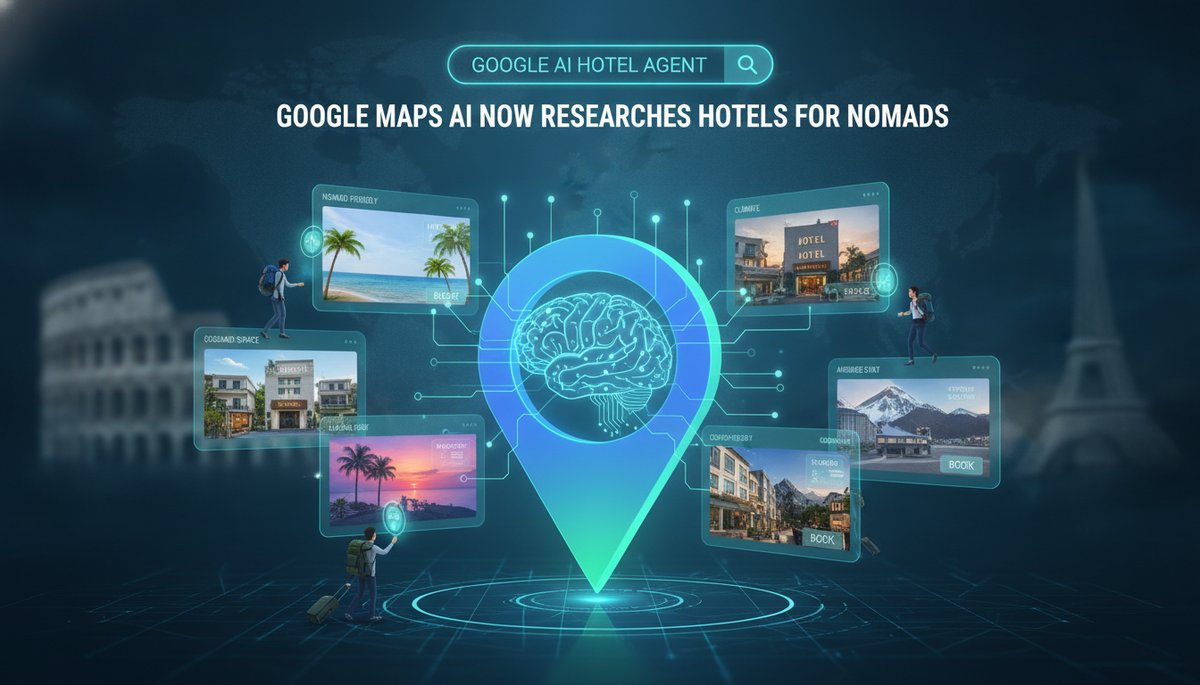
Google rolled out agentic AI capabilities to its Ask Maps feature on August 6, marking a substantive shift in how the tool handles accommodation research. Users can now describe a hotel need in plain language — specifying price range, neighborhood feel, amenities, or general "vibe" — and Ask Maps will check availability and compare prices before surfacing a shortlist. From there, users click through to a partner site to complete the actual booking.
The update also extends to food ordering and event ticket discovery, making Ask Maps a more complete trip-planning layer within Google Maps. The hotel and restaurant features are rolling out to U.S. users at launch, according to TechCrunch's reporting.
The upgrade introduces what Google calls Personal Intelligence — an optional, off-by-default feature that lets Ask Maps pull context from a user's Gmail and Google Calendar. That means the tool can surface a hotel recommendation near an airport before a confirmed flight, or suggest dinner options factored around an existing reservation. Personal Intelligence is expanding beyond the U.S. to Australia, Brazil, Canada, Indonesia, Japan, and Mexico, as Gizmodo reported. Ask Maps also gains conversation memory, allowing users to reference earlier trip-planning exchanges without starting over.
Critically, the AI handles the research and comparison stage but stops short of completing transactions. As Gizmodo confirmed, users still select from the shortlist Maps surfaces before any purchase or reservation proceeds. Google is not autonomously booking anything.
What this means for remote workers and nomads
For nomads who already use Google Maps as their base-picking tool, the agentic hotel layer removes the most tedious part of accommodation research — opening a dozen tabs to cross-check prices, reading through amenity lists, and manually verifying availability windows. Describing a need conversationally ("walkable to coworking, under $80, quiet neighborhood") and getting a pre-filtered shortlist saves real time, especially when scouting an unfamiliar city quickly.
The Personal Intelligence integration adds a layer that frequent travelers will recognize as genuinely useful: a tool that knows your itinerary and surfaces relevant options before you think to ask. If you've been building an AI-assisted travel workflow, Ask Maps is now a more credible component of that stack.
That said, nomads who rotate through regions outside the U.S. should note that the hotel and food features are launching domestically first. And the agentic layer, however capable, reflects what's listed on Google Maps — it won't surface off-platform options, smaller guesthouses without a Maps presence, or negotiated rates on direct-booking sites. For anything outside that index, the research still falls to you. Treating the shortlist as a strong starting point rather than a complete picture is the right frame for experienced nomads, particularly when landing somewhere new and off the beaten path.
Sources
- Google Maps adds agentic features, including food ordering and hotel bookings — TechCrunch, accessed Aug. 8, 2026
- Google Maps Adds Agentic Feature That Orders Food and Books Hotels for You — Gizmodo, accessed Aug. 8, 2026
You Might Also Like
Travel + Remote Work Briefing — October 22, 2026

Travel + Remote Work Briefing — October 21, 2026

Travel + Remote Work Briefing — October 20, 2026