
EU Entry/Exit System (EES): What Travelers Need in 2026
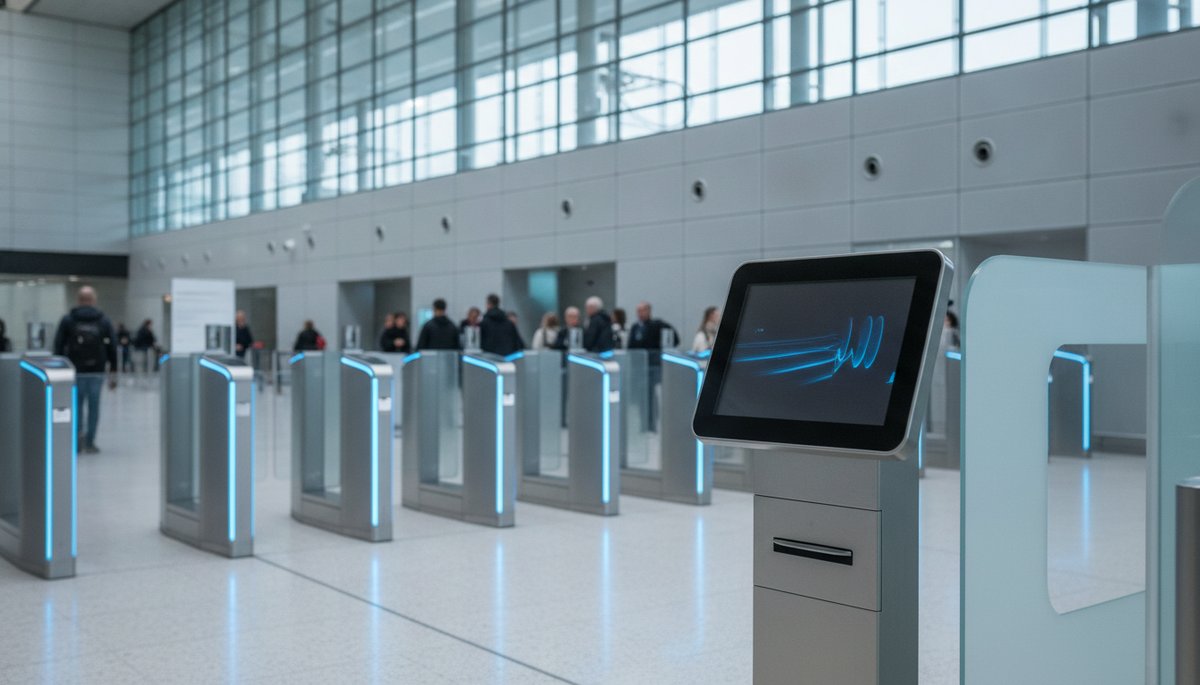
If you've crossed into the Schengen area recently and gotten fingerprinted and photographed at a kiosk instead of getting a passport stamp, you've met the EU's new Entry/Exit System. It's not a pilot anymore — as of April 10, 2026, EES is fully live across all 29 participating Schengen countries, and it changes how every non-EU traveler, including long-stay nomads doing the 90/180-day shuffle, gets tracked at the border.
This isn't a new visa or a new fee. It's a change in how your entries and exits get recorded — and it has real implications if you're the kind of traveler who's routinely close to your 90-day limit.
How does the EU Entry/Exit System work?
EES is an automated IT system that registers non-EU nationals traveling to the Schengen area for short stays. At the border, you scan your passport and provide fingerprints and a facial image at a self-service kiosk or staffed booth; the system then logs your travel document data plus the date and place of entry or exit. Later crossings reuse your stored biometrics rather than requiring you to re-enroll every time.
When is the EU Entry/Exit System coming out?
EES isn't "coming out" anymore — it's here. Rollout began progressively on October 12, 2025, and the system reached full operation across all 29 Schengen-area countries on April 10, 2026, per the European Commission's Migration and Home Affairs department.
What is the EU Entry/Exit System (EES)?
EES is an EU border-control system, not a visa. It replaces manual passport stamping for non-EU nationals on short stays with a digital record of every entry, exit, and refusal of entry, making it easier for border authorities to spot overstays automatically.
Who has to register for EES?
Any non-EU national entering the Schengen area for a short stay must be registered — this includes tourists, digital nomads on visa-free 90-day stays, and business travelers. EU/EEA citizens, and travelers who already hold a long-stay national visa or residence permit for a Schengen country, are not subject to EES registration in the same way.
What data does EES collect?
The system captures your name and travel document details, biometric data (fingerprints and a facial image), and the date and place of each entry and exit. That biometric record is what lets border agents skip manual stamping on your next crossing.
Does EES replace passport stamps?
Yes. As of the April 2026 full rollout, EES replaces the ink passport stamp for non-EU short-stay travelers, logging your border crossings digitally instead. Don't be surprised if your passport pages stay emptier than on past trips — that's expected, not a mistake.
How does EES affect the 90/180-day rule?
The 90/180-day rule itself hasn't changed: you can still generally spend 90 days in any rolling 180-day period across the Schengen area on a visa-free stay. What's changed is enforcement — because EES timestamps every entry and exit automatically, overstays are flagged digitally instead of relying on someone manually counting ink stamps. If you've been mentally "rounding" your days in the past, it's worth tracking them precisely now, since the system is doing the same math in real time.
What about ETIAS vs EES?
EES and ETIAS are different systems that get confused constantly. EES is border registration that happens when you arrive — it's free and automatic. ETIAS is a separate pre-travel authorization that visa-exempt travelers will need to apply for online before departure, similar to the US ESTA. As of this writing, the EU has not confirmed a firm ETIAS launch date; earlier late-2026 targets have slipped, and the European Commission says it will announce a start date several months in advance.
EES vs ETIAS at a glance
| EES | ETIAS | |
|---|---|---|
| What it is | Automated border registration (biometric entry/exit log) | Pre-travel authorization, applied for online |
| Who it's for | All non-EU nationals on short Schengen stays | Visa-exempt nationals traveling to Europe |
| When you deal with it | At the border, on arrival/departure | Before you book or board your flight |
| Cost | Free | EUR 20 one-time application fee (under-18s and over-70s exempt); official launch date still to be confirmed |
| Status as of this post | Fully operational since April 10, 2026 | No confirmed launch date |
| What you actually do | Scan passport, give fingerprints/photo (first crossing) | Apply online in advance once required |
What this actually means for your next border crossing
Expect your first EES crossing to take longer than a normal passport check — you're enrolling biometrics for the first time, and lines at busy airports and land borders have been longer during the transition. Budget extra time at the border on your next Schengen entry, especially at high-traffic hubs. If you're island-hopping or country-hopping inside the Schengen area and cutting it close on your 90 days, this is a good moment to actually track your dates with a spreadsheet or app rather than estimating — EES is tracking them precisely, so you should too. And if you're heading into a stretch of countries with patchy public Wi-Fi at border crossings and beyond, it's worth having your own connectivity sorted before you land — an eSIM from a provider like Airalo lets you get data the moment you land without hunting for a local SIM shop. (This is an affiliate link — job4travelers may earn a commission if you purchase through it, at no extra cost to you.)
If you're already deep into Schengen-adjacent visa planning, our guides on extending a tourist visa and digital nomad visas cover the broader long-stay picture outside the EU, and our travel gadgets for digital nomads roundup can help you pack for longer border waits. For the bigger-picture reality check on what long-term travel actually involves, see the hidden truth about being a digital nomad.
EES doesn't change your travel rights in the Schengen area — it changes how closely those rights get enforced. Nomads who've been loosely tracking their 90/180 days should treat this as the moment to get precise, not the moment to panic.
Frequently Asked Questions
When did the EU Entry/Exit System become mandatory?
Do I need to register for EES every time I enter the Schengen area?
Is EES the same as ETIAS?
Does EES cost anything?
Will EES make my 90/180-day tracking stricter?
You Might Also Like

Travel + Remote-Work Briefing — October 27, 2026
Travel + Remote-Work Briefing — October 26, 2026

Travel + Remote-Work Briefing — October 25, 2026