Things to Do in Cartagena in July 2026: Festivals, Beaches & Digital Nomad Guide
Things to Do in Cartagena in July 2026: Festivals, Beaches & Digital Nomad Guide
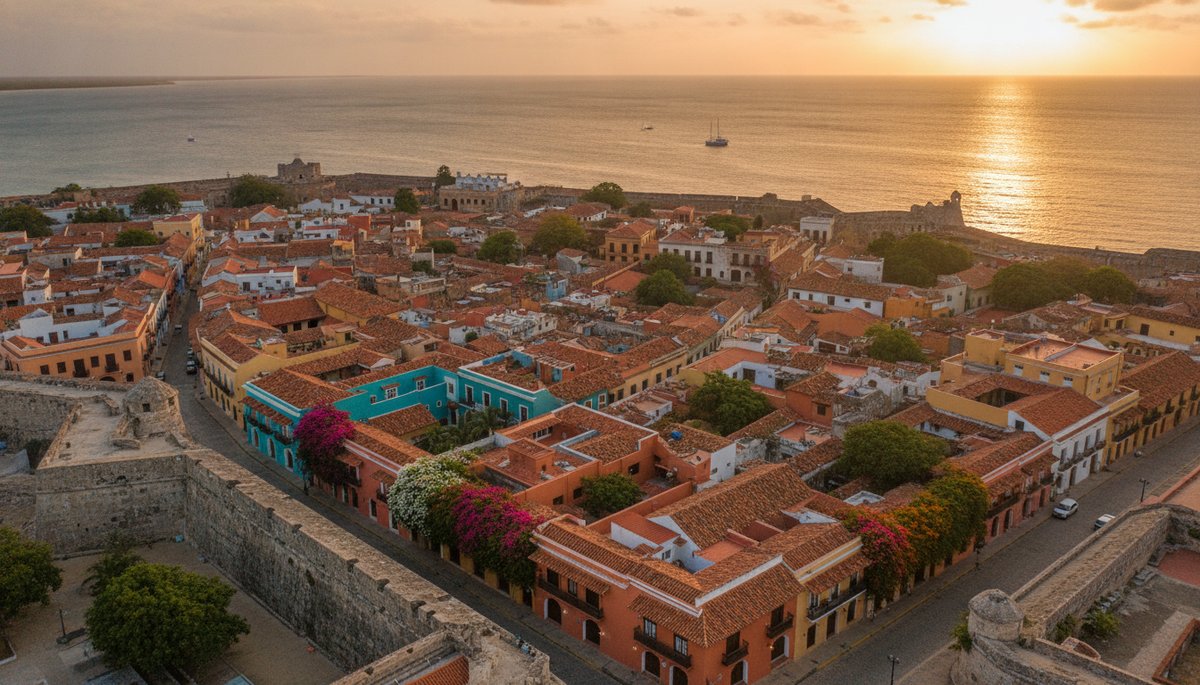
Cartagena de Indias in July is a city that sweats, dances, and surprises you. The UNESCO-listed Walled City glows gold at sunset, Afro-Caribbean rhythms drift through Getsemaní's painted streets, and Colombia's Independence Day turns the whole country into one giant celebration — all while an armada of domestic vacationers descends on the Caribbean coast for school holidays. It's hot, humid, and occasionally rainy. It is absolutely worth it.
Whether you're flying in for a long weekend around July 20, basecamp-style remote working for the month, or just adding Cartagena to a Colombia circuit, here's everything you need to plan July 2026 well.
Quick note on the two Cartagenas: If you've seen headlines about the Rock Imperium Festival (Iron Maiden, Sabaton, July 3–5) or La Mar de Músicas world music festival (July 17–25) supposedly happening in Cartagena in July — those are both in Cartagena, Spain (a city on the Mediterranean coast of Murcia). This guide covers Cartagena de Indias, Colombia, on the Caribbean coast. Different continent, different festivals.
What Festivals Are in Cartagena Colombia in July 2026?
Colombia Independence Day — July 20 (Monday)
The single biggest event in Cartagena's July calendar is Colombia's national Independence Day, which commemorates the country's 1810 declaration of independence from Spain. In 2026, July 20 falls on a Monday, creating a long puente weekend that the entire country treats as a national blowout.
In Cartagena, celebrations kick off early — flag-raising ceremonies and civic acts begin around 7:00 AM at Plaza de la Aduana in the heart of the Walled City. Marching bands wind through the cobblestone streets, parades build through the morning, and by evening the ramparts and plazas come alive with live cumbia, vallenato, and fireworks that reflect off the Caribbean harbor. The atmosphere is genuinely special: this is one of the few moments when the entire Colombian population floods into the streets together, and Cartagena's colonial setting gives the celebration a particular drama.
Practical heads-up: the July 18–20 long weekend is peak domestic travel season. Rooms fill weeks in advance and prices spike — book by late June or earlier.
Afro-Colombian Drum Culture in Getsemaní and Palenque
Throughout July, Cartagena is a gateway to the world's most significant living African diaspora communities. San Basilio de Palenque, about 55 km from Cartagena, is a UNESCO-listed village founded by formerly enslaved Africans in the 17th century and is considered one of the birthplaces of Afro-Colombian musical traditions including bullerengue, mapalé, and champeta.
Day trips from Cartagena to Palenque (around 1.5 hours by bus or shared taxi) are easy to organize, and in July the village receives more visitors in the school-holiday season. In Cartagena itself, Getsemaní's plazas host informal and semi-organized Afro-Caribbean music sessions throughout the month — ask at your guesthouse about current programming, since schedules are rarely locked far in advance.
Note: The major Festival de Tambores y Expresiones Culturales de Palenque is an October event, not July — the dates often get conflated online, so we've been careful here.
Ongoing Cultural Calendar
The Cartagena Music Festival (Festival Internacional de Música de Cartagena) typically takes place in January, not July. However, independent concerts, open-air cumbia nights, and neighborhood fiestas happen throughout the year in Getsemaní and the historic center — check the Alcaldía de Cartagena's official cultural calendar (cartagena.gov.co) as you get closer to your trip for any late-announced July events.
Is July a Good Time to Visit Cartagena?
Honestly? Yes — with eyes open.
July sits firmly inside Cartagena's rainy season, but "rainy season" on the Colombian Caribbean coast is not the kind of rain that cancels plans. Showers typically come in brief, heavy bursts in the late afternoon or evening, then clear quickly. Mornings are often sunny and ideal for beach trips. The full monsoon-style downpours arrive in September and October — July is moderate by comparison.
The real appeal of July is the Colombian school vacation surge. Families, couples, and friend groups from Bogotá, Medellín, and Cali descend on Cartagena for the break, and the city has a festive, energetic quality that you won't find in the quieter "low season" months. The Independence Day long weekend especially transforms the Walled City into something memorable.
Trade-offs to know:
Accommodation prices rise during the July vacation period and spike hard around July 18–20
The Rosario Islands day trips and Playa Blanca boat tours fill up fast on weekends
Street food and nightlife scenes are at their most vibrant
If you want lower prices and fewer crowds, January through March (the main dry season) is peak-quality travel time. But if you want Cartagena alive — July delivers.
Where to Stay in Cartagena: Getsemaní vs Centro vs Bocagrande?
Three neighborhoods dominate the conversation for visitors and nomads. Here's the honest breakdown:
Getsemaní is the best overall pick for most travelers. Once overlooked (and genuinely rough-edged), it's now one of Latin America's most-talked-about neighborhoods — colorful murals, independent cafes and bars, a real community feel, and meaningfully cheaper than the Walled City. The walkable distance to Centro means you get the best of both worlds. Digital nomads in particular gravitate here for the coworking cafes and the vibe of creative hustle. Arrive during the day, explore at night with awareness — some quieter side streets warrant more care after midnight.
Centro Histórico (the Walled City) is where you come for the postcard Cartagena: bougainvillea-draped balconies, plazas with fountains, horse-drawn carriages, boutique hotels in restored colonial mansions. It's the most expensive option, the most atmospheric, and the most tourist-dense. Worth splurging on for a few nights if the budget allows, especially around Independence Day when the whole neighborhood becomes a stage.
Bocagrande is the modern beach district — high-rise hotels, the city's most accessible beaches, good restaurants and shopping malls. It's further from the historic sites but closer to the sea. Ideal if you want a beach-resort feel with direct Caribbean access and don't mind a taxi or bus to reach the old city.
For a two-week nomad stay, the winning formula is: Getsemaní for the long haul, one or two nights in Centro for the colonial experience around Independence Day.
Cartagena's Beaches and Islands in July
The Caribbean doesn't take a rainy season. Water temperature sits around 29°C year-round and the sea is calm enough for swimming on most days.
Playa Blanca (Isla Barú) is the closest "real" white-sand beach — about 45 minutes by speedboat or 90 minutes via the road bridge. The water is clear and turquoise, the sand is exactly as advertised, and vendors are persistent. Boat transfers run 40,000–60,000 COP ($10–15) round trip. Go on a weekday in July to avoid the school-vacation weekend crush.
Islas del Rosario is a cluster of 27 islands about 45 minutes southwest by speedboat, set within a protected national marine park. The coral is alive, snorkeling is excellent, and day trips (80,000–150,000 COP, $20–37 per person, usually including lunch and transfers) leave from the Muelle de los Pegasos by the clock tower. Book ahead for July weekends.
Isla Tierra Bomba is just 15 minutes by boat from the city walls and often overlooked. Beach clubs on the island offer day passes with sun loungers and food — a calmer alternative to Playa Blanca if you're not chasing the ultimate white-sand beach.
City beaches in Bocagrande are fine for a quick swim but crowded and less pristine than the islands. Good for convenience, not for the full Caribbean experience.
Can You Work Remotely from Cartagena?
Cartagena is a legitimate digital nomad base — less developed than Medellín or Bogotá on the infrastructure side, but the gap has narrowed significantly. Here's the practical picture:
Coworking spaces: Cowork Cartagena in La Matuna (near the Walled City) has fiber-optic internet, a rooftop terrace with harbor views, and a welcoming community vibe. TuWork in Bocagrande is the more corporate option — private offices, conference rooms, and showers for client calls and focused deep-work days.
Cafes: Fruto Bendito Café and Bohaza Café Bar in Getsemaní are reliably laptop-friendly with solid Wi-Fi and multiple outlets. Most hotels in Bocagrande and the newer guesthouses in Getsemaní advertise high-speed connections.
Cost of living: Budget around $1,200–$1,500 USD per month for a comfortable life — short-term Airbnb or guesthouse, eating out daily, transport, coworking day passes, and the odd island day trip. Drop to $900–$1,100 in a longer-term apartment in Getsemaní or Manga.
Colombia's digital nomad visa (visa de nómada digital) allows stays of up to two years. Requirements include proof of remote income and health insurance coverage. For a deeper dive into Colombia's nomad scene and how it stacks up against the country's other cities, see our guide to the best places in Colombia for digital nomads.
For gear essentials before any remote travel stint, check out the digital nomad starter kit — it covers the laptop, travel router, and power kit setup worth having before you fly.
Staying Connected in Cartagena
Don't rely on hotel Wi-Fi alone for client calls and deadlines. A Colombia eSIM from Airalo gives you fast mobile data from day one — no SIM swap, no hunting for a phone shop after a 6-hour flight. Plans start around $4 for 1 GB and go up to 20 GB for a month at $41. Install it before you leave home, activate on arrival. (Affiliate link — I may earn a commission at no extra cost to you.)
Get your Airalo Colombia eSIM here.
For more countries that welcome remote workers long-term, see our tracker of countries with digital nomad visas.
What's the Weather Like in Cartagena in July?
July sits in the rainy season — but the reality is more manageable than the label suggests.
Average temperatures: High 31°C (88°F) / Low 27°C (80°F). The heat index (factoring in humidity at ~77%) can feel closer to 38–40°C during midday, so light, breathable clothing is non-negotiable.
Rainfall: About 99 mm total across roughly 20 days — typically brief, heavy afternoon showers rather than all-day rain. Mornings are generally clear and great for beach trips. An ultralight packable rain jacket takes up no space and eliminates any anxiety about being caught in a downpour during Independence Day parades.
Sea conditions: Water stays at 29°C, swells are modest, and swimming is safe and pleasant throughout July.
What to pack: Breathable linen or moisture-wicking fabrics, a compact rain layer, reef-safe sunscreen, and solid sandals that can handle cobblestones and occasional puddles.
Safety in Cartagena: A Grounded View
Cartagena is broadly safe for travelers in the areas covered by this guide — the Walled City, Getsemaní, and Bocagrande all have strong police presence and a tourist-friendly infrastructure. The most common issues are pickpocketing, phone snatching in crowds, and taxi overcharging — petty crime, not violent crime.
A few practical habits go a long way:
Keep your phone in your pocket rather than out in your hand, especially in crowded plazas during Independence Day events
Use registered ride-hailing apps — Uber, Cabify, or InDriver — rather than hailing street taxis at night; agree on a price or use the app meter
At beaches and islands, keep bags attended or use a dry bag you can carry into the water
Check the latest advisories from your home country's foreign ministry before travel (things evolve, and your government's travel page is the authoritative source)
Getsemaní's side streets late at night deserve the same awareness you'd apply in any urban neighborhood at 2 AM — the area has improved dramatically but isn't uniformly lit. Walk with a group or take a rideshare for anything past midnight.
Planning Your July Trip: Practical Details
Getting there: Cartagena's Rafael Núñez International Airport (CTG) connects to major Colombian cities (Bogotá, Medellín) and several US hubs. Bogotá is the most common gateway for international arrivals — a 1-hour domestic connection.
Getting around: The historic center is walkable. For the airport, islands, and cross-city trips, use Uber or Cabify (more reliable pricing than street taxis). Mototaxis are cheap and used by locals but not recommended for first-time visitors navigating unfamiliar streets.
Book ahead for July: The July school vacation and Independence Day weekend are high demand. Aim to book accommodation 4–6 weeks out. Rosario Islands and Playa Blanca day-trip boats also sell out on July weekends — book via your guesthouse or a reputable local operator.
Language: Spanish is essential outside tourist zones. Cartagena's hospitality industry speaks decent English in high-end hotels and popular restaurants, but the further you venture from the tourist belt (Getsemaní locals, market stalls, mototaxi drivers), the more a basic Spanish vocabulary pays off.
The Bottom Line
July in Cartagena, Colombia is hot, humid, festive, and alive. Colombia Independence Day on July 20 is the headline moment — a genuinely moving national celebration played out against the backdrop of one of the Americas' most beautiful colonial cities. The beaches are warm, the nomad infrastructure is solid for a Caribbean city, and the Afro-Colombian cultural heritage that pulses through Getsemaní and the road to Palenque is unlike anywhere else in the world.
Pack light, book early, carry a rain jacket, and skip the street taxis after dark. The rest takes care of itself.
Frequently Asked Questions
What festivals are in Cartagena Colombia in July 2026?
Is July a good time to visit Cartagena Colombia?
Where should I stay in Cartagena — Getsemaní, Centro, or Bocagrande?
Can you work remotely from Cartagena Colombia?
What is the weather like in Cartagena in July?
You Might Also Like
Travel + Remote Work Briefing — October 13, 2026
Travel + Remote Work Briefing — October 12, 2026

Travel + Remote-Work Briefing — October 11, 2026