
Nomad Travel Briefing — September 14, 2026
Today's stories all price the same decision from different angles: what a European fall actually costs a remote worker. Eurocontrol's record summer numbers show which corridors are running hot and which are still disrupted, a small German city makes the case that the cheap base doesn't have to be a famous one, and a set of €10-to-€79 rail legs shows what it costs to string them together. None of it demands a change of plan this week. All of it is worth knowing before you lock a Q4 itinerary.
Where is European flight capacity tight this fall, and which routes still carry disruption risk?
Europe averaged 35,959 flights a day this summer — a 2.4 percent increase over 2025 and the busiest season on record — even as the war between the U.S. and Iran disrupted Middle East-bound routes, according to Eurocontrol data reported by Euronews Travel. The network hit a single-day record of 37,640 flights on Friday, July 10.
Reliability improved alongside the volume: 72.6 percent of flights arrived on schedule, up 1.2 percentage points from 2025. But the growth was lopsided. Eurocontrol said the war "influenced" this year's tourist season, and Euronews reported the conflict pushed more Europeans to holiday within the continent rather than book trips to riskier regions. Albania, Croatia, Cyprus, Greece, Montenegro, North Macedonia, Serbia and Slovenia all posted strong traffic increases, along with continued growth across southwestern Europe. The slowdown landed elsewhere: Bulgaria, Hungary and Türkiye saw lower traffic tied to the conflict, and Travel Tomorrow's coverage of the same data also listed Romania. Travel Tomorrow additionally reported flights between Europe and the Middle East fell roughly 59 percent, with about 1,150 daily flights affected by rerouting around closed airspace.
For nomads, that split is a booking signal. The Balkans and southwestern Europe — already popular for lower costs and mild shoulder-season weather — are coming off a record summer, which tends to mean fuller flights and less last-minute fare flexibility into October and November. Anything transiting Bulgaria, Hungary, Romania, Türkiye or the Middle East carries more schedule risk, and the rerouting is still measured in hundreds of daily flights rather than an isolated blip. A cheaper fare into a constrained corridor can still cost you a longer, less predictable travel day than a pricier one into a corridor already running smoothly. Book growth-corridor routes earlier than usual, and build buffer into anything crossing a disrupted one.
Source: Euronews Travel; Travel Tomorrow
Can a small German city like Trier actually work as a fall nomad base?
Trier is cheap and genuinely uncrowded, and there is a workable coworking option at €180 a month — but Germany still has no digital nomad visa, so the legal path runs through the freelance visa and its paperwork.
Travel Off Path this week highlighted Trier, a city of about 113,000 near the Luxembourg border, as a quieter alternative to Munich, reporting it drew only 467,804 overnight visitors last year against Munich's roughly 6 million in 2025. Founded around 16 BC as Augusta Treverorum, it is Germany's oldest city and later served as one of the Roman Empire's imperial capitals; the 2nd-century Römerbrücke, a 2nd-century amphitheater that once seated roughly 18,000, and the early-4th-century Aula Palatina are all still standing, according to Travel Off Path. On price, the outlet reported a 0.3-liter local beer runs roughly $4.40 and a half-liter $7. Trier sits "barely 10 miles" from Luxembourg, with Luxembourg City about 30 miles out.
Low visitor counts and cheap beer don't answer the two questions that decide a base, though: where to work and how to stay legally. On the first, PROworkspace in central Trier lists open-space desks at €180 a month per person plus tax, with Wi-Fi and meeting rooms included, per a Workin.space listing. On the second, Germany still has no dedicated nomad visa; remote workers rely on the freelance visa, which requires proof of sufficient funds plus any qualifications or licenses the profession demands, according to Remote Work Europe's review of the April 2026 Visa Handbook. That handbook outlines a forthcoming remote-work permit with a registered-address requirement and a €1,200-a-month minimum income threshold, though it had not launched as of the handbook's release. Internet reliability and long-stay housing supply in Trier specifically are not something we could verify here.
Source: Travel Off Path; Remote Work Europe; Workin.space
Is a rail pass worth it for an autumn slow-travel loop in Europe?
Probably not for these routes alone — at €10 to €79 a leg, the point-to-point tickets are already cheap enough that a multi-country pass only pays off if you're chaining several regions together.
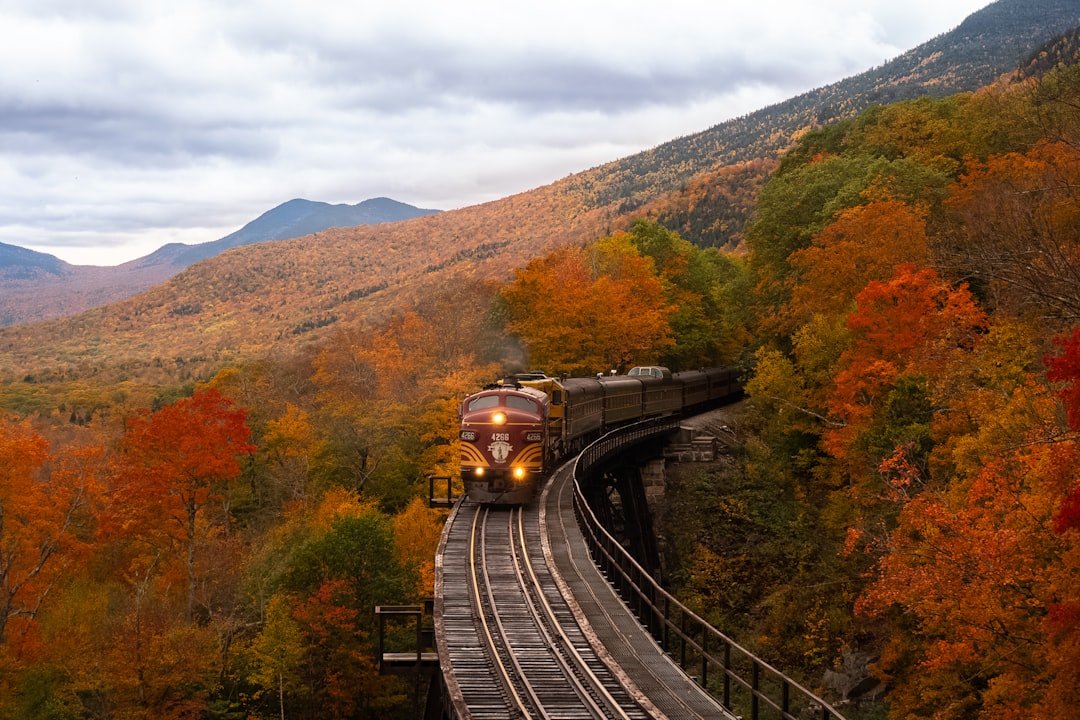
Euronews Travel published a roundup of five European train routes picked for autumn foliage, spanning four countries. They run from Switzerland's GoldenPass Line, a 191-kilometer route between Montreux and Interlaken, to Austria's Schneeberg Railway, a cog train climbing to 1,800 meters at Hochschneeberg. The others: Mallorca's Tren de Sóller, a wooden-carriage line built in 1912 running Sóller–Palma with €40 return tickets; Bulgaria's Rhodope Narrow Gauge Railway, a 125-kilometer route through the Rhodope and Pirin mountains with day-tour packages from €79; and Austria's Semmering Railway, a 36-minute Gloggnitz-to-Mürzzuschlag crossing recognized as the world's first standard-gauge line over a high mountain pass, with standard-class fares from €10, according to Euronews. Euronews cites JR Pass weather data favoring some routes: the GoldenPass corridor sees clear skies 52.55 percent of the autumn season, and the Rhodope region averages just five rainy days.
The pass math only shifts if you're covering several of these in one loop, since they sit in four separate countries — Switzerland, Spain, Bulgaria and Austria. The Interrail Global Pass covers 33 countries under one ticket, though the site lists no price for shorter durations. The bigger catch for anyone treating a rail day as a workday: these are scenic, high-elevation lines built around views, not commuter amenities, and Euronews makes no claim about onboard Wi-Fi on any of the five. Plan them as offline blocks, download what you need the night before, and save calls for base days.
Source: Euronews Travel; Interrail
What to watch
- Whether the Balkan and southwestern-Europe corridors that absorbed this summer's record demand hold their fares into the October–November shoulder, or tighten further as fall bookings open.
- Germany's forthcoming remote-work permit — the €1,200 income threshold and registered-address requirement are drafted, but the launch date is still open.
- Autumn foliage is a short season: rail loops through two or three of these regions need booking before both the leaves and the favorable weather odds pass.
You Might Also Like

Travel & Remote Work Briefing — October 4, 2026

Travel & Remote Work Briefing — October 3, 2026

Travel & Remote Work Briefing — October 2, 2026