
EES Biometric Rollout Turns EU Airports Into Bottlenecks
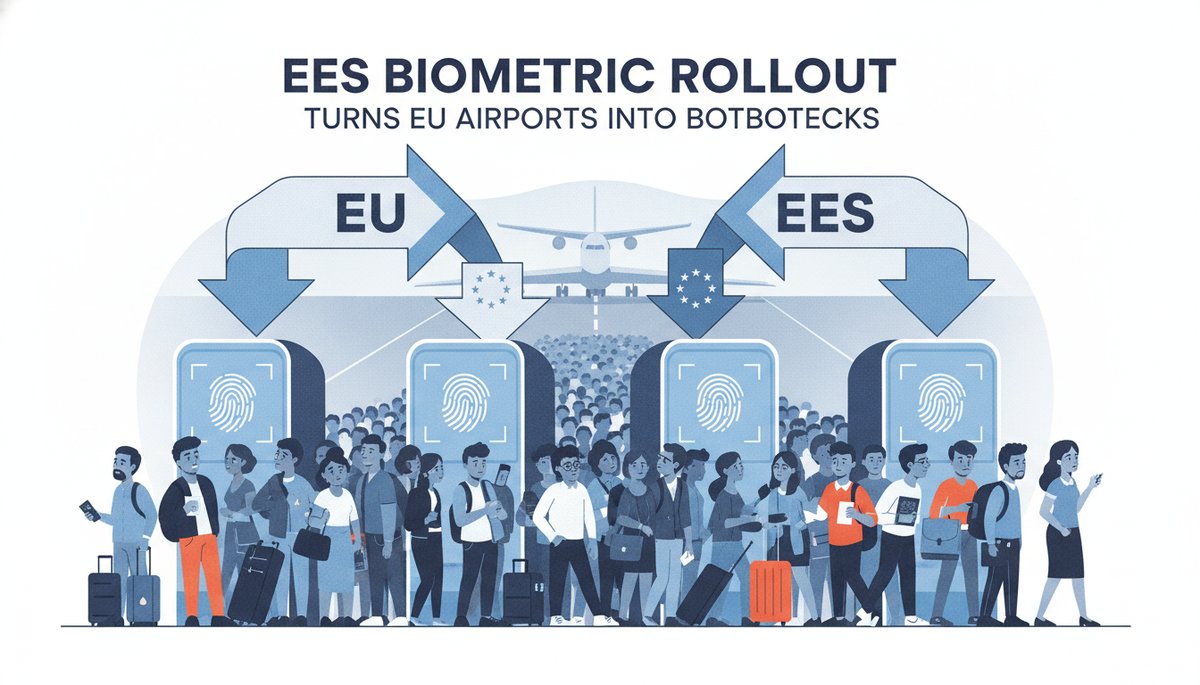
The European Union's new biometric border system is producing queue times of up to five hours at some Schengen airports, and the disruption is serious enough that EU officials convened an urgent meeting with airlines and airport operators this week to address what industry groups are calling a crisis.
The Entry/Exit System, which replaced passport stamps with digital biometric records across 29 countries after going fully operational on April 10, requires non-EU nationals to submit facial images and fingerprints at every Schengen entry and exit. The initial registration alone adds processing time at the border — and with 40 million more passengers expected at European airports in July and August compared to the previous two months, the math is turning ugly fast.
The industry's case for a pause
Ryanair publicly called for the EES rollout to be suspended until September, citing the system's lack of readiness for peak summer volumes. The airline is not alone. A joint letter from Airports Council International Europe, Airlines for Europe, and IATA described the situation as "critical" and demanded that member states be given the authority to completely suspend EES whenever passenger volumes exceed the operational capacity of border control facilities — a flexibility they want to run at minimum through July and August.
Aircraft have reportedly departed with empty seats while passengers remained trapped in border queues after gates closed. The European Commission, for its part, acknowledged the urgent meeting but argued EES impact has been "limited" at most airports, attributing the bottlenecks to member states' insufficient numbers of border guards and inadequate infrastructure rather than the system itself. Frontex deputy executive director Uku Särekanno told Euronews the system was expected to stabilize within "one or two years."
Among airports seeing disruptions are Copenhagen, Rome Fiumicino, and Brussels, according to reporting by The Points Guy, with travelers arriving two to three hours early and still nearly missing their flights.
What this means for remote workers and nomads
If you run your Schengen time on a careful 90/180-day schedule, the EES changes your math at the border — not just your wait time. The old passport-stamp era allowed a degree of ambiguity: stamps were sometimes missed, dates occasionally smudged. That ambiguity is gone. Every entry and every exit is now logged digitally and synchronized in real time across the entire Schengen zone.
For practical travel planning right now, the queues mean you should build substantially more buffer into any Schengen departure — especially at major hubs during peak summer. Missing a flight because of an EES queue does not reset your 90-day count; you have still consumed those days. If you are nearing your limit and your flight departs with you stuck in the border line, you may exit your allowed days while still in the airport.
Nomads considering a digital nomad visa or longer-term arrangement as a way around the 90/180 ceiling should note that EES enforcement also raises the stakes for any overstay — even an accidental one caused by a delayed exit date. The World Travel and Tourism Council warned that the disruptions could jeopardize $45.4 billion in visitor spending, a signal that the political pressure to find a workable solution before August peaks is significant. Whether the Commission moves fast enough for summer travel remains the open question.
Sources
EU leaders call 'urgent meeting' with airlines as airport chaos grows — The Points Guy, accessed July 3, 2026
How the Entry-Exit System is becoming a nightmare for Europe's summer travellers — Euronews, accessed July 3, 2026
EU border rules causing travel chaos ahead of summer peak, industry warns — Al Jazeera, accessed July 3, 2026
You Might Also Like

Travel + Remote Work Briefing — October 15, 2026

Travel + Remote Work Briefing — October 14, 2026
Travel + Remote Work Briefing — October 13, 2026